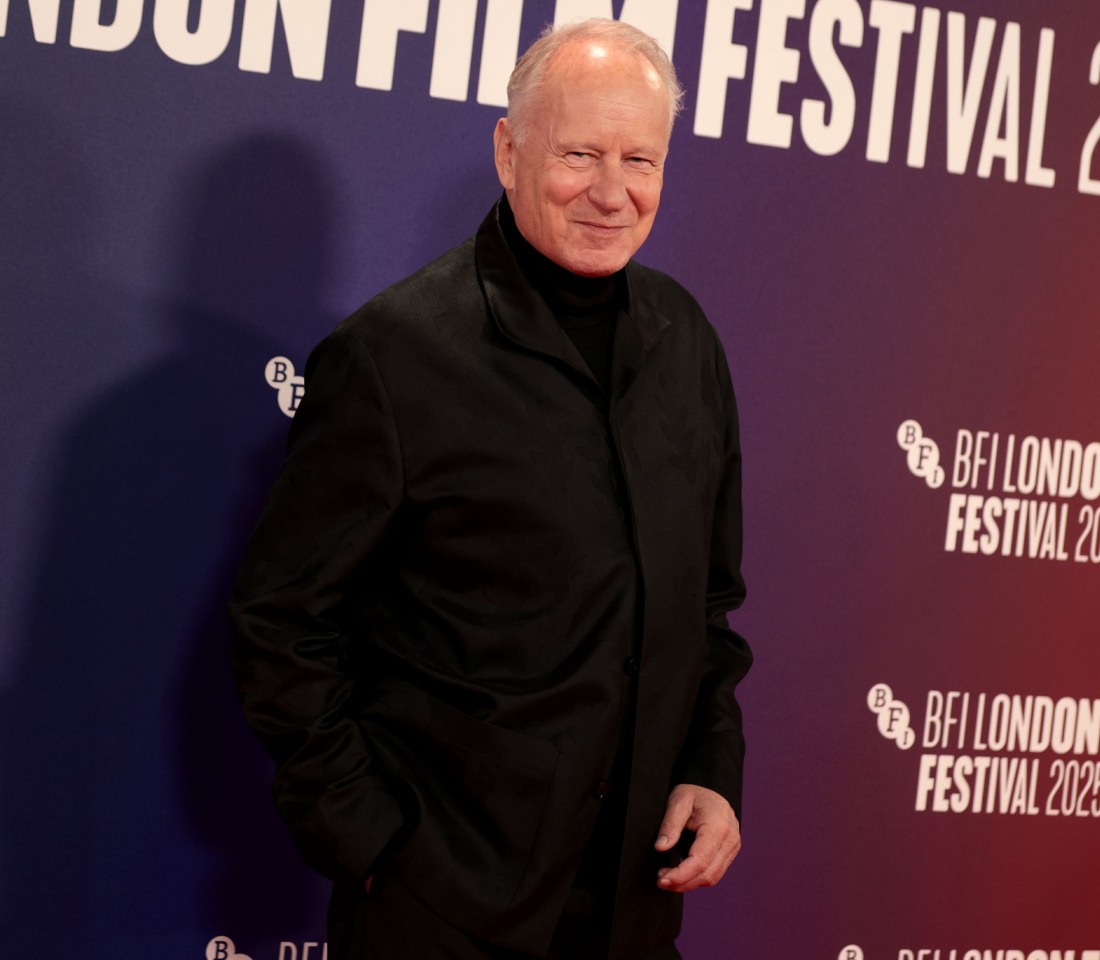
I’m such a big fan of interviews with older actors/legends when they’re at the point in their lives where they don’t have any f–ks left to give. They’re brutally honest about the realities of their lives, careers and movie business. I’m not sure Stellan Skarsgard ever really gave a f–k, but he’s in a particularly honest mood these days. He’s 74 years old, still recovering from a 2022 stroke, and he might end up getting his first-ever Oscar nomination for Joachim Trier’s Sentimental Value. This is Trier’s follow-up film after the wild success of The Worst Person in the World (which I loved so much). They’re saying Sentimental Value is also great, and might be a big awards-contender. Which is why Stellan sat down with Vulture for a lengthy conversation about his career, his big family (he has eight kids and most of them are actors), money, Oscar campaigns and more. Some highlights:
Life after his stroke: “I feel a little more like I live under the sword now. Because I’ve lived a naughty life. And I’m 74, which is already on overtime.”
Why he said yes to Sentimental Value: “All my career, it’s been mostly chance. But I usually take the projects I like if I can. If they have a good director or if it is a failed brilliant film — there’s something interesting about it. With Joachim Trier, I was waiting for him to call. It was about time, I thought…. I played hard to get for a week. We had lunch together and talked about the film. He wanted to pay for lunch. I said, “No, no. I don’t want to be in debt to you.” So I paid. And that was a weak way of saying I’m independent; I’m not easily flirted with — which I was. It’s one of the best roles I’ve ever had, and he’s one of the best directors I’ve worked with. So of course I would’ve said “yes.”
His kids’ reaction to Sentimental Value: “…Especially when I see the film, I go, Ooh, yeah. I could have been there. That could have been done. Alexander saw the film at Telluride, and he came out, destroyed in his face, and he hugged me.
His first big American movie: “I met an agent called Jeri Scott in New York, and she wanted to be my agent. It took her five years to get me to come to L.A. But she got me for The Hunt for Red October. They offered me that role. I worked for a day and a half and got more money than I made before in my life. Probably about $50,000. It was a great check and residuals, everything. So suddenly I thought, It’s a good idea. This works for me.
How his stroke affected his work: “Since I had the stroke, my argumentation is much weaker. My language is weaker. I feel that I cannot fight. I can’t have a discussion. I got really scared [after my stroke]. [It happened] Three years ago. Between one and two of Andor and one and two of Dune. That was perfect timing. But I found a way. They have earpieces where you have a prompter that says the line. It’s not enough because I have my rhythm. They have to say their line on top of my line for me to be able to answer it. They have to say it very fast, very neutral. It takes a lot of training for that guy….it was on Dune. You might say, “Oh, you’re lucky. You don’t have to learn your lines.” There’s more work now than there was before. Suddenly, I can’t come up with names. I can’t follow a thought or make an argument that spans several sentences that gets to the point — that, then bang! That is extremely frustrating. But on the other hand, I’m alive. I can work.
How he feels now, three years out: “I’m not afraid of dying, but I am afraid of not being capable of living. That is a fear. And being boring. With all my eight kids, there’s one thing I’ve been afraid of every time I have a new kid. Not that they have Down syndrome or they’re autistic … that they’re boring. Luckily, none of them were.”
Whether he considers his kids nepo babies: “No. I consider myself a nepo daddy because I get so much goodwill and maybe jobs because of them….I know that they haven’t recommended me for anything, because I didn’t recommend them for anything. But my 13-year-old, Kolbjörn, the youngest, suffers from that. When his pals at school call him nepo baby, he gets so sad. He doesn’t have any friends at school. He gets isolated. Cruel kids — or cruel and ignorant. They love it on the internet. But it is such a bullsh-t thing. Because nobody would hire you, at least not for anything good, if you’re not good enough.”
How money factors into his decision making: “Of course, when a big studio comes and offers me something, I say “More!” immediately. Because they’ve got to pay. European independent films, I go down in price. I am not interested in money other than spending it. My family eats my money all the time. I am not getting rich in this. But I’ve had a lot of fun.
How he feels about the Oscars: “The Oscars have their place. They are good for the business, and they’re good for independent films because there are many films that wouldn’t be seen at all if it wasn’t for the Oscars. Is it fair? You can’t compete in any art, so it’s a silly concept, but it is a lot of people voting on what they think is the best of the films they’ve seen. I do it myself every year. The thing is that it costs a lot of money to participate in that race. And fortunately we have American distributors that are paying for it because no European film company could afford it. You look at Neon, for instance. It’s a really good company. They are enthusiastic, and they know the market. They invest in the f–king Oscars. The modern Oscar campaign was originally a Harvey Weinstein invention in a way. He did a lot of good for independent films too. And some harm. He bought up ten films, then he shelved nine and put one up for an Oscar. The film business is like horse dealers. It’s not necessarily honest; some of it is driven by necessity and some by greed. But it hasn’t lost its wild, vaudeville character.
I didn’t know about his stroke and I certainly didn’t know how much it affected him during filming immediately afterwards. I guess he couldn’t pull out of Dune 2? Or maybe Denis Villeneuve was just hellbent on ensuring that Stellan could work no matter what, and that’s why they trained someone to feed Stellan his lines. Honestly though, from the way he sounds in this interview, he’s had a significant recovery. He’s witty and funny and charming. And very Swedish. That part about Alexander coming to him after seeing Sentimental Value… very sweet. And it must be so special to visit all of these film festivals and run into his kids promoting their projects too.
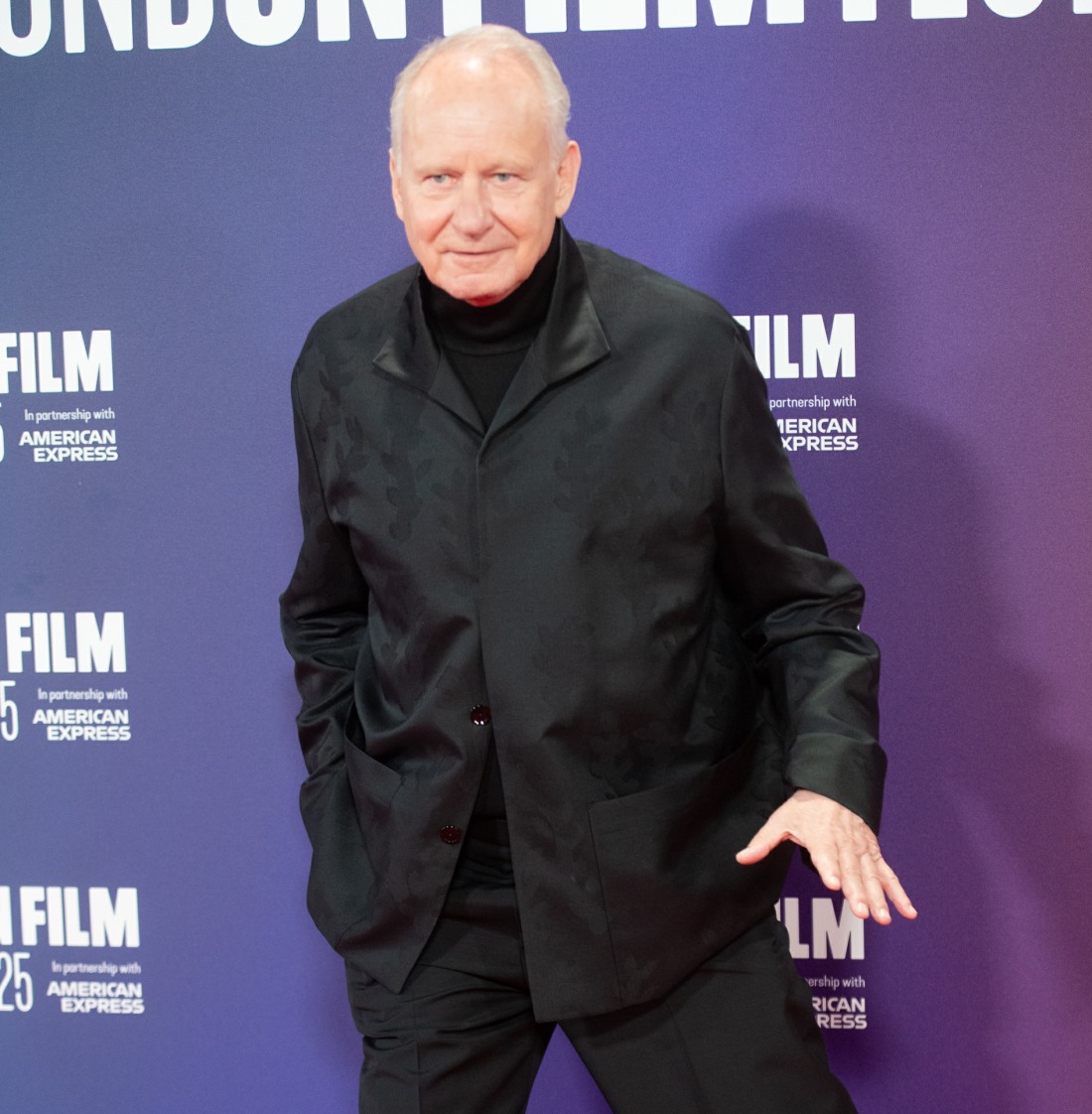
Photos courtesy of Avalon Red.