Antoine “Twan Twan” Humphries got his start dancing as a kid in 1985 to the jukebox in his great-grandmother’s Bronzeville restaurant.
Inspired by Michael Jackson and his older cousin, Humphries says, he would dance and earn money from the gangsters who once hung out at Lele’s Grill on the corner of East 47th Street and South Indiana Avenue.
He went on to become a member of the Chicago footwork scene’s first generation of dancers. Now, he hopes to create a hub in Roseland at the home of his nonprofit, The Urban Ark, to preserve that history. He also seeks to raise money to keep the dance going.

“When we come to Chicago, where do we go?” Humphries remembers tourists asking him, hoping for a hub to learn about the city’s unique dance style. “We don’t really have a place.”
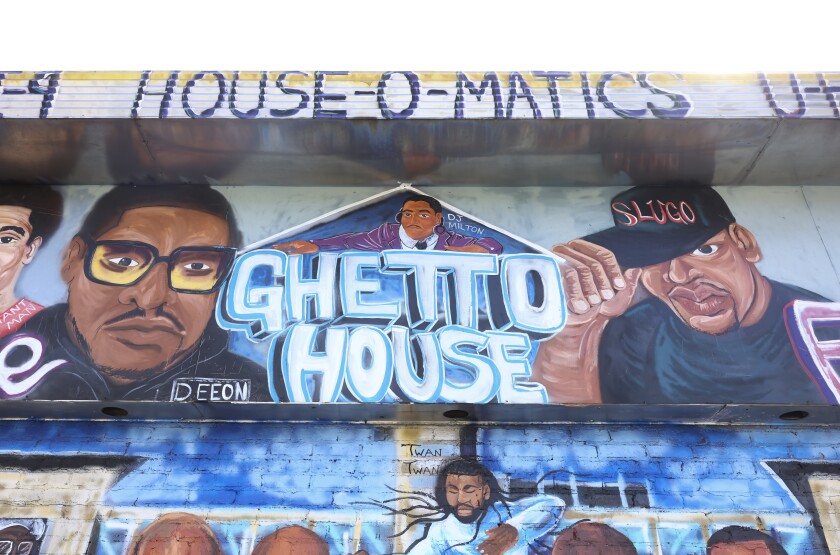
Now, the beginnings of that place are easily identifiable by a two-story mural on the corner of South Wentworth Avenue and West 111th Street that details the history of footwork in Chicago. Humphries acts as a historian, describing the individuals and groups as well as the buildings and addresses where some of what he calls culture’s “best memories” were made in the 1990s. He designed the mural himself and painted it with help from a friend in 2020.
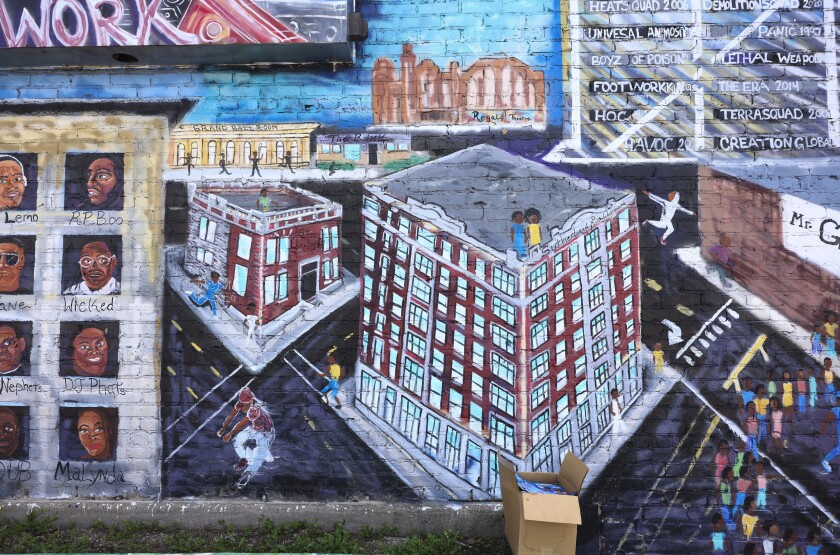
“This was a beginning of a movement,” Humphries says. The heart of the mural is a building representing the now-demolished Robert Taylor Homes that once sat along State Street in Bronzeville — and where footwork was celebrated.
This was before cell phones and social media, and the weekend parties weren’t advertised. Instead, Humphries says, “you knew where the party was because of the music,” and once when you got close you followed the sound. “The synergy of the culture surged from the project buildings.”
Across the center of the project building are the presidents of the early footwork groups, like Ronnie, Will and Tish. Some still dance today. In the two towers on the sides of the building, faces of people who, Humphries says, “pushed the culture further” look out the windows, like Marnie, Adonis and Kenyatta.
Above the project building are faces of DJs who spun the music for the dancing, like Slugo, Deeon and Spin. Names of the early crews stretch across the steel beam that stretches horizontally across the top, like House-O-Matics — to which Humphries belonged — and Phase2. In the middle of the project building is Twan Twan, dancing with his eyes closed.
The Sears Tower rises on the left side of the mural, with names of DJs stretching across every floor. The John Hancock rises on the right side, holding the names of dance crews from the 1990s. A map on the bottom half of the mural shows some of the buildings where dancers practiced and partied, like Mr. G’s, Grand Ballroom and Jackson Park Field House.
Dancers seem to move all throughout the streets.
Along the bottom of the mural stretches the event that all of them worked toward: the Bud Billiken Parade, which has been held every summer for nearly 100 years. Footwork dancers, gymnasts, drill teams and more march across the bottom of the mural as part of the celebration.
“This is what kept people off the street,” Humphries says. It kept folks from being killed and from joining gangs.

|
Anthony Vazquez/Sun-Times

|
Anthony Vazquez/Sun-Times

|
Anthony Vazquez/Sun-Times

|
Anthony Vazquez/Sun-Times

|
Anthony Vazquez/Sun-Times
|
Anthony Vazquez/Sun-Times

|
Anthony Vazquez/Sun-Times

While the parade continues, Humphries says many of the people who started the footwork culture have moved on, whether from age or financial necessity or both. Not as many young people are rising up to take their places. That worries him.
So Humphries hopes to raise money for the groups to buy their costumes and rent the safe practice space they need to prepare for the parade, instead of standing at traffic stops all summer asking drivers for money. He estimates they will need about $20,000 for costumes, and about $250,000 to rent all the equipment, space, floats and other support needed to perform With the time they save they could take classes, become financially literate, and do other things to future their ambitions, he says.
He calls it a start.
“The only thing you can do is put a plan together to start making change.”
Muralist Twan Twan stands next to his mural titled “Chicago Footwork History” which celebrates Chicago Ghetto House and Footwork culture on the side of Urban Ark located at 149 W. 111th St. in the Roseland neighborhood, Friday, April 17, 2026. | Tyler Pasciak LaRiviere/Sun-Times
Tyler Pasciak LaRiviere/Sun-Times