Cook County Health expects to provide around $485 million in free or discounted care next year, returning to an era before the Affordable Care Act insured millions more Americans than it does today.
That’s about $100 million more in what’s known as charity care than the county expects to provide this year, and the largest amount in more than a decade.
What’s largely driving this is people losing health insurance — people with low incomes in particular. That’s less money flowing to Cook County Health, which mostly treats poor and immigrant patients at its two hospitals, John H. Stroger Jr. and Provident, and more than a dozen community health centers.
In 2027, the health system expects about 30% of its patients to be uninsured — more than double a 13% low in 2023.
Dr. Erik Mikaitis, CEO of Cook County Health, sees the ripple effects reaching beyond the hospitals and health centers he oversees into communities and even into businesses, when sick people can’t work.
“If you don’t have insurance, you’re less likely to engage,” Mikaitis said in an interview with WBEZ before unveiling his proposed 2027 budget. “You’re going to come to the ED with a stroke or a heart attack instead of going to the clinic to manage your blood pressure.”

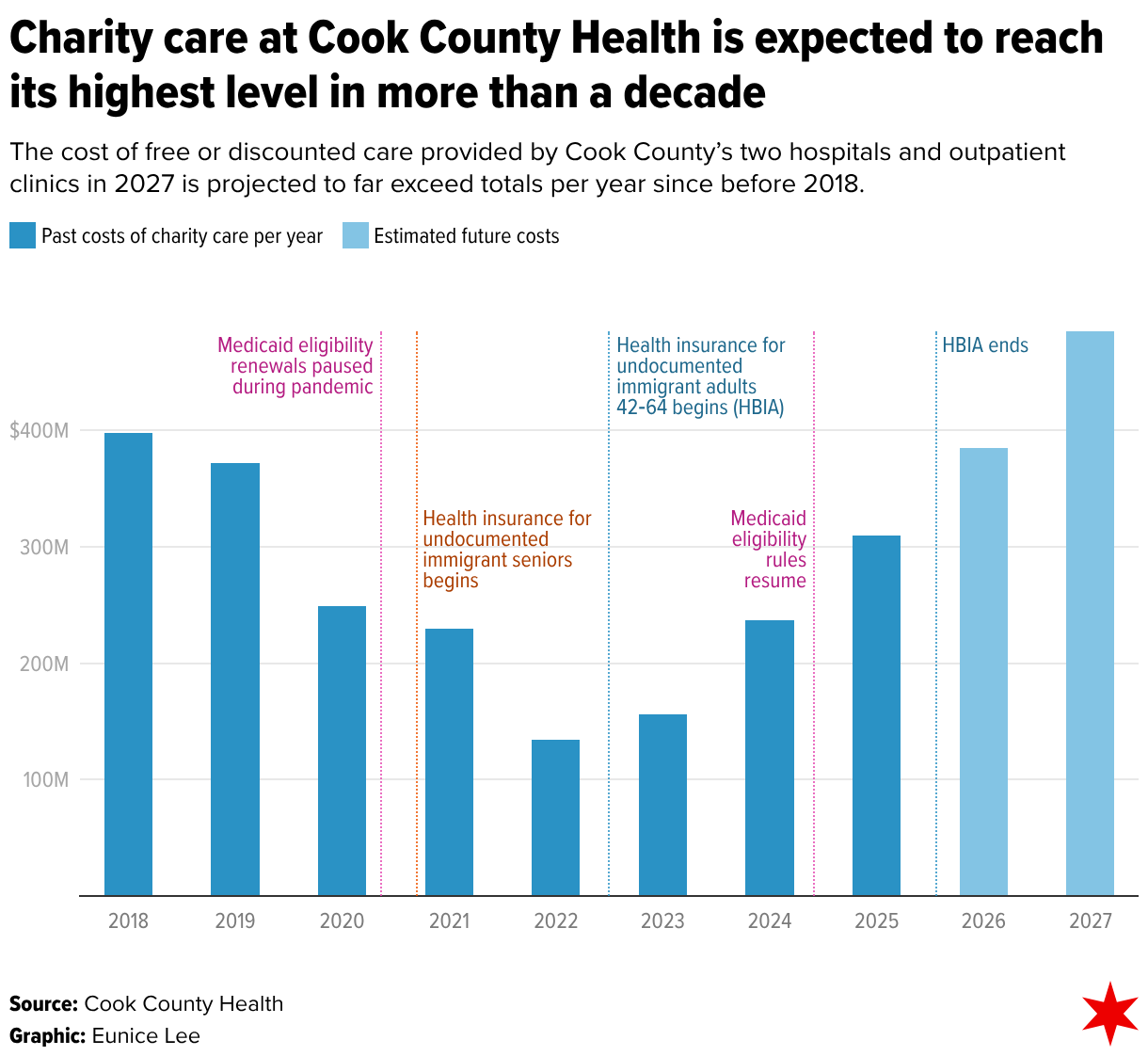
Cook County Health is one of the biggest public health systems in the nation. The estimated spike in charity care for low-income people is part of the health system’s preliminary $4.7 billion budget for 2027. It’s a slimmer budget by more than $400 million compared to this year. That’s partly from cutting costs to get ahead of not bringing in as much money, but also because the health system’s Medicaid health insurance plan, CountyCare, is expected to be smaller next year based on about 50,000 current members losing coverage.
Mikaitis is focused on making sure insurers pay the health system for all the treatment it bills for and helping low-income patients with Medicaid keep their coverage despite new roadblocks from Washington.
Next year, big cuts to Medicaid public health insurance for people who are poor or have disabilities take effect. New work requirements kick in as well as more frequent checks to make sure people qualify.
In Illinois, around 1 in 4 people have Medicaid. More than 400,000 people could lose coverage, and around half of them live in Cook County.
Mikaitis still plans to make some investments at Cook County Health, such as upgrading MRIs. There are no plans for layoffs or cuts to service for patients, but that depends on if the health system can receive $40 million from the county to close an estimated gap, Mikaitis said. Otherwise, around 150 people could be let go, as well as cuts to medical care and other programs that help patients, like research and housing assistance.
“We’ve essentially cut to the bone at this point,” he said.

A bigger question is how much the health system’s finances could affect the county’s overall bottom line and other services the county provides for all residents, from getting property tax bills on time to running the county’s vast court system and jail. The health system is one of the biggest pieces of the county’s overall budget.
A spokesperson for Cook County Board President Toni Preckwinkle said it’s too early to discuss.
“We’re working through the budget process, and we’re well aware of the financial challenges ahead,” spokesperson Cara Yi said.
The health system’s budget eventually becomes part of the overall county budget. Preckwinkle typically pitches her proposal to county commissioners in October, who must approve it. The new budget takes effect Dec. 1.
What’s happening at Cook County Health is likely to play out in communities across the U.S.
Besides Medicaid cuts, other people are dropping plans they bought on government health insurance exchanges they no longer can afford now that enhanced ACA subsidies have disappeared after Congress let them lapse last year.
The pressure compounds. Cuts to other government-funded programs like federal food assistance could lead to poorer health in a community, while other hospitals and clinics facing the same stress could cut back services or close — potentially sending more patients to the county.
“That’s going to have, I’m really concerned, a devastating impact on the current hospitals that are struggling,” Mikaitis said. “Those patients have to go somewhere, right?”
Two safety net hospitals in the Chicago area, which largely treat low-income patients like Cook County Health, shuttered in the last year. Others are on the bubble now, Mikaitis said, even before the Medicaid cuts start. In some cases these hospitals have received advances not just from the state but from CountyCare to help make ends meet.
All of these changes could affect people who never step inside a safety net hospital, Mikaitis said. They could see longer wait times, he predicts, and even their private insurance could get more expensive to help subsidize care for people who no longer have coverage.
Kristen Schorsch is a senior reporter covering public health at WBEZ.