
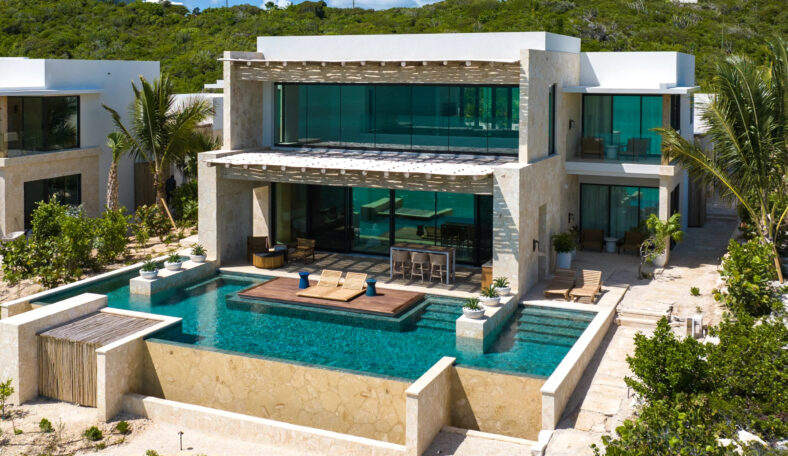
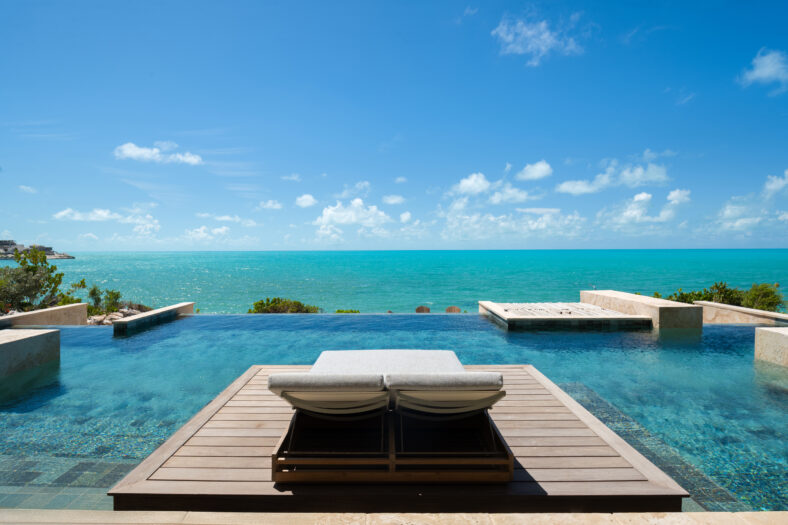
The Turks and Caicos islands have become one of the most talked-about and desirable destinations in the world, because it doesn’t just look pretty on Instagram – it’s a true tropical paradise with some of the world’s best beaches and five-star hotels. The newest and arguably most attractive of them isn’t in Grace Bay, the best known and most buzzed-about locale on the main island of Providenciales; rather, it commands 2,200 feet of shoreline on Cooper Jack Bay, on the southwest side of “Provo” as it’s known, which combines proximity with privacy in a highly appealing way.

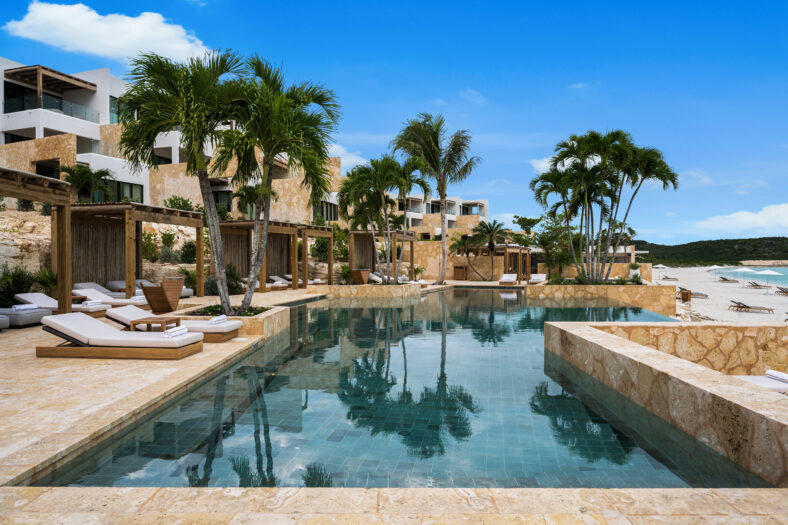
We’re talking about The Strand Turks and Caicos, a recently opened Leading Hotels of the World property on the south side of Providenciales, fronted by both coral stone formations and soft, white sand, with incredibly calm, clear, shallow water extending into the bay. In addition to some of the most luxurious rooms, suites and villas on the island, it is also home to an impressive real estate development.
John Fair, The Strand’s Managing Director, developer, and project manager, approached the site with a clear point of view. Fair is the visionary developer behind internationally renowned luxury resorts across Mexico, Turks and Caicos, and Hawaii, including the iconic Grace Bay Club in Turks and Caicos, and the Forbes Five-Star Esperanza Resort in Cabo San Lucas, Mexico.

“I thought, if I’m going to do another [resort], I’d like to do it in Turks and Caicos, because this island and country has been really good to me,” Fair tells Maxim. “But it was also because this has turned into a world-class, five-star destination, [but] I felt like on the residential and residential resort side, it wasn’t up to par.”

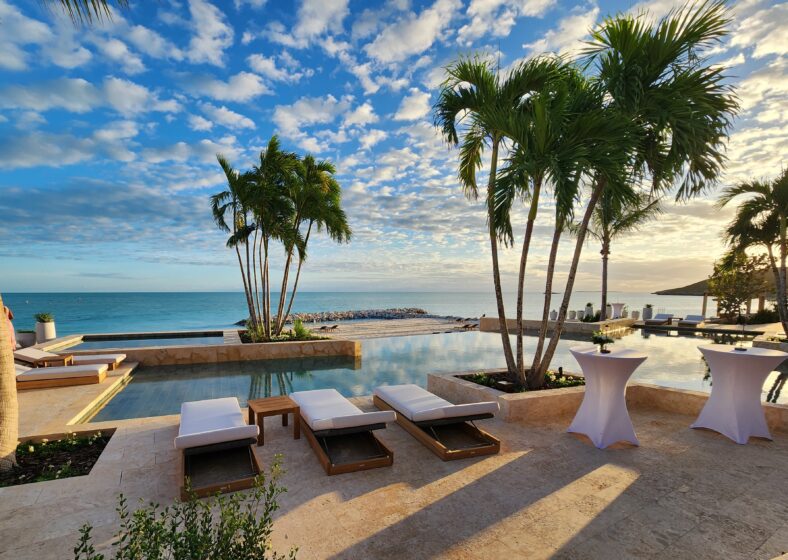
The gap he saw was not about demand. “It’s got the clientele of an Aspen or a Cabo or a Papagayo… but some of the offerings I didn’t think were quite up to the level of the very best places in North America,” he notes. The opportunity, as he saw it, was to build something that matched the tastes of the caliber of the top-tier travelers already coming to the island.

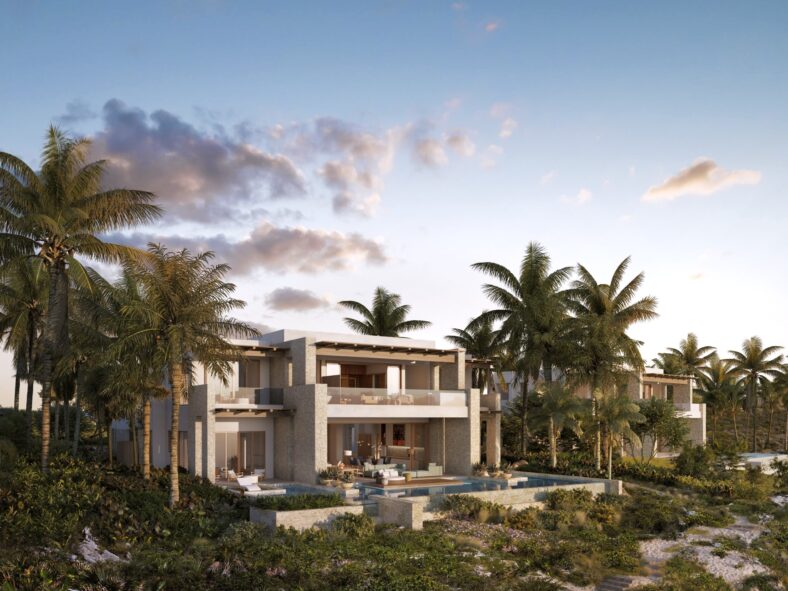
“Everything starts from the land and goes from there,” Fair says. The challenge was scale and frontage. “The trick was to find a piece of ground big enough, with enough frontage to be able to create a sense of place and almost a destination within a destination.” Very few people understood the atypical site’s potential, Fair adds, though he recognized it immediately and fended off other bidders with his usual resolve.
From there, he set out to create something as luxurious as the island’s most famous resorts, but with a unique aesthetic, designed to stand the test of time. “I wanted it to look beautiful now, but I wanted it to look even more beautiful 50 years from now,” Fair says. That thinking carries through to finishes—stone, plaster, wood—and to the way structures sit on the land rather than intrude upon it. Interior decor and furnishings, while contemporary, also speak to The Strand establishing a more enduring design and construction legacy.

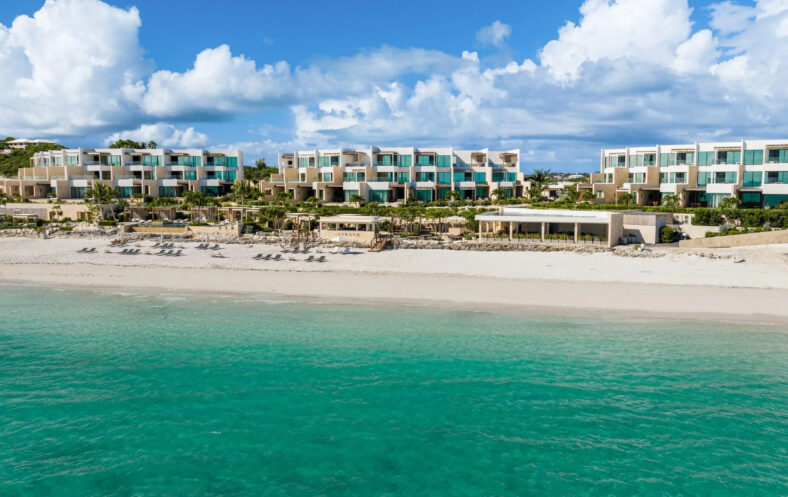
“Out of 160 bedrooms, every other bedroom is right on the water,” Fair points out. Instead of stacking rooms behind one another, the design prioritizes direct sightlines and proximity to the bay. The resort is structured as a residential community first, with suites, villas, and standalone homes ranging from one-bedroom units to six-bedroom estates. Ownership is part of the model, with homes available for purchase and placed into a rental program when not in use.
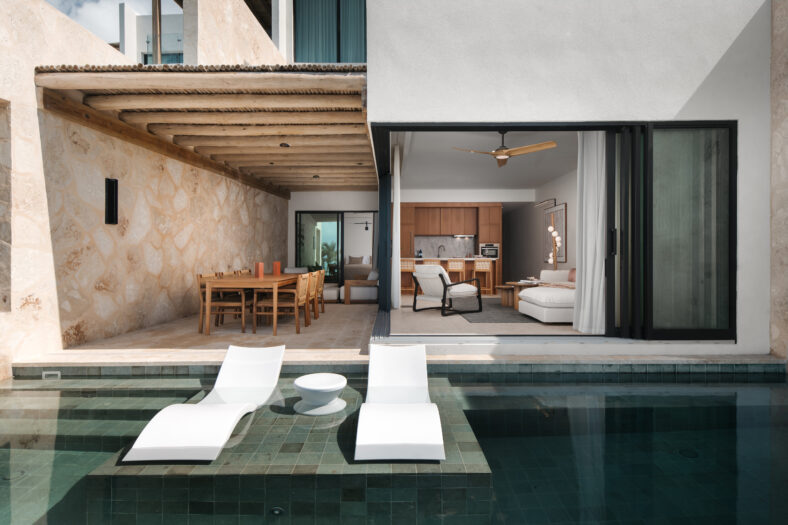
Expansion is already underway, particularly at the top end. Additional estates are being built, increasing the number of larger homes with direct frontage and private outdoor space. The idea is to “grow without changing the character of the place—keeping density low while adding inventory,” in contrast to more thickly settled parts of the island where space and privacy are difficult to find.
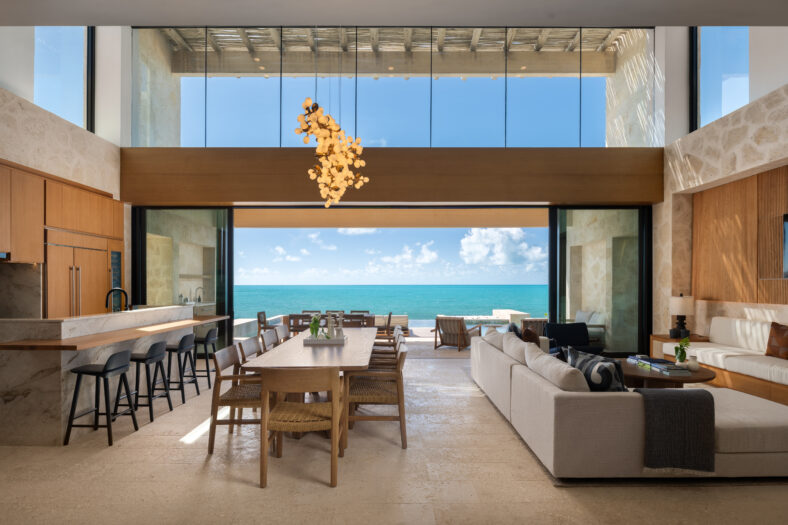
From the start, buyers responded. “We got the first $70 million of sales ourselves because we struck a chord with clientele who loved the idea of Turks and Caicos but had never been able to find what they were looking for,” Fair says. “Grace Bay is going to move towards being a Seven Mile Beach… it’s inevitable it’s going to re-densify,” he opines. By contrast, “We’re the end of the road and we control this beautiful bay.”
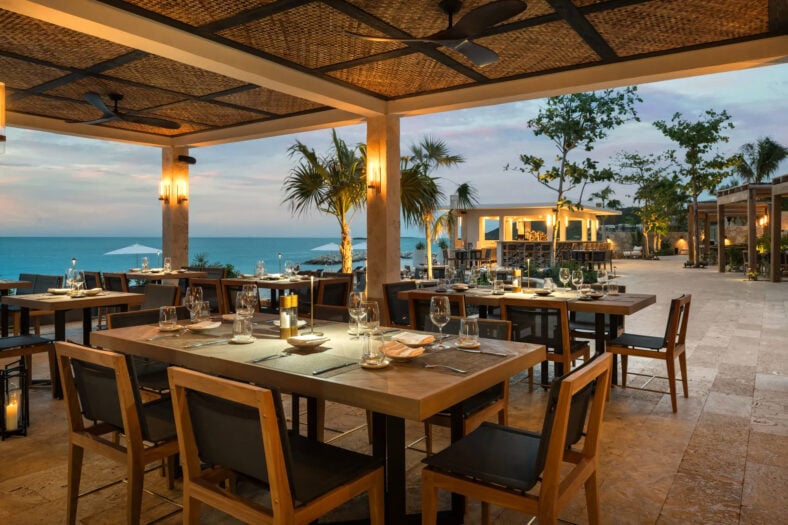
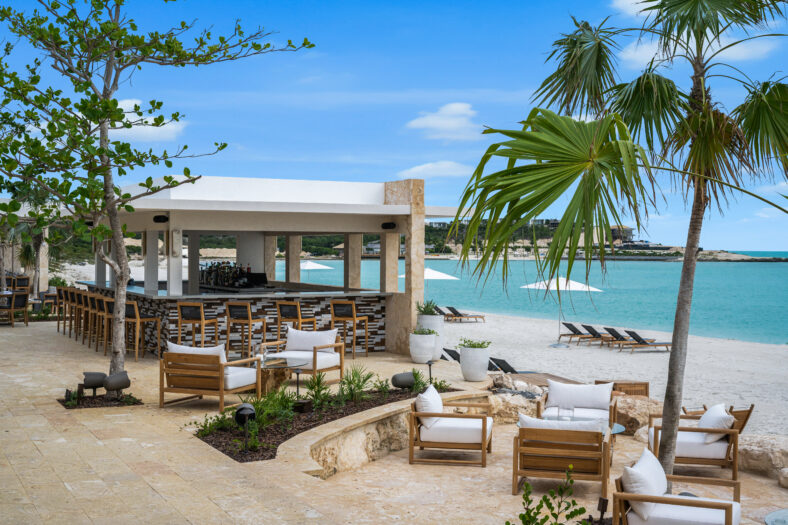
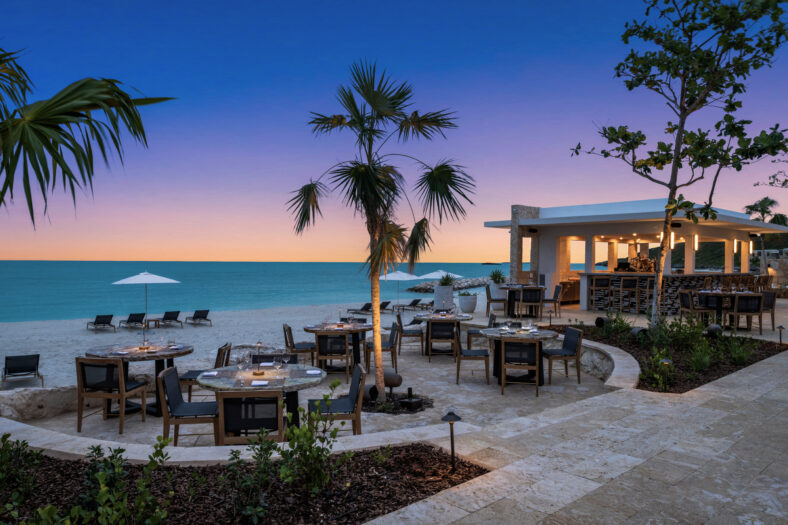
That sense of going above and beyond extends to the food and beverage program, which has become a draw in its own right. The picturesque DelMar Restaurant and Beach Club sits just above the waterline and centers around a wood-fired parrilla grill, turning out whole fish, steaks, and seafood. Fair calls it “the hottest restaurant in town… away from messy Grace Bay,” noting that guests come from across the island and even from nearby islands.
The kitchen is led by a talented Mexican chef Alvaro Zepeda, with a menu that pulls from various coastal cuisines and focuses on straightforward preparation over heavy presentation. The wine program is a special point of emphasis, and the operation is overseen by Elias Chavez Osorio, the property’s Food and Beverage Manager, who capably and graciously leads the team alongside chef Alvaro.

Leadership across the property has also evolved, with an accomplished new general manager, Randall Wilkie, stepping in as the resort continues to grow and refine operations. With the team of Wilkie, Zepeda and Osorio on site alongside Fair himself, who is building his own estate on the property, and thus is fully invested in all senses of the word, it is a well run, hands-on and exceptional property with a team to match.
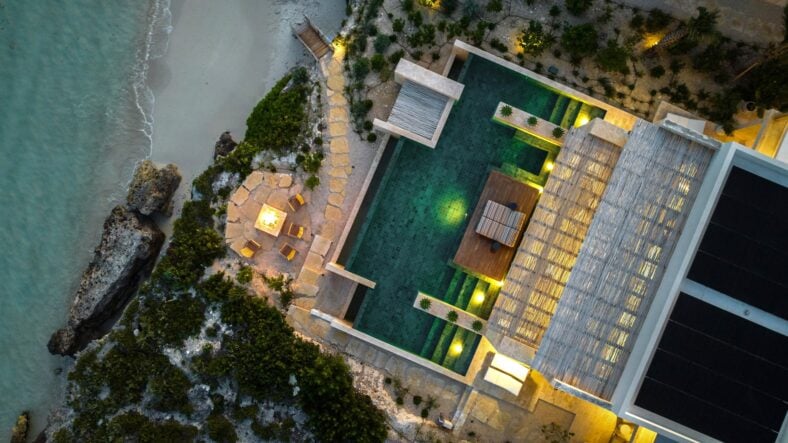
Sustainability is also an important feature of The Strand. The resort already generates more than 75 percent of its power through solar integration, with a goal of eventually producing its own energy entirely. The infrastructure includes solar panels, battery storage, and systems designed to reduce heat load and water use. Another initiative is the pollinator program, developed in partnership with the Butterfly Pavilion, aimed at establishing the property as a designated pollinator sanctuary—the first of its kind in the Caribbean.