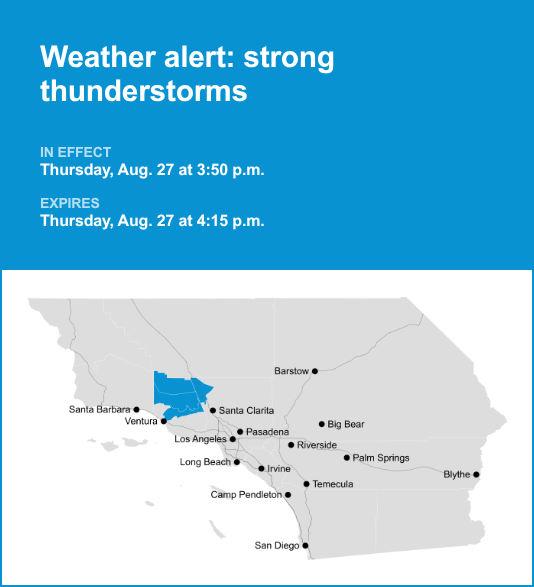
5 Freeway corridor near Santa Clarita, Central Ventura County Valleys, Southern Ventura County Mountains and Northern Ventura County Mountains are under a weather alert for strong thunderstorms by the National Weather Service on Thursday at 3:50 p.m. The alert is in effect until 4:15 p.m.
Residents may experience wind gusts of up to 40 mph.
“At 3:48 p.m., Doppler radar tracked a strong thunderstorm 18 miles north of Fillmore, moving north at 35 mph,” says the NWS Los Angeles/Oxnard CA. “Gusty winds could knock down tree limbs and blow around unsecured objects.”
Locations impacted by the alert include Fillmore, Pyramid Lake, Piru and Interstate 5 over the Grapevine.
According to the NWS, “If outdoors, consider seeking shelter inside a building. Strong winds may extend far away from rain and thunderstorms.”

Lightning on the horizon: Expert safety measures for thunderstorms
Each year, lightning strikes the United States approximately 25 million times, mostly during the summer. It claims the lives of about 20 people annually, according to the NWS. The threat of lightning becomes more pronounced as thunderstorms draw nearer, peaking when the storm is directly overhead and gradually waning as it moves away.
To protect yourself during a thunderstorm, take these recommendations into consideration:
Lightning safety plan:
- When venturing outdoors, it’s crucial to have a lightning safety plan in place.
- Monitor the sky for threatening signs and listen for the sound of thunder. If thunder is audible, it’s an indication that lightning is nearby.
- Seek shelter promptly in a safe location, preferably indoors.
Indoors safety measures:
- Once you’ve found shelter indoors, abstain from using corded phones, electrical appliances, or plumbing fixtures, and refrain from approaching windows and doors.
- These precautions help reduce the risk of electrical surges, as lightning can follow conductive pathways.
Wait for the all-clear:
- After the last lightning strike or thunderclap, wait at least 30 minutes before resuming outdoor activities.
- It’s important to remember that lightning can strike even when a storm seems to have passed, so exercise caution.
When indoor shelter isn’t available:
If you find yourself outdoors without access to indoor shelter during a thunderstorm, take these steps to maximize your safety:
- Avoid open fields, hilltops, or ridge crests, as they expose you to greater lightning risk.
- Steer clear of tall, isolated trees and other prominent objects. In wooded areas, stay close to lower stands of trees.
- If you’re in a group, ensure that individuals are spaced out to prevent lightning current from transferring between people.
- Camping in an open setting during a thunderstorm is strongly discouraged. If you have no alternative, set up camp in a valley, ravine, or other low-lying areas. It’s crucial to note that a tent provides no protection against lightning.
- Do not approach water bodies, wet objects, or metal items. While water and metal don’t attract lightning, they conduct electricity effectively and can pose significant risks.
In summary, when facing the threat of lightning, preparedness and vigilance are your best allies. By following these guidelines, you can significantly reduce the likelihood of lightning-related incidents and prioritize your safety.
Navigating rainy roads: Safety tips for wet weather
When heavy rain sets in, the risk of flooding and hazardous driving conditions rises. Whether it’s prolonged rainfall or rapid runoff, being prepared is essential. Here are some valuable safety tips from the NWS to ensure you stay safe in heavy rain:
Beware of swollen waterways:
During heavy rain, avoid parking or walking near culverts or drainage ditches, where swift-moving water can pose a serious risk.
Maintain safe driving distances:
Use the two-second rule to maintain a safe distance from the car in front of you and allow an extra two seconds in heavy rain.
Reduce speed and drive cautiously:
On wet roads, slowing down is paramount. Gradually ease off the accelerator and avoid abrupt braking to prevent skidding.
Choose your lane wisely:
Stick to the middle lanes to minimize the risk of hydroplaning. Outer lanes are more prone to accumulating water.
Visibility matters:
Enhance your visibility in heavy rain by turning on your headlights. Watch out for vehicles in blind spots, as rain-smeared windows can obscure them.
Watch out for slippery roads:
The initial half-hour of rain is when roads are slickest due to a mixture of rain, grime, and oil. Exercise heightened caution during this period.
Keep a safe distance from large vehicles:
Don’t follow large trucks or buses too closely. The spray created by their large tires reduces your vision. Take care when passing them as well; if you must pass, do so with caution.
Mind your windshield wipers:
Overloaded wiper blades can hinder visibility. If rain severely impairs your vision, pull over and wait for conditions to improve. Seek refuge at rest areas or sheltered spots.
When stopping by the roadside is your only option, position your vehicle as far off the road as possible, ideally beyond guardrails. Keep your headlights on and activate emergency flashers to alert other drivers of your position.
In the face of heavy rain, these precautions can make a significant difference in ensuring your safety on the road. Remember to stay informed about weather conditions and heed guidance from local authorities for a secure journey.
For more local weather alerts, visit our Weather Advisory page