The Cool Kids were raised on rap. “Hi Top Fade,” the new album from the Chicago-rooted hip-hop duo, pays homage to the genre’s origins by incorporating classic hip-hop elements: scratches, breaks and reversing beats.
“Having that energy in it is what made it fun in the first place,” said Chuck Inglish, one-half of the duo.
Inglish connected with Sir Michael Rocks, the other half of the Cool Kids, on MySpace in 2005. In the two decades since, they’ve released seven studio albums and collaborated with such artists as Freddie Gibbs, Mac Miller, Larry June, Chance the Rapper and Lil Wayne. They also started their own independent label, C.A.K.E. Recordings.
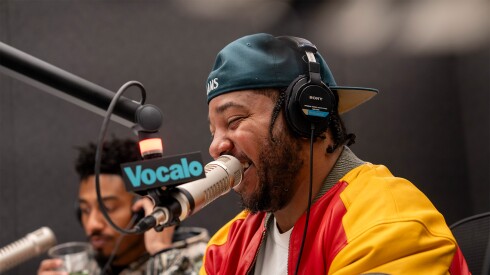
“Hi Top Fade,” their new album this year, is their first album in three years and features artists including A-Trak, Sango and Pink Siifu. The duo has launched a tour in support of the album — it stops at the Empty Bottle on Dec. 19. They stopped by Vocalo’s studios before leaving on tour to talk about engaging with audiences again and how they use classic hip-hop “recipes” in their music. This interview has been edited for length and clarity.
Nudia Hernandez: You guys just released this new album, “Hi Top Fade,” your first album in three years. What was it like releasing an album again?
Sir Michael Rocks: Man, it’s always a good feeling to put some work out into the world again and get that response, that real life feedback from the listeners. This one was special because, musically, we were able to really dial into the formula that made us love this and brought us together as a group in the first place. We took a lot of stock in what we wanted this to sound like and what we wanted it to look and feel like. So, to get it out into the world and get that response back, that’s always just an amazing feeling.

I really love that you started the album with “95 South.” How did that come together? I really love how you can hear DJ scratches in the background.
Chuck Inglish: You get a lot of people that don’t necessarily respect rap or the elements of hip-hop, or they’ll be like, “I’m not a rapper.” Or, “No, this is just music.” Nah, bro. We make rap. Rap is what I heard as a child that made me who I was. There’s no running from that. I could tag, I could write. I’m not about to break dance, I got a plate in my ankle.
The rappers I came up being a fan of, from Eric B. and Rakim to even Capone-N-Noreaga, the album covers were like comic books. So when we get an opportunity to make our comic book, it’s not like we’re gonna use a different pen. The scratches, the breaks. You can expand on certain things, but I love the recipes that come with it, so I’m gonna sprinkle it in when I can: Sending beats back in reverse, DJ scratch-stops. Having that energy in it is what made it fun in the first place.
People forget it started as fun. Rap was not the struggle, it was a block party. If you know your history, it’s like, why deviate from that? That song being something that I feel like could get the party started, why not add the elements to it?

You put together this great body work, now you’ve got to take it on the road. How does the tour come together? Do you guys pick how many stops, how many cities?
Rocks: The touring world has taken a lot of shifts over the past 10 to 15 years. I think that now the important part of touring is to find places and regions, areas, cities that really, really rock with you and are really supportive of you. I think that’s more important than taking 50 states by storm and hitting a new city every night doing shows. I don’t think we’re in that touring environment anymore, and I think that you’ll get way more benefit by hyperfocusing on the spots that are really receptive to you.
It’s just a different landscape right now; it’s not always smart to try to do 100 dates back-to-back-to-back and see what happens. It’s way smarter to find the places that you’ve had some good reception at, or you’re curious about, and hit those spots. Show them love, show that support and show that enthusiasm back to them, and they’ll reflect that toward you.
Inglish: You used to be able to kind of audition in different states, and people would discover you. There’s not too much discovery in touring right now, people aren’t just going to shows of bands they heard of and wanted to check out.
Now, you’ve got to focus on where your motion is and then build off of that. That’s the best way to go about it, so that’s how we pick which dates we’re doing. We’re doing them like TV show seasons — what we do in New York or these cities we won’t do in other cities. So it’s not like you’re selling everybody the same thing.
You’re ending your tour Dec. 19 at the Empty Bottle here in Chicago. What could people expect from these shows?
Rocks: This season, our main focus, of course, is “Hi Top Fade” and premiering a lot of that stuff live for the first time. We haven’t performed any of that stuff really yet, so it’ll be a big focus of ours. We’ve actually got some records from our mixtape “Gone Fishing” that we want to bring back out as well, because we’re going to celebrate an anniversary of that this year.
You now have your own record label; you founded C.A.K.E. Recordings. You’ve said in the past that the industry can take advantage of younger artists with contracts. What would your advice be to young artists when getting approached by record labels?
Inglish: Read. Just read. I don’t say that vaguely. If you don’t read and you don’t investigate on your own, then you’re going to go off word of mouth of somebody else, and that might not be in your best interest. Figure out what’s specific for you, especially in these times.
It’s way easier for you to put your music out on your own and spread it around how it gets spread around – it’s the same thing they’re doing in these buildings. There’s no differentiation, besides PR and money spent, but good music rises to the top. I would say, just trust your gut.