Wheat has always been the quiet hand of the American whiskey world. While rye gets credit for pepper fire and corn for toffee and vanilla sweetness, wheat does something both more subtle and more seductive: it softens. It rounds. It lets the barrel speak, and echoes its tone. And after centuries of playing second fiddle, it’s finally getting its chance at the top of the marquee.
The story starts early. William Larue Weller swapped wheat for rye as far back as 1849, and the tradition carried forward through brands like Maker’s Mark, which famously torched its ancestral recipe in 1953 to build a wheated bourbon from scratch. But wheat whiskey—where wheat itself claims top billing in the mash bill—barely existed in modern form until Heaven Hill essentially invented the contemporary category with Bernheim back in 2005, the first new style of American whiskey since Prohibition. For two decades, that category grew patiently, convert by convert.
Today the pace quickens, with distillers big and small responding. See some recent craft distillers like Laws, Middle West, Five Points Distilling and even Maker’s Mark, under their Star Hill Farm label, have made wheat whiskeys a core aspect of their portfolios. Meanwhile cult demand for wheated bourbons like Maker’s Mark, Weller and Pappy Van Winkle stirred mainstream appetite for anything wheat-forward—see Heaven Hill’s recent extension of their Weller family, Daniel Weller, which uses spelt wheat for its second grain, or Garrison Brother’s wheated experiment with honey and cognac oak.
Which explains the timing of this Spirit Of The Week roundup: four more noteworthy wheat-driven releases have recently landed almost simultaneously, making a strong collective case for the grain’s versatility. Maker’s Mark 2026 Wood Finishing Series: The Stewards Release honors the Loretto distillery’s operations teams through a wood-stave-finished wheated bourbon, arriving in two cask-strength batches. Chicken Cock Wheated Bourbon marks a historic pivot for the 168-year-old brand, introducing its very first wheated mash bill. Bernheim 20th Anniversary Wheat Whiskey commemorates two decades of the spirit that launched a category, bottled at a robust 115 proof. And Remus Master Distiller Experimental Series No. 2 pushes boldest of all—a port-and-sherry-finished 95% wheat whiskey that signals just how adventurous this grain can get.
Maker’s Mark 2026 Wood Finishing Series: The Stewards Wheated Bourbon

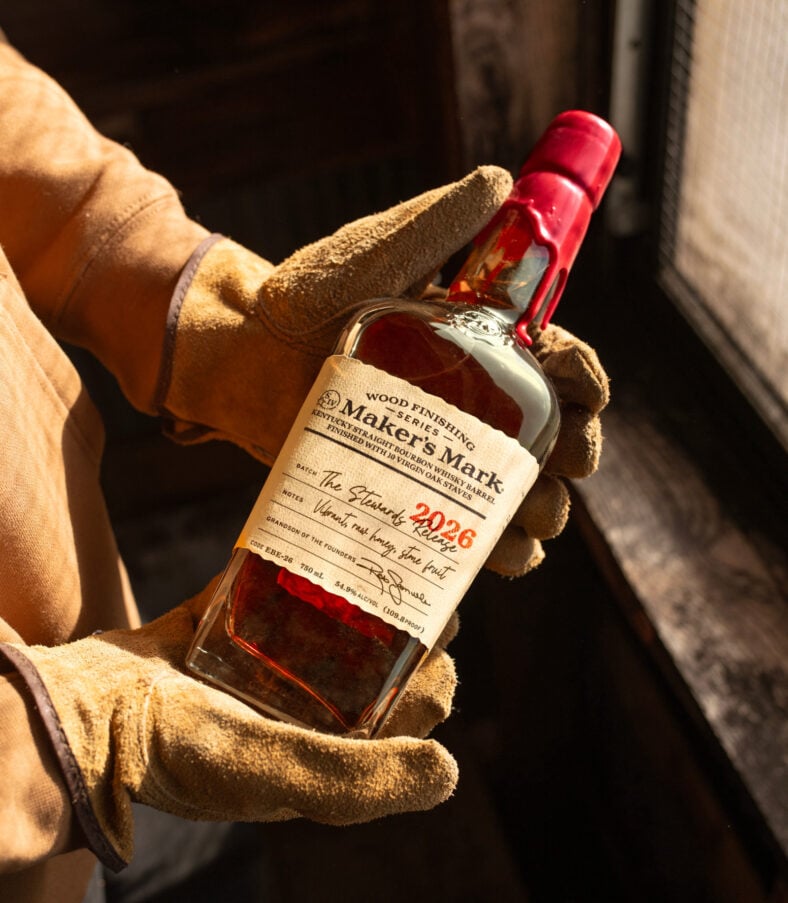
Since the Samuels family founded Maker’s Mark in 1953 the brand has always stood for focused simplicity and quality consistency. And for 50+ years making only one singular expression: Maker’s Mark classic. What made it unique from day one was Bill Samuels’ genius idea to swap soft red winter wheat in place of the more commonly used rye, softening the black pepper bite for a more rounded sweetness. Add using only one proprietary yeast strain for greater control of the mash, and that’s how things went in Loretto, Kentucky for over a half-century. It is no hyperbole to suggest Maker’s Mark, along with Weller, are the two most important artisans in wheated bourbon, together carving out what is now a standalone pillar of American whiskey.
That ‘one single spirit’ ethos remained etched in stone until Bill’s son, Bill Jr., created Maker’s Mark 46 in 2010—the distillery’s first alternate to the beloved, classic Maker’s Mark. But fret not, they would never change the wheat-forward recipe, signature yeast, or integrity of oak. So before developing Maker’s Mark 46, Bill Samuels, Jr. created strict guardrails for all future innovation: “You cannot change the mash bill, the distillation, or the original barrel,” Master Distiller Blake Layfield tells Maxim of the self-imposed limitations the family continues to craft under.
“At Maker’s Mark, we believe bourbon is an agricultural product, and a universe of flavor can be unlocked using only the core elements. Because of that, we have a strict rule: we never ‘borrow’ flavor from external sources; you won’t find port, cognac, or wine casks in our rickhouses. Every note must originate right here at the distillery.”
There are still ways to continue to evolve, however, even with these (some might argue constricting) parameters. It can be as simple as adding an age statement to their Cask Strength expression—or be significantly more complicated. For the brand’s exceptional Wood Finishing Series, for instance, instead of using second casks to ‘finish’ their bourbon—as most brand’s would—they looked toward the wine industry, pioneering a technique inserting virgin French oak staves, seared to different levels, into fully matured bourbon for nine weeks, stored in cool temperatures. “We can then amplify specific flavors, like rich caramel and soft spice with surgical precision,” reveals Layfield, who as a Ph.D. is also Head of Innovation and Blending. “This became our innovation DNA. It ensures every bit of flavor comes strictly from nature—water, oak, yeast, grain and time—without the interference of secondary casks or external additives.”
Launched in 2019 and grouped into five-year themes, the Wood Finishing Series continues to prove itself as one of Maker’s Mark’s most innovative branches. “We view the Wood Finishing Series as a multi-year roadmap into the soul of our bourbon,” Layfield states. The first five-year block explored the ‘Science of the Spirit.’ Launching in 2019, these highly nerdy expressions dove deep into details like the fatty acid esters in their proprietary heritage yeast, or celebrated Maker’s expensive decision to barrel their bourbon at 110-barrel entry proof.

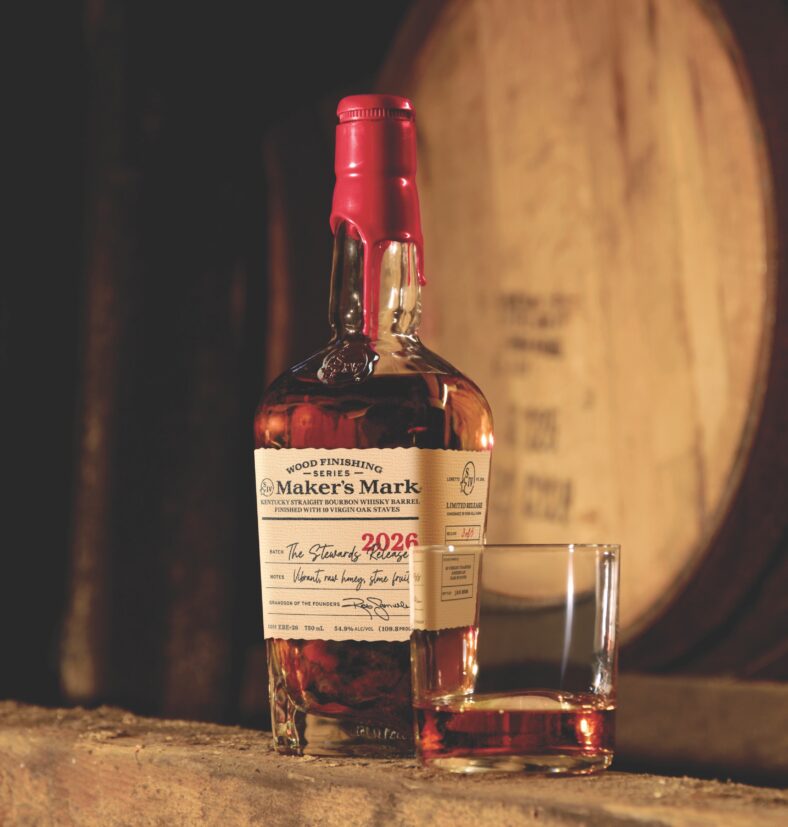
“Now, we have shifted from the process to the people—honoring the stillhouse team with the Heart Release (2024), followed by our barrel warehouse crew with the Keepers Release (2025). This Stewards Release (2026) is the natural evolution of that story, recognizing the broader community that protects our quality every day.”
The Stewards Release marks the midpoint of a five-year journey, as we can expect two more editions of The Wood Finishing Series honoring the human beings behind Maker’s Mark before they move on to another theme. A truly unique, ultimately expressive arm of wheated bourbon that will never be tasted again—making its $75 SRP a value.
“What strikes me first of The Stewards is the vibrancy of the aroma—it doesn’t just sit in the glass, it pops. There’s a brightness there that sets the stage for a really beautiful harmony of flavors. While you’ll find that classic Maker’s citrusy cherry note, the Stewards Release dials up a distinct toasted marshmallow character that I personally love,” Dr. Layfield concludes. “Honestly as the weather warms up, this might be the perfect bourbon for Spring and Summer cookouts.”
“Honestly as the weather warms up, this might be the perfect bourbon for Spring and Summer cookouts.”
Maker’s Mark Master Distiller Blake Layfield
Chicken Cock Wheated Kentucky Straight Bourbon

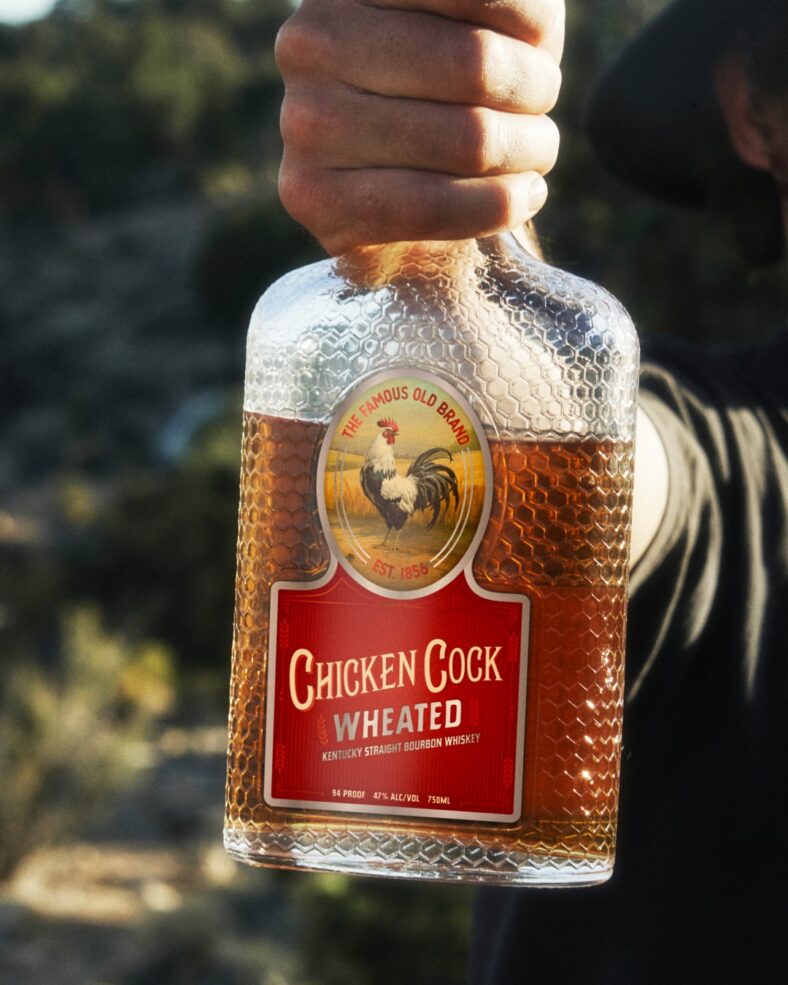
Among a spate of historic, dead labels resurrected during the recent American Whiskey Boom, Chicken Cock taps its ancient legacy in both story and juice. Originally founded in 1856, faded into obscurity in the 1950s, then resurrected in 2012, Chicken Cock came reborn out of the gate with a slew of well-sourced bourbons. A couple years later they started producing their own high-rye bourbon mash bill (70% corn / 21% rye / 9% malted barley) at the Bardstown Bourbon Company.
However this past February they aimed to rewrite their own playbook. The release of Chicken Cock Wheated Kentucky Straight Bourbon marks their first-ever wheated expression, a softer evolution of a brand long associated with rye-forward character. Replacing the brand’s Small Batch bourbon in the core lineup, the new wheated expression signals both a shift and a statement. Its mash bill—68% corn, 20% wheat, and 12% malted barley—leans into a smoother, rounder profile, dialing back the spice. Aged for a minimum of five years in level 4 char American white oak and bottled at 47% ABV (94 proof), Chicken Cock Wheated Bourbon strikes a balance between easy drinkability and layered complexity.
On the nose and palate, the whiskey reveals notes of cordial cherries and caramel sweetness, followed by nostalgic hints of cream soda that develops richer elements like baked dough, brown sugar, and dried fruit. This release opens the Chicken Cock door to a broader audience while maintaining the strong backbone bourbon enthusiasts expect. Priced at $55, Chicken Cock Wheated Bourbon also arrives as an accessible addition to the whiskey shelf.
Bernheim Original Kentucky Straight Wheat Whiskey 20th Anniversary

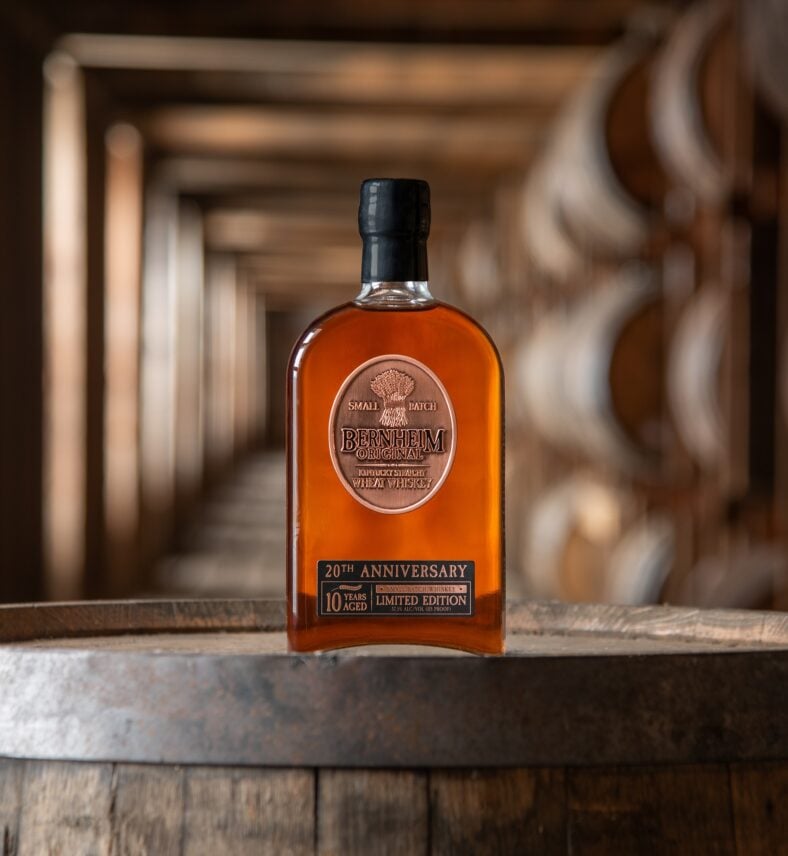
If we’re going to highlight American wheat whiskey, the conversation needs to begin with Bernheim. Or really Heaven Hill Distillery, which launched the the daring label in 2005, bucking the about-to-explode categories of bourbon and rye with the country’s first whiskey where soft winter wheat carried the heaviest load in the grain recipe (51% wheat / 37% corn / 12% malted barley).
Two decades after redefining American whiskey, Heaven Hill raises a tumbler to this innovation with the release of Bernheim Original Kentucky Straight Wheat Whiskey 20th Anniversary—a limited edition bottling honoring both their gutsy past and thriving present. What was once a gamble has since evolved into a cornerstone in the broader American whiskey renaissance, helping expand palates and redefine expectations for passionate #whiskeyheads worldwide.
The 20th Anniversary expression carefully curates a blend of 10-year-old barrels, distilled at Heaven Hill’s historic Bernheim Distillery, aged for a decade in Bardstown rickhouses, and bottled at a robust 115 proof. Aromatically, Bernheim 20th Anniversary opens with warming notes of cinnamon and baking spice, underscored by the soft vanilla and seasoned oak. On the palate, the whiskey unfolds with subtle layers of molasses and butterscotch sweetness winter wheat is known for, before giving way to a gently spiced finish that lingers with a bit of heat. Offering maturity and depth, the 20th Anniversary juice feels both classic and distinctly Bernheim.
“When we launched Bernheim Wheat Whiskey 20 years ago, we took a chance on a new mashbill and a new idea,” says Heaven Hill’s Executive Chairman Max L. Shapira, “The support we received in those early days helped shape not only this brand, but the expansion in popularity of different styles of American Whiskey we continue to see today.” Pick up Bernheim Original Kentucky Straight Wheat Whiskey 20th Anniversary for $85.
Remus Master Distiller Experimental Series No. 2 Wheat Whiskey

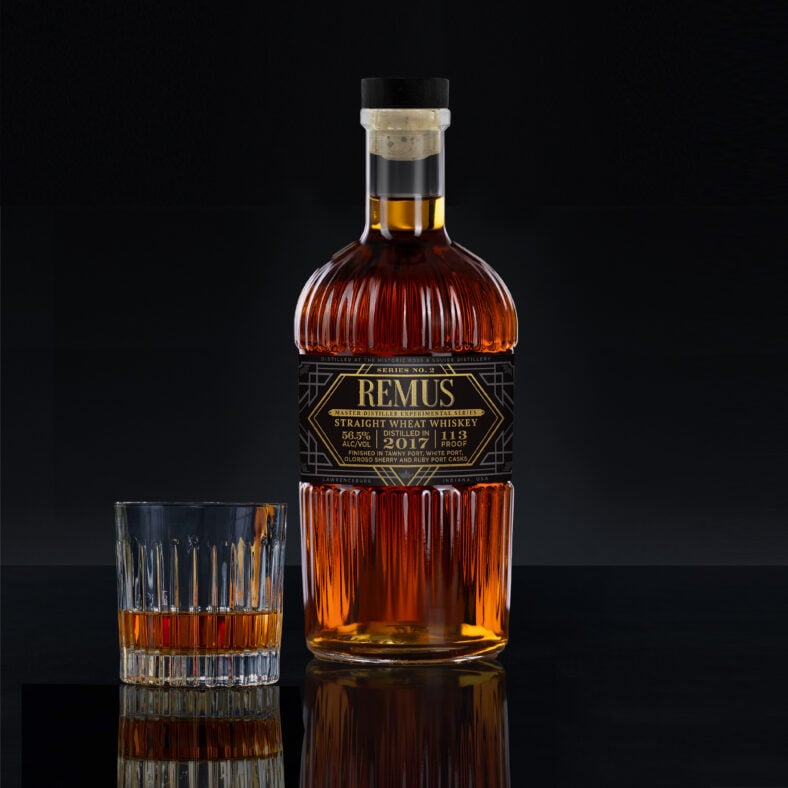
Not a household name for consumers, Indiana’s industrial MGP (Midwest Grain Products) produces much of the white label spirits used by “craft” brands across America (e.g. Angel’s Envy, Bulleit, High West, Templeton, WhistlePig, Blue Run, etc.). In 2021 they rebranded their historic Lawrenceburg distillery to Ross & Squibb, and shifted greater attention to developing some of their own labels—their high-rye bourbon Remus case in point. Their inaugural Remus Master Distiller Experimental Series won Gold at the 2025 San Francisco World Spirits Competition, but the followup pivots away from bourbon to a wheat whiskey distilled in 2017, finished in a quartet of fortified wine casks.
“I think the really interesting thing about this year’s Experimental Series is it’s a mash bill that most people haven’t seen from us,” Master Distiller Ian Stirsman told us over Zoom. “And we’ve never really done any cask finishing.” He estimates the ratio of the finished wheat whiskey to be about 75% Ruby Port and Oloroso Sherry, with the remaining 25% Tawny and White Port— the latter being the smallest of the quartet, yet it delivers subtle grape notes he finds critical to the final blend. “Our whiskey has been cask finished a lot by our customers, but we haven’t done any ourselves up to this point.”
Stirsman shares how the light nature of their wheat whiskey takes on the nuanced finishes of second casking well—especially compared to the bold backbone of their high-rye bourbons, which are harder to influence. He shares notes of dried red berries, dark chocolate and honeyed malt, with a long fruit-and-nut finish. “I think the palate is really dominated by the cask finishes, but the cask finishes aren’t overpowering.”
The potent Remus Master Distiller Experimental Series No. 2 comes bottled at 56.5% ABV (113-proof), with a SRP of $70. Stirsman advised us to not expect many more wheat whiskey offerings from Remus, however, regardless of their new Experimental Series. “The Remus label shows off the best of our high rye bourbons,” the Master Distiller clarified. “I don’t know that you’ll see a straight wheat whiskey as an everyday shelf item from us anytime soon.”
Follow Deputy Editor Nicolas Stecher’s travel, spirits and automotive adventures on Instagram at @nickstecher and @boozeoftheday.