$9 billion.
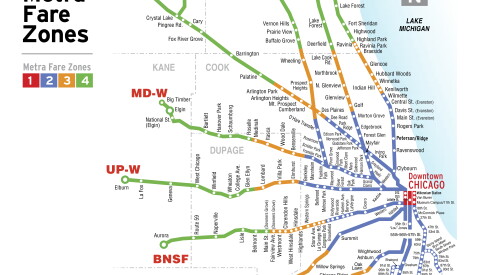
That’s the estimated cost of Metra’s ambitious long-term plan to run trains every 15-30 minutes and, for the first time, connect the south and west suburbs directly to O’Hare Airport.
Metra on Wednesday unveiled its draft Systemwide Network Plan to convert its 11 commuter rail lines into all-day frequent “regional rail” on par with the world’s best transit systems.
The plan entails:
- Creating crosstown Metra service by running tracks through the center of Union Station.
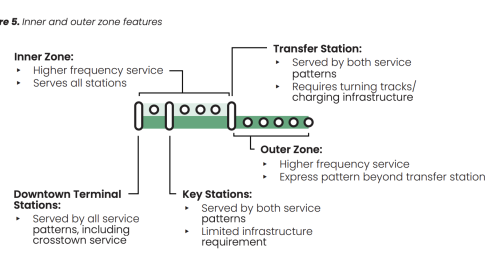
- More frequent service on “inner zones”, and express service on “outer zones” on certain lines.
- Expanding its rail yards and battery-powered fleet.
But getting there requires more money for improved infrastructure and quicker trains.
The 60-page draft report makes clear the cash isn’t currently available. Much of the extra $1.5 billion coming from the Northern Illinois Transit Authority Act will cover daily operations, not new infrastructure like tracks and trains. And federal funding has slowed to a trickle, even though much of it was part of the Biden administration’s transit law. The $9 billion price tag is 18 times greater than the $500 million Metra budgeted this year for infrastructure and trains.
The plan isn’t all dream thinking.
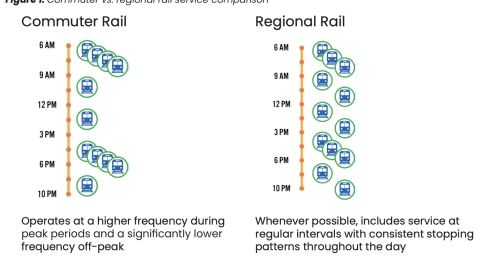
The first phase of Metra’s two-part plan can be attained with little additional investment, according to the report. By adding more frequent service on the current lines, Metra could get trains running every 30-60 minutes with few changes to tracks or new trains.
Metra could get there by dividing some train service into “inner” and “outer” zones, depending on their distance from the Loop. Inner zone trains would turn back before reaching the end of the line. Outer zone trains would run express closer to downtown, occasionally stopping at some inner zone stops. The overall effect is more frequent service in more heavily used areas close to the Loop, and quicker service from more distant areas.
The first phase plan also includes getting train service from downtown to O’Hare every 30 minutes. Metra leaders have explained previously this is difficult because the line is shared with a freight railroad. A privately-funded venture, the O’Hare Flyer, is trying their own route to the airport on different freight tracks.
Part two of the plan is more ambitious and requires billions more dollars.
It would get Metra trains running every 15-30 minutes, as opposed to the current system of hourly off-peak trains, and provide direct crosstown trips. That’s a paradigm shift from the current Metra system where every line ends just outside of the Loop.
The plan estimates a $610 million price tag to improve Union Station to allow trains to run through it. If that happened, someone in Aurora could take the BNSF line through downtown all the way to O’Hare, according to the plan.
The plan even considers running the Rock Island Line through Union Station from its current terminus at LaSalle Street Station. Doing so would provide a direct route from the south suburbs to O’Hare.
Getting trains to run every 15-30 minutes would require extensive upgrades to tracks and rail yards. Metra would need many more smaller, faster battery-powered trains, like the one Metra unveiled this month.
The plan’s “clear vision” for more frequent trains and crosstown service impressed Joseph Schwieterman, director of DePaul University’s Chaddick Institute for Metropolitan Development.
“Up to now, planning about that has been pretty vague. [This plan] identifies particular routes best suited for crosstown service,” he said.
The plan appears to be the first in which Metra seriously considers running trains through Union Station. The station currently has tracks on its north and south sides, but they don’t connect. The most similar previous plan is the West Loop Transportation Center, which envisioned a tunnel under Canal Street to connect Union Station to the CTA Blue Line, Schwieterman said.
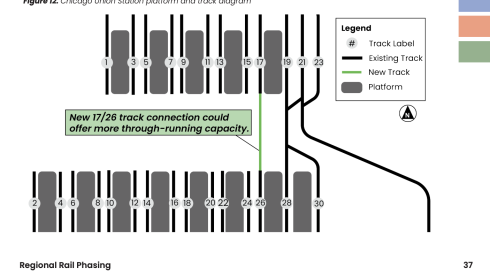
Metra’s new plan, however, acknowledges Union Station’s complexity and provides a detailed plan starting with just one through-track.
“It would start small but puts us on a path from having a more hub and spoke plan,” Schwieterman said.
The report acknowledges challenges. Metra does not own many of its rail lines, and must negotiate with freight railroads that do. Most of Metra’s rail yards are also operating at capacity, with little room to grow. Union Station, which would need a major overhaul, is owned by Amtrak, which also shares tracks with Metra.
Metra began studying the potential move to regional rail in 2023 as a response to changing ridership habits post COVID-19 pandemic. Its $9 billion price tag is not much more than the ongoing $5.7 billion Red Line Extension.
“The plan emphasizes solutions that can be achieved within Metra’s existing footprint, largely avoiding costly investments,” Metra spokesman Michael Gillis said in an email.
The agency has already made small moves toward more frequent, regional service. Metra increased the number of weekend trains on the BNSF and UP-North lines, and saw a 30-40% bump in ridership during those times.