There’s a new British documentary airing on the BBC tonight called What’s the Monarchy For? An interesting moment for the BBC to air a documentary questioning the purpose of a monarchy in the modern world, not to mention platforming criticisms of the Windsors as out-of-touch and unpopular. The documentary was organized by historian David Dimbleby, whose main thesis seems to be that Scooter King William is the monarchy’s last hope, and that William will need to make widespread changes when his father passes. Personally, I think all of these people are going to be in for a rude awakening when it comes to William’s ideas about “changing the monarchy.” His changes will be: taking away his brother’s titles, refusing to wear robes or participate in royal ceremonies, and tweeting his support for major occasions rather than showing up in person. Still, Dimbleby has some thoughts:
Public approval in the monarchy is in decline. When asked how important it was to continue having a monarchy, as part of the first British Social Attitudes survey back in 1983, 86% of people said it was “very important” or “quite important”. In last year’s survey, just 51% of people answered the same. The proportion of young people approving of the monarchy is lower still.
Scandals: Plenty of people might be quick to put the most recent threat to those bonds down to scandal. There is no love lost between Andrew Mountbatten-Windsor, as he is now known, and the British public. Only 4% of people had a “positive” view of him in a YouGov poll in October (the same month he was stripped of his titles), followed by the Duke and Duchess of Sussex, with ratings of 30% and 21% respectively. Yet no-one I spoke to while making these films pointed to any one individual as the sole reason for the current standing of the monarchy in the eyes of the public.
The real challenge for the monarchy is public support: “They thrive on the oxygen of public support”. It is, ultimately, the key to their survival. Prof Whitelock takes this a step further. “The Royal family is a brand,” she explains. “There is always a sense of needing to keep the brand popular.”
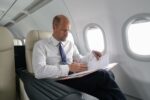
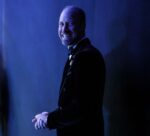
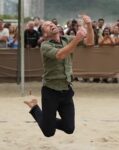
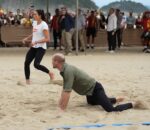
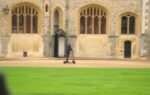
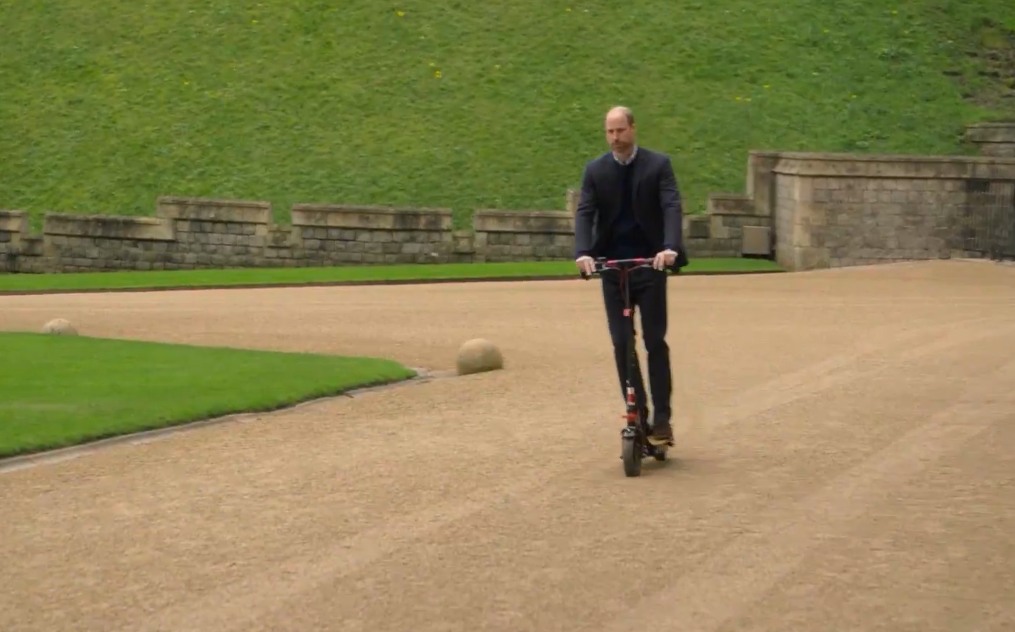
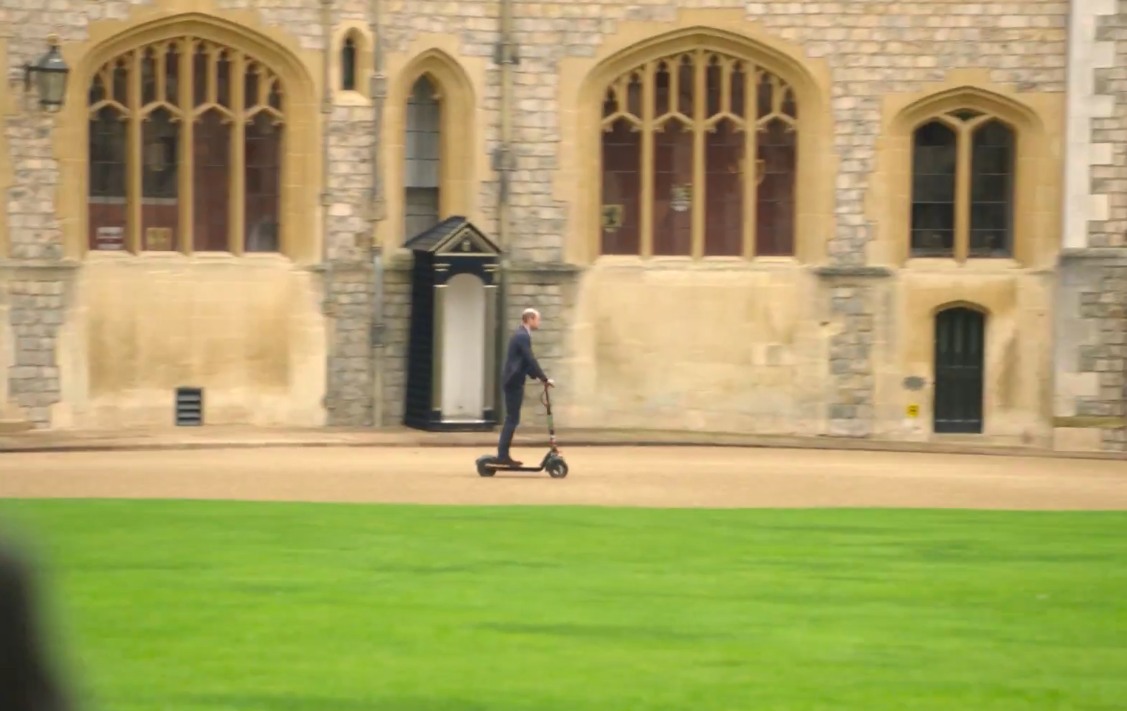
The Ordinary Joe/Scooter King: Recently, Prince William joined forces with Canadian actor and comedian Eugene Levy for an episode of his travel comedy series that aired last month. Mr Levy appeared particularly amused to see his entrance – zipping around Windsor Castle on an e-scooter. A bright idea – the image getting across is that William is just an ordinary Joe.
The Waleses’ social media: British “adman” Rory Sutherland, who has spent 37 years in the heart of the advertising world, currently as vice-chairman of Ogilvy, fully approves of the Waleses’ approach to striking a more modern tone. “I think he’s walked the line, which is a very narrow line between modernity and kind of absurdity extremely well,” he says of Prince William. “It is a very delicate path to tread.”
More changes need to happen though: Prof Whitelock, though positive about Prince William and his fellow senior Royals’ attempts to seem more accessible, is less sure about whether that is enough to modernise the institution as a whole. “If the monarchy is really to modernise in a significant way, we need to see much more transparency, much more accountability,” she argues.
Royals should pay taxes: In talking to people as research for my documentary, there seem to me to be other factors, which are potential stumbling blocks to fuller public support. First, the fact that the monarch is not legally obliged to pay income tax or capital gains tax on his personal income, because the relevant laws do not apply to the Crown, and only does so voluntarily – and that he was not legally obliged to pay inheritance tax after the death of his mother. “I think the best way to make those concessions is voluntarily rather than under duress. It’s a better look certainly,” says Rory Sutherland. A spokesperson for Kensington Palace has also said that the Prince of Wales voluntarily pays the top rate of income and capital gains tax on all his personal income, including receipts from the Duchy. No explanation was given, when asked for the documentary series, as to why the Prince of Wales has chosen not to follow his father’s example of publishing his tax returns since inheriting the role.
Royal lifestyles need to change: Then there is their lifestyle – particularly when many people in the country face a cost of living crisis. Mr Sutherland does not believe the fact the royals live in palaces to be something the public particularly cares about. But he adds: “I always thought that skiing holidays are a bit of a bad look.”
William’s promises to “change” the monarchy: It remains unclear exactly what he means by this. Whether it is simply fewer courtiers, a bit less ceremony, no more people calling him sir, or bowing. Or is it possible William envisages much more of a rethink? There has been some debate over the years about whether or not there is merit in a bigger shift: in making the British Royal Family more in line with the Dutch royal family, or the Scandinavian ones with a much more informal and modest style. Prof Whitelock for one believes certain parts of it could well appeal to the prince. “I don’t think the idea of dressing up in all the stuff for the coronation is something that appeals to him.” But it comes with risks. “Those who really support the monarchy like all that comes with it, so if we got to a point where we it looks like the Scandinavian monarchies that don’t have big coronations… some people might say ‘what’s the point now’? If people are asked what defines Britain. I’m sure before too long you do get to the monarch.”
Republic’s Graham Smith chimes in: “You should not have that family in that position of privilege and status. They are just a bunch of very ordinary people, who just happen to be related to people who, hundreds of years ago, built big castles and won a few battles. Essentially, it’s a ridiculous institution, which… has no justification. Yes there is an audience. But there’s also an audience for the Kardashians and David Beckham.”
If I’m being honest, I’ll admit that William and Kate are being tasked with the impossible: modernize but keep enough tradition for the royalists; be ordinary and accessible yet still have enough mystery to keep the whole thing afloat; increase transparency even though you’re inheriting a vast “royal estate” which is full of history people want to forget. But William and Kate’s significant character flaws will make these tasks even more difficult, and they fundamentally don’t have the charisma to keep people on their side. They will have the same problem as Charles and Camilla: their appeal is a mile wide and an inch deep.
Photos and screencaps courtesy of Avalon Red, Cover Images and AppleTV+.