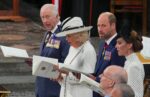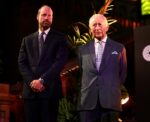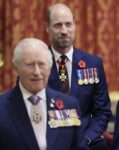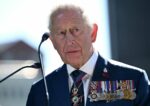
As I said in a post over the weekend, King Charles’s big Friday announcement surprised me. Charles announced that his cancer treatments were going so well, the treatments would be reduced in the new year. Charles has looked like hell for the better part of two years, and given his heir’s behavior in 2025, many royal commentators believed that Charles was not long for this world. If Charles is improving – or if he finds a way to live with cancer for many more years – that really changes things. Suddenly, the institution isn’t bracing itself for an illiterate, rageholic king with a short fuse and no work ethic. Suddenly, there’s more time to prepare Prince William for the job, and more time for Charles to make some changes too. Well, Tom Sykes had some thoughts on his Royalist Substack. Sykes was notably kicked off the royal rota WhatsApp for saying outright that Charles was/is dying, and instead of saying “hey, maybe I got that wrong,” Sykes is arguing that Charles’s cancer has destabilized his reign and Charles needs to clean house and more. Some highlights:
Taking back the narrative: What mattered most about King Charles’ statement was not what it said about his cancer, but what it signaled about power, control, and whether he is finally ready to reassert authority over an institution that has, over the past two years, drifted badly off the rails. This was a strategic announcement as well as a personal health one, an attempt to take back control of a narrative that has escaped the king almost from the moment he ascended the throne. The language was careful, optimistic without being definitive, and clearly designed to close down a chapter of speculation rather than open a new one. The message was simple: things are improving, the King is still here, and the story needs to move on.
What happened after Charles’s cancer announcement last year: Authority has steadily drained toward the heir. It was damaging for the institution. Once a monarch is publicly framed as vulnerable, power erodes. The institution begins to prepare for what comes next.
The destabilizing information vacuum: No one is saying the king is cured, least of all himself. He still has cancer. He is still being treated. He is still demonstrating enormous courage. Those realities have not changed. What has changed is the palace’s calculation about silence. Saying nothing any longer was no longer an option. The vacuum was too destabilizing, feeding speculation not just about Charles’ health but about who is really in charge.
Reasserting the king’s authority: On the same day as the health statement, The Times carried a story—clearly briefed by the king’s camp—that Charles has not been in touch with Prince Harry since Harry saw him in London earlier this year. These stories should not be read in isolation. Together, they amount to an unmistakable re-assertion of authority. The message is that the king is not a passive figure to be managed by his kid’s PR team. He is still king, and he will decide how relationships are conducted, not least with a son who has spent years monetizing grievance.
The time for half-measures is over: All of this brings us to the most important point of all: if Charles is indeed stabilizing, if he is genuinely well enough to “step back up” as head of the family and institution, then the time for half-measures is over. The monarchy over which Charles has presided has been battered on multiple fronts. The Andrew scandal continues to corrode the crown’s credibility, a slow-motion disaster that has not been decisively resolved. The Harry saga has poisoned the family’s internal dynamics and dragged the monarchy into endless culture-war theatrics. And around the edges, discipline has visibly frayed.
Stop dithering: If Charles is better—and one sincerely hopes that he is—then the obligation now is not simply to reassure the public about his health, but to impose discipline on an institution that has gone alarmingly slack. The royal family is not a loose collection of relatives with access to historic buildings. It is a constitutional mechanism, funded by the public, whose legitimacy depends on order, hierarchy, and restraint. For too long, discipline has been absent. Lines have not been delineated or enforced. The result has been chaos and a monarchy that looks reactive rather than authoritative, endlessly cleaning up after the same characters.
The job at hand: The cold, hard question now is whether Charles will use this moment to get back on with the job in hand. That job is not just surviving cancer. It is running the family, enforcing standards, and restoring coherence to an institution that has been drifting, wounded, and distracted for far too long. If he is well enough to do that, then it is time—long past time—for him to do so.
The thing is, Charles’s dithering nature annoys the hell out of me and I imagine it annoys most of the people within the institution. While very few courtiers were looking forward to William’s reign, at least William is a quick decision-maker, although he has terrible instincts. Still, I think it’s a bit unfair to blame all of this on Charles and his cancer – Charles always made it clear that he would hold onto the throne to his last breath. William was the one sowing discord, William was the one telling Sykes and others that his kingship would be coming soon, William was the one calling his father weak, old, out of touch and half-dead (in so many words). William has done more to create this toxic environment within the institution than Charles.
Photos courtesy of Avalon Red, Cover Images.