Melissa Little sat beside her son, Matthew, in his wheelchair as “Jingle Bells” filled the auditorium. Little leaned in, shook handheld bells and sang along with the Evanston Symphony Orchestra playing on stage.
This joyous moment was a long time coming. Matthew, who is 36 and has cerebral palsy, helped inspire the orchestra’s first-ever “barrier-free” concert ahead of its annual holiday show, which regularly attracts more than 1,000 people to the Evanston Township High School auditorium.
But Little never felt like she could bring Matthew to that performance.
“When he expresses his joy at music, he vocalizes at such a level that it becomes a distraction,” said Little, a longtime Evanston resident. “And normally I would say, never mind. But it is such a distraction that I didn’t feel like I could bring him to that concert.”

Instead, Little teamed up with a member of the orchestra, who scoured the community for grants and managed to secure enough funds to launch the dedicated inclusive concert, designed for people who may want to move around or make noise while experiencing the joys of music.
For years, Little had been asking her friend Penelope Sachs, who plays viola in the volunteer ensemble, if she could bring Matthew to a rehearsal. It didn’t work out. But then, the Trump administration took aim at the National Endowment for the Arts, specifically, grant funding for groups focused on diversity, equity and inclusion. On the chopping block was a grant program that gave funds to projects specifically focused on underserved communities, including individuals with disabilities.
The move angered Sachs — and gave her an idea.
“I said, ‘No, we’re going to go the opposite way,’” said Sachs, who has played with the orchestra for more than 30 years. “We’re going to finally do what Melissa has always wanted, and we’re going to do a concert specifically to include people who don’t get to come to concerts.”
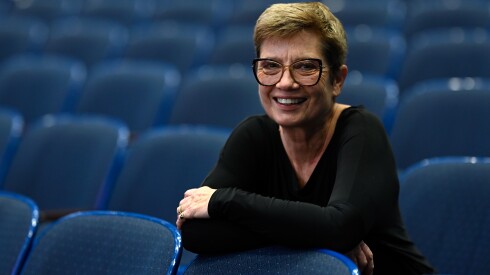
Sachs began looking for financial support to cover the show’s production costs. After securing grant dollars from funders including ComEd, the Evanston Lighthouse Rotary Club and Illinois Arts Council, Sachs and Little tried to think of everything that would make their event inclusive: accessible parking, an American Sign Language interpreter, even a sensory-free room where people could retreat if they got overwhelmed.
Across the Chicago area, some institutions, like the Goodman Theatre and Ballet Chicago, have begun offering “sensory friendly” versions of their performances of their holiday shows. But still, parents say, inclusive opportunities to enjoy live music and performances are rare.
After months of careful planning, the Evanston concert arrived on a frigid December Sunday. That afternoon, about 100 people bundled in winter gear filed into the high school auditorium. Volunteers at the door handed out jingle bells and song sheets. One young attendee eagerly asked, “Where’s Santa?” Perfectly on cue, the big guy in red walked in across the room.

Audience members included parents and caretakers of both young children and adults with disabilities. Lisa Andrews brought her 4-year-old son with autism. Both mother and son were dressed in festive sweaters.
“We don’t normally get to do things like this,” said Andrews, choking up as she helped her son to his seat. “This is his first concert. He really likes music. We’ll see how long we’ll stay, but I think he’s gonna have a good time.”
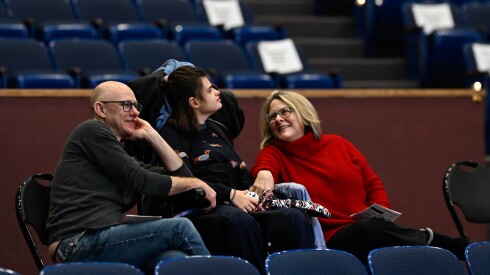
Across the auditorium, Jonathan Heller and Margaret Storey settled in with their 22-year-old daughter Josie, who is nonverbal and uses a wheelchair. This concert was a welcome family outing.
“Josie loves music. We love music, and it’s an opportunity to see a big orchestra, which I don’t think Josie has ever done before,” Heller said.
As the concert began, Santa himself took the stage to applause, along with Lawrence Eckerling, the orchestra’s music director. When Sachs first presented the orchestra with her idea, Eckerling said, it was instantly met with enthusiasm.
“The desire to do it was off the charts, for sure,” Eckerling said. “I mean, that’s what we’re here for. It’s a responsibility to your art to reach as many people as possible.”

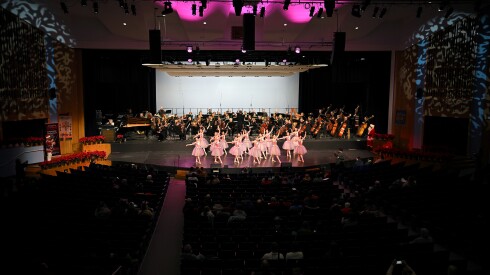
The orchestra launched into festive songs like “Deck the Halls” and “Oh Chanukah, Oh Chanukah,” with Eckerling pausing for teaching moments. From the podium, he told the audience about the instruments on stage and the sounds they make.
In the front row, 7-year-old Julian Kelsey clapped and bounced in his seat. His mom, Darlene, said it was relaxing to not have to be worried “about noises and jumping and distractions.”

For Marilyn Hall’s son, also 7, the best part of the show was when dancers joined the musicians on stage for a Nutcracker number, which he called “the best song ever.”
Hall said it was a relief to have a relaxed environment, where her son could be himself. “I thought it was really nice to have an inclusive space where I didn’t feel like we had to try and make a mask the whole time,” she said.
As concertgoers filed out, expressing joy and their favorite moments, Little stood beside Matthew, beaming with pride, tears filling her eyes. She hopes to bring the event back next year.
“My gosh, how wonderful was that?,” she said, expressing her gratitude for all the musicians. “Beautiful music for people that love it most.”

Courtney Kueppers is an arts and culture reporter at WBEZ.