In 2003, the city of Chicago predicted more than 140,000 people would live in its central area by 2020, which includes the Loop, Near North, Near West and Near South Sides. But the population count was too low — hitting 181,000 in 2020.
Over the past 20 years, the central area added 103,000 residents, with the population reaching 184,000 in 2024, according to city data.
Chicago has one of the nation’s fastest-growing downtowns, and the city’s Department of Planning and Development is hoping to shape its growth with the first comprehensive downtown development plan in more than 20 years.
The Central Area Plan 2045 was unanimously approved by the Chicago Plan Commission last month. It’s the latest update to a framework the city puts together every 20 years on the future growth and development of Downtown and adjacent neighborhoods. The last two Central Area Plans were adopted in 2003 and 1983.
“The plan will enhance downtown’s legacy as an economic engine and a vibrant home for residents that are well served by public transit and all the cultural, open space and educational amenities that are essential for sustainable growth,” Chicago Department of Planning and Development Commissioner Ciere Boatright said in a news release.
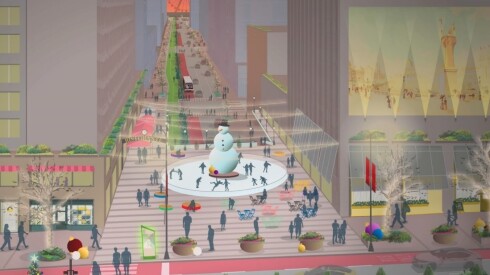
The plan includes more than 250 goals, actions and “strategic projects” across the central area such as more nightlife, office-to-residential building conversion projects, transportation enhancements and flexible green spaces that can host year-round events.
The proposals come as the city anticipates more than 100 million square feet of new construction and 100,000 new residents in the central area by 2045.
“This plan is a list of ingredients for the future of downtown, but you have to put some of the ingredients together into a recipe,” Michael Wood, director of civic and industry affairs at the Chicago Architecture Center, said.
The Central Area Plan 2045 offers some of the same broad strokes in previous plans like themes from 2003 that included strengthening transportation connections and promoting mixed-use districts. The 1983 plan called for beefing up the city’s transit, in addition to more downtown housing.
The latest plan builds on those ideas with eight pillars: arts and entertainment; economic development; environment, climate and energy; housing and neighborhoods; land use; lifelong learning; public health and safety; and transportation and infrastructure.
Michael Edwards, president and CEO of the Chicago Loop Alliance, said it’s really built on connectivity. The alliance had written a letter of support to the Plan Commission urging them to vote yes.
“It’s a great asset of the Loop, specifically,” Edwards said. “The whole central area is pretty connected, and I think reinforcing those connections to make [the area] really connecting with our rivers … brings more and more people Downtown.”
The plan proposes extending the Chicago Riverwalk between Lake Street and the south branch of the Chicago River. It also proposes an extension between Wolf Point and the Wild Mile, as well as new water taxi stops.
A southern extension would bring the Riverwalk to the Harrison Street bridge — and to Chinatown and The 78, where development of the Chicago Fire FC’s new stadium will soon take place.
“Anything in our city to do with water should be at the top of our list,” Brian Vitale, principal and managing director at architecture firm Gensler, said. “The Riverwalk, the lakefront — those are our precious commodities. … That’s where people are; that’s why they’re visiting. They bring their money here. That’s how we grow.”
Another strategic project is the creation of a landscaped, walkable loop surrounding the central area that will also connect job centers, tourist attractions and more. Other proposals include festival streets, whose uses can be flexible throughout the year, and shared surfaces, as in paved roads that can be switched between car, bike or pedestrian use.
Wood said Chicago Architecture Center surveys have shown that residents want more areas of respite throughout the city.
“Consistently, our surveys show us that people want public, open space,” Wood said. “I think thinking big about what inviting nature into the Loop can look like is a big idea.”
Business leaders like Vitale are glad there was an emphasis on reframing Chicago’s neighborhoods as more than single-purpose districts. The Central Area Plan calls for more nightlife in the Loop to keep people Downtown after work.
Vitale said River North was considered the main entertainment district, while the Loop was for work. Those lines have become blurred over the years, which helps drive more economic growth, he said.
“You have to have a community — both the government and the private sector people — where you remove as many barriers to make sure that this can happen,” Vitale said. “If you remove the barriers that maybe were either real or perceived in the past, it will allow for people to be much more creative about how they use space in the city.”
The framework makes the case for more evening dining options, street festivals and establishing an Office of Nighttime Engagement to “address opportunities and manage challenges that arise after normal business hours,” according to the plan.
More interactive, engaging street art and cultural activities is a priority for the Loop Alliance, and it’s where Edwards sees a lot of overlap between the Central Area Plan and the organization’s work.
He said there’s continued potential in converting office buildings into residential, and new city policies could incentivize building owners to fill up their vacant storefronts.