Francisco Gonzalez-Jasso, a longtime Little Village resident, didn’t know exactly how to make his way back to his childhood home in Torreón, a city in Mexico’s northern state of Coahuila. He hadn’t been there in 33 years.
“I kept asking people on the bus, ‘Is Torreón next?’ ” Gonzalez-Jasso, 55, says in his native Spanish.
In Torreón, he took a cab to his old block. But the years had erased his memory of the house. He paced the street, checking the addresses on every door. When he found the right one, he says, the house looked different. It was really small.
“I started yelling out my brother’s name: Cesar, Cesar,” Gonzalez-Jasso says. “Once I saw his face, I told the taxi driver to leave. Then, I embraced my brother.
“I was broken.”.
The last time they were together, Cesar, now 50, was 17.
Gonzalez-Jasso is trying to rebuild his life in Mexico after he was arrested by Border Patrol agents last October in Little Village in front of friends and neighbors. He was deported a few days later. WBEZ has been keeping up with Gonzalez-Jasso after visiting him in Mexico in December, not long after he arrived there.
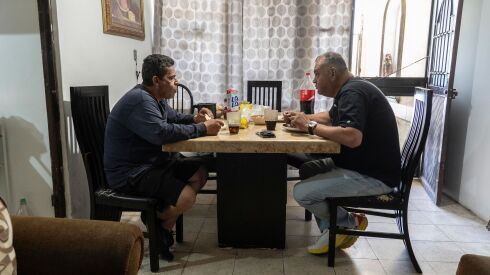
The tall man with a sturdy build was a well-known presence in his Chicago neighborhood for more than three decades. Still, despite not having a criminal record, the U.S. Department of Homeland Security branded him a member of the Latin Kings gang — a tag that has followed him to Mexico.
Gonzalez-Jasso is among hundreds of people swept up during Operation Midway Blitz, the aggressive Trump administration deportation campaign aimed at clearing “violent criminals” off Chicago-area streets. He also is among immigrants who say they were wrongly accused of being a criminal or having ties to gangs.
“It’s humiliating for me,” Gonzalez-Jasso says. “I’m not a criminal. I never harmed anyone.”
‘This was his home’
Gonzalez-Jasso was known on 26th Street in Little Village as Panchito. His arrest and deportation last fall were a gut punch to neighbors who remember him as a friendly face always ready to lend a hand.
“I cried, honestly, I cried when I learned that Panchito was arrested,” Carlos Macías, the owner of Carniceria y Taqueria Aguas Calientes on 26th street, said in Spanish. The two have been friends for more than 20 years.
Also speaking Spanish, Ana Guerrero, a waitress at the taqueria who often served Gonzalez-Jasso, said: “He was like your daily coffee, always here in the mornings before heading to work. He was always very respectful. This was his home.”
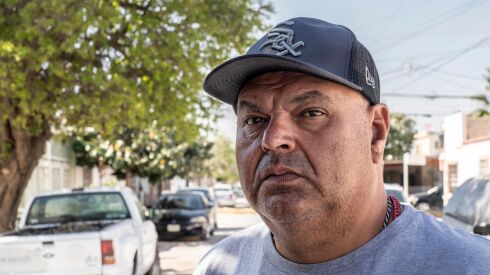
The afternoon of his arrest, Gonzalez-Jasso says, he and his friends were having a birthday party at Jacaranda, a bar on 26th Street. He stepped out to buy a pack of cigarettes. That’s when Border Patrol agents arrested him.
“The saddest thing, and it hurts, is that they grabbed me, they forced me down, pointed a gun at me, in front of people, children.” Gonzalez-Jasso says. “Your world collapses. Your life is over. Tied up, handcuffed, in pain, disappointed. What did I do?”
He says Border Patrol agents punched him several times as they dragged him to a van. The agents didn’t know his name, didn’t show him a warrant and had no reason to stop him, he says. Video of his arrest circulated on social media.
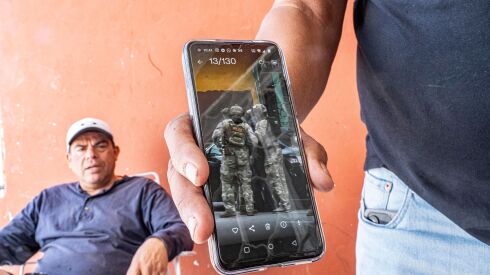
DHS released a statement that afternoon saying, “U.S. Border Patrol conducted targeted enforcement resulting in the arrest of Francisco Gonzalez-Jasso, a criminal alien from Mexico and member of the Latin Kings criminal organization.”
The agency hasn’t responded to questions about what evidence it has of that claim.
Gonzalez-Jasso’s name isn’t listed in state or city records as having gang ties or a criminal record. Nor was he included in the 2018 Chicago Crime Commission “Gang Book,” the most recent one published.
He lived in Chicago without legal immigration status and was deported once before, in the 1980s. But he says the government accusations naming him as a gang member aren’t true. He worked in construction for years and in places that required background checks including school buildings.
“I would have been caught already after 30 years,” he says.

Alexa Ramírez came to Chicago with big plans for the future. As she tries to readjust to life in Mexico, she and her husband are working out how to rebuild their life together.
Listen
Advocates say Gonzalez-Jasso isn’t the only one who was labeled a criminal. DHS has made other accusations — and filed charges against some, only to drop them later for lack of evidence.
After his arrest, Gonzalez-Jasso says, he was taken to the U.S. Immigration and Customs Enforcement processing center in Broadview, where officials “treated animals better than us.”
There wasn’t enough food or water, he says, and he was denied his medicine. He was miserable in a crowded cell. Fearful he would be stuck there for weeks, Gonzalez-Jasso gave up and signed his deportation papers. He says he was sent to detention centers in four states before arriving in Matamoros, Mexico.

Word of his deportation made it to Mexico first
Gonzalez-Jasso arrived in his hometown in bad shape. He hadn’t slept, showered or changed clothes in days. He was in pain from the punches during his arrest, he says.
He spent two days in bed. It took him several weeks to feel like himself again, he says.
“I kept thinking, ‘What am I going to do,’” he says. “I was deported like the worst criminal. My reputation is gone.”
And the home where he was now living wasn’t what he remembered. Over the years, he had lost both his parents and two brothers. The faded curtains and worn furniture were a constant reminder that three decades had passed, that his parents were no longer there to hold things together.
Gonzalez-Jasso says he felt like an intruder there despite his brother’s efforts to make him feel welcome. Cesar was living there with his wife and three children.
His brother and other relatives had seen the videos of his arrest even before he arrived — making his integration that much harder. When his sister heard of his arrest, she was so shaken she almost had a nervous breakdown.
“I didn’t want anyone to know I was thrown out like that,” Gonzalez-Jasso says.

|
Duilio Rodríguez/For the Sun-Times

|
Duilio Rodríguez/For the Sun-Times

|
Duilio Rodríguez/For the Sun-Times
|
Duilio Rodríguez/For the Sun-Times

|
Duilio Rodríguez/For the Sun-Times

|
Duilio Rodríguez/For the Sun-Times

|
Duilio Rodríguez/For the Sun-Times


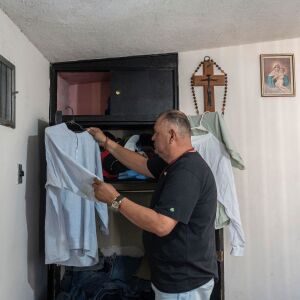


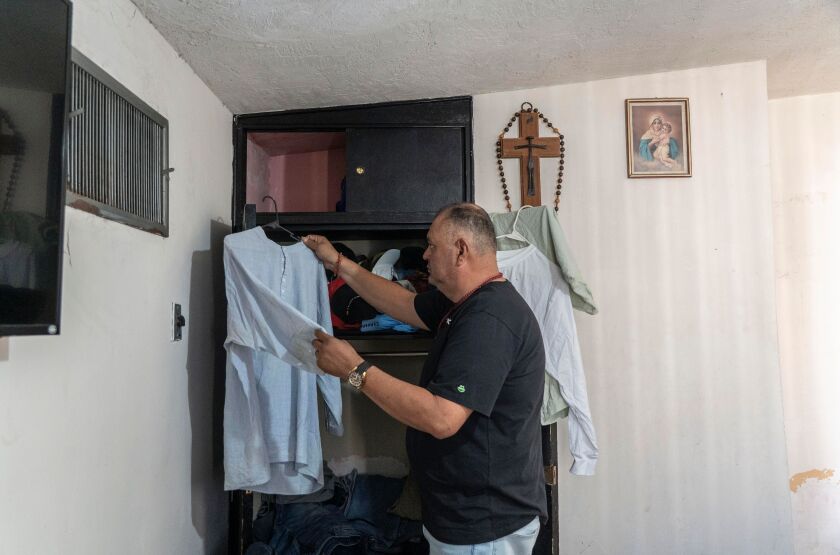
Four months after his deportation, Gonzalez-Jasso is living on a modest pension from his construction work. He shipped his clothes from Chicago and gave away the furniture he left behind. He is trying to get someone to haul his two cars.
He’s keeping busy remodeling his parents’ home, doing a complete overhaul of the kitchen and the bedrooms.
But he worries about the violence in Mexico. One of his brothers disappeared years ago and was never found.
Once in a while, he replays the video of his arrest. It’s painful to hear the sounds — the whistles, a woman yelling “la migra” — and to see himself surrounded by Border Patrol agents.
Gonzalez-Jasso wants to clear his name so everyone knows he’s not a gang member. But he doesn’t know where to start.
And he misses his Little Village friends and neighbors. Some of them recently traveled to Mexico to see him for a few days. They aren’t his blood relatives. But they were his family.
In Chicago, he says, his voice cracking, “There are many people who love me. And I miss them.”