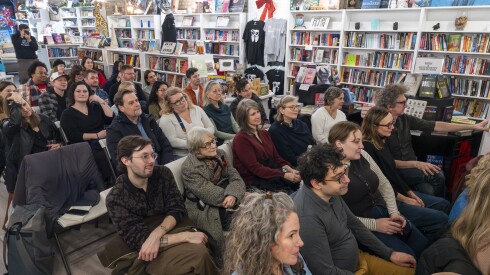
Amid shelves filled with books, an audience of more than 70 people laughed and cried at the final event at Volumes Bookcafe in Wicker Park last week.
Local authors paid tribute Tuesday to the independent bookstore and its owners, sisters Rebecca and Kimberly George.
On stage, Rebecca George said tearfully, “It’s been the absolute honor of my life to have been a part of this community.”
Since opening in March 2016, Volumes has sold more than 250,000 new books and hosted thousands of readings, panels and other events. But in November, it announced plans to shutter the store at 1373 N. Milwaukee Ave. on Jan. 31.
Many businesses in Chicago have struggled since the COVID-19 pandemic due to high inflation, rising costs, dwindling foot traffic and other challenges.
When interest rates rose last year, Volumes’ commercial mortgage payment nearly doubled, Rebecca George said. The store was coping until October 2024, when Barnes & Noble opened nearby in Wicker Park’s historic Noel State Bank building.
Since then, Volumes’ monthly sales plunged 20% to 30%, George said. Its 2024 holiday season was the worst in nine years. Business in summer 2025 was its slowest on record, and autumn was even worse.
“We went several months in 2025 without paying ourselves more than a few bucks here and there to eat and pay health insurance,” she said.
Meanwhile, Barnes & Noble is booming. In 2025, it launched 58 stores nationwide and plans 60 more openings this year. In the Chicago area, it will open four stores this year, including in the Loop. Barnes & Noble CEO James Daunt told WBEZ Monday that the bookstore chain has a different model than Volumes.
Yet George said the retailer has siphoned away customers. “People would say they would check down the street first, and we don’t hear from them again,” she told the Sun-Times. “That seems like a small thing but that can amount to hundreds, if not thousands, of dollars per month.”
Another blow came with the news of soaring health care costs. Last fall, the federal government announced ending health insurance subsidies for the Affordable Care Act.
In 2025, George paid about $380 per month for health care. Costs jumped to $796 a month this year. “We just can’t afford that,” she said. George nearly canceled her ACA insurance, but a relative is paying for two months of coverage.
“It is rough being a small business. Property taxes are doubling in some places with big companies buying up real estate and putting in multinational corporations,” George said. “It’s unfortunate because people don’t move to a city neighborhood because it has mall-like stores. They are attracted to unique neighborhood vibes. Corporate America is the antithesis of that.”
Keith Lewis, owner of Bookie’s bookstore in Beverly, has known George for about 20 years when they were Chicago Public School teachers. Volumes “had an immediate impact on Chicago’s literary scene” because it hosted so many events, he said.
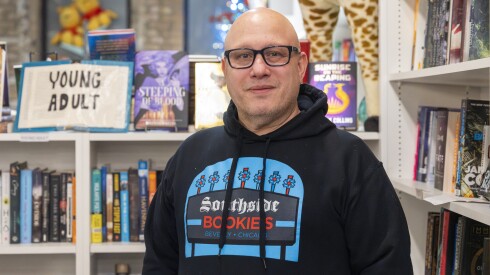
The Georges are especially known for their support for books, authors and community, Lewis said. “Rebecca has ideas that she moves forward with,” he said.
For example, she and other Chicago booksellers spearheaded an Independent Book Store Day bus tour for years. Volumes especially championed local authors.
Its pending demise “shouldn’t have happened,” Lewis said. “It’s awful, and I’m angry about it.”
One bright spot is that “people are absolutely reading books,” George said. “I feel like those who say reading is dead are just the people who aren’t reading. People need a break from technology, and books are a great way to disconnect from the world and engage with the world at the same time.”
For many, Volumes was more than a bookstore.
Whitney Simon and George Shakhnazaryan met at Volumes during a speed dating event in 2024 and got engaged there last month. “It’s the end of an era. Small, independent book shops are essential,” Shakhnazaryan said. “I’m extremely grateful for everything that happened in this place. I found love.”
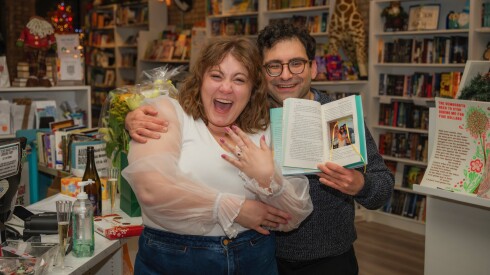
Simon teared up when talking about Volumes. “We’ll miss them,” she said.
Author Rebecca Makkai said some of Chicago’s approximately 40 independent book stores are thriving, while others are on a roller coaster.
“Bookstores survive when people remember where they want to shop, and don’t go online, when people keep investing in them,” Makkai said.
George is uncertain about what she’ll do next but hopes to stay connected to Chicago’s book community.
“I don’t have all of the solutions, but I know that if everyone advocates for their neighbors with their choices, that is a much better world to live in,” she said.