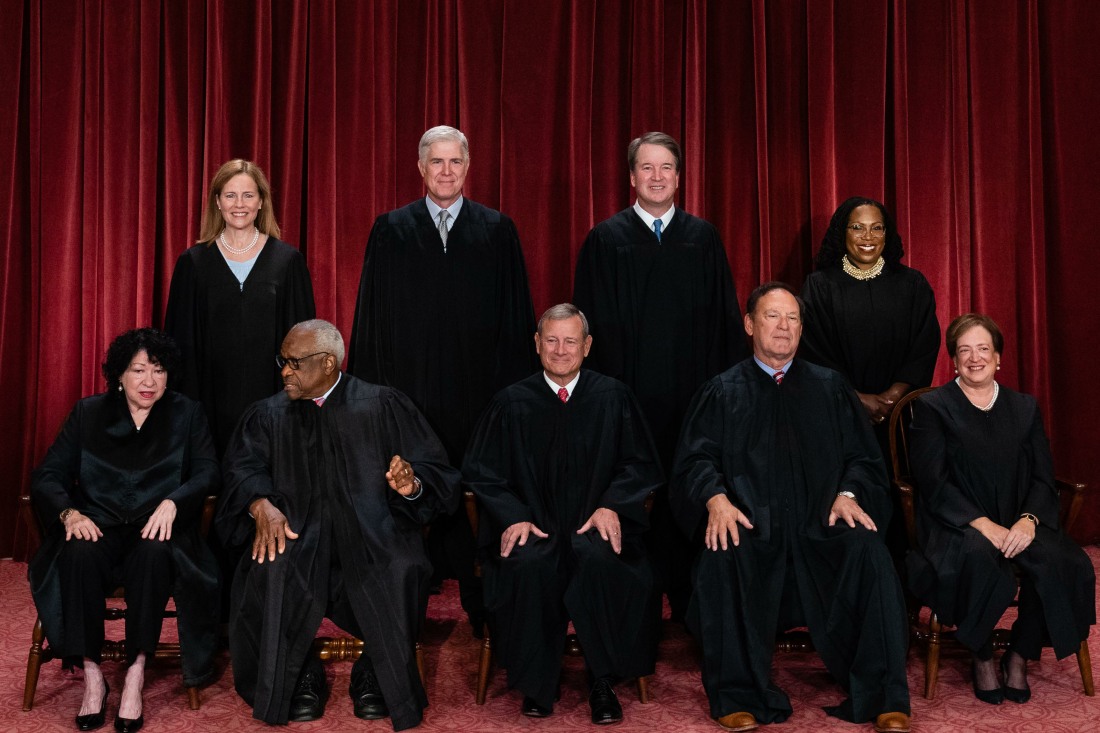
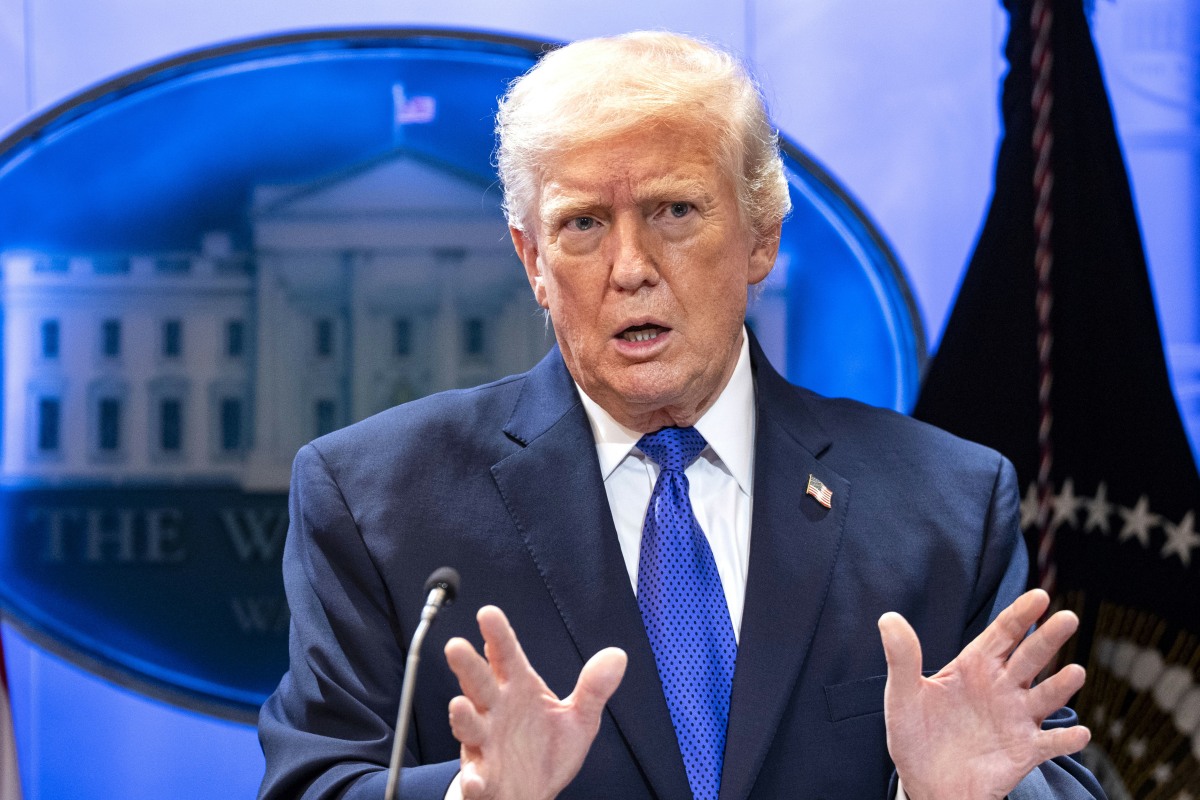
The Supreme Court’s spring-term decisions have been released in a steady stream in recent days, and it’s been mostly bad news for campaign-finance reformers and transgender folks. Although I have to say, the case about transgender athletes was not a huge surprise, and the decision mostly sounds like a placeholder/status-quo situation. Then, on Tuesday, SCOTUS released their decision on Donald Trump’s attempts to subvert the 14th Amendment, also known as birthright citizenship. Trump ran on ending birthright citizenship in 2024, and once in office, he tried to selectively limit birthright citizenship via an executive order. SCOTUS said “nope.”
The Supreme Court on Tuesday struck down President Trump’s executive order limiting birthright citizenship, reaffirming the long-held principle that the Constitution guarantees that nearly all children born on U.S. soil are citizens.
The ruling was a significant blow to a policy long pursued by Mr. Trump to prevent babies born to undocumented immigrants and temporary foreign residents from automatically becoming Americans.
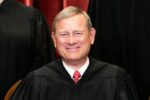
Chief Justice John G. Roberts Jr., writing for the majority, explained that Mr. Trump’s executive order violated the 14th Amendment of the Constitution. Children born in the United States to undocumented parents or to parents temporarily in the country, he wrote, are citizens at birth.
“Citizenship, then and now, was the right to have rights — to freely participate in our political community,” Chief Justice Roberts wrote. “The framers of the 14th Amendment extended that promise to ‘every free-born person in this land.’”
He added: “We keep that promise today.”
The legal battle over birthright citizenship began on the first day of Mr. Trump’s second term, when he announced an executive order titled “Protecting the Meaning and Value of American Citizenship.” In the order, he declared that citizenship would not longer be automatically granted to babies born on U.S. soil. In particular, children born to immigrants who entered the country illegally would no longer be citizens, nor would those born to parents here on a lawful but temporary basis, such as those on student, work or tourist visas.
The president’s order faced immediate legal challenges, as civil rights organizations, immigrant advocacy groups and expectant parents sued, successfully winning in court to block the order while lawsuits unfolded.
It never went into effect, and there were few signs the administration had been preparing the dramatic overhaul of the citizenship system that would have been necessary were it allowed.
That last part is, I suspect, rather crucial to SCOTUS’s decision. It’s not that the far-right Supreme Court is suddenly full of justices fiercely protective of the 14th Amendment. It’s that Trump’s EO was half-assed at best, and he literally had no plan for how, when and where birthright citizenship was applied. Trump thought he could just wave a magic wand and delegitimize the citizenship of every child born to immigrant parents, and that would be that. I’m trying very hard not to think about what the Roberts court would have done if Trump actually had a real plan to remove citizenship en masse from millions of first-generation Americans.
Photos courtesy of Cover Images.