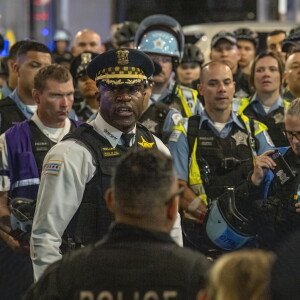
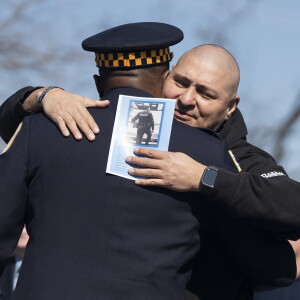
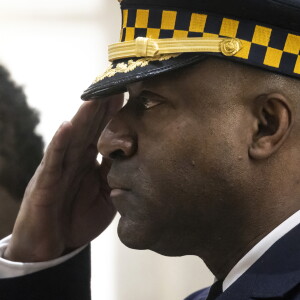
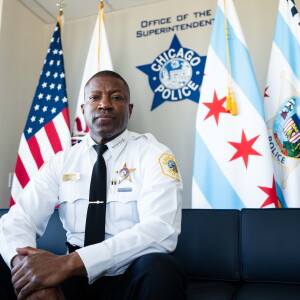
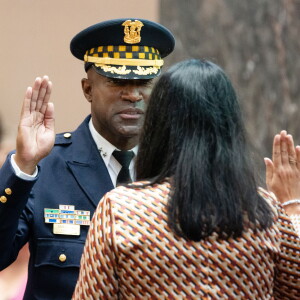
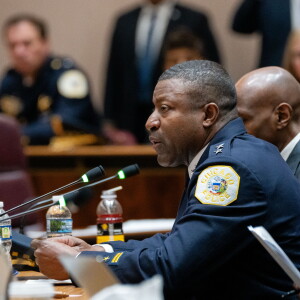
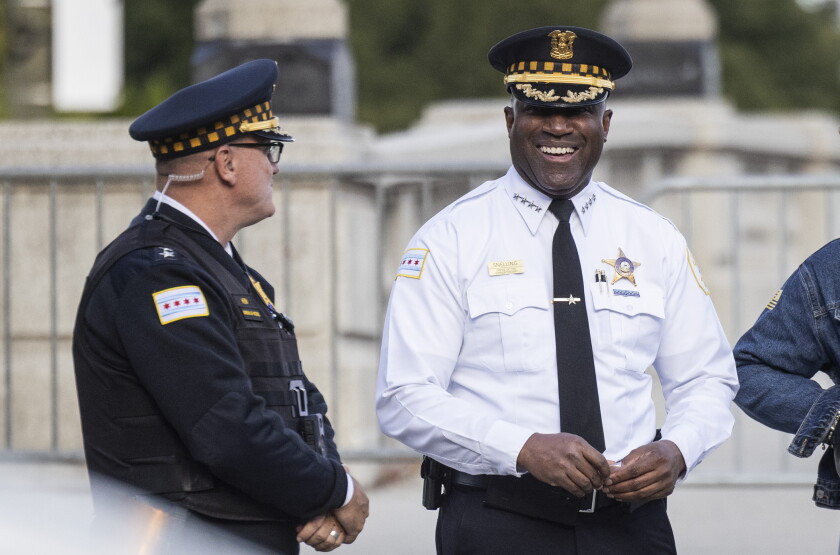
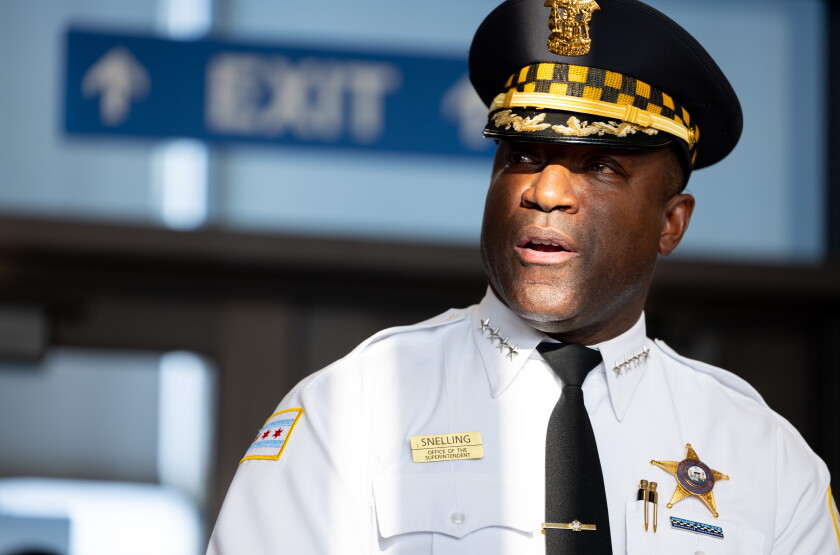
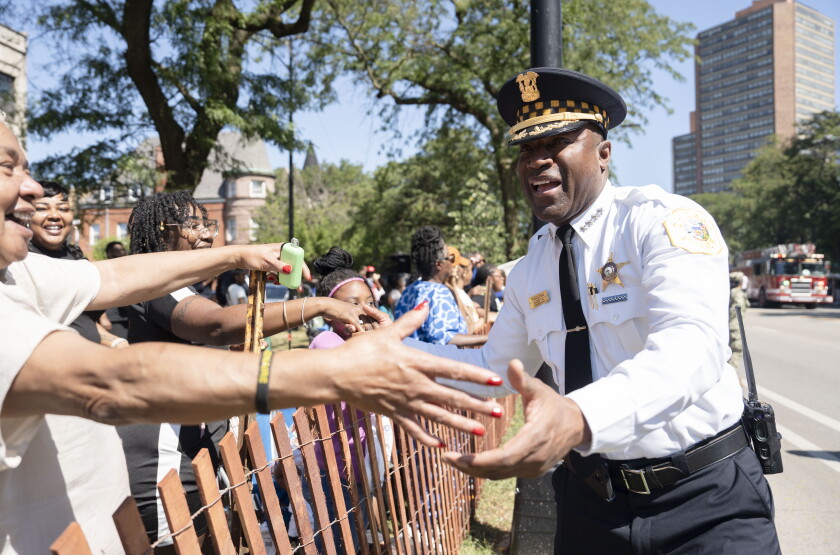
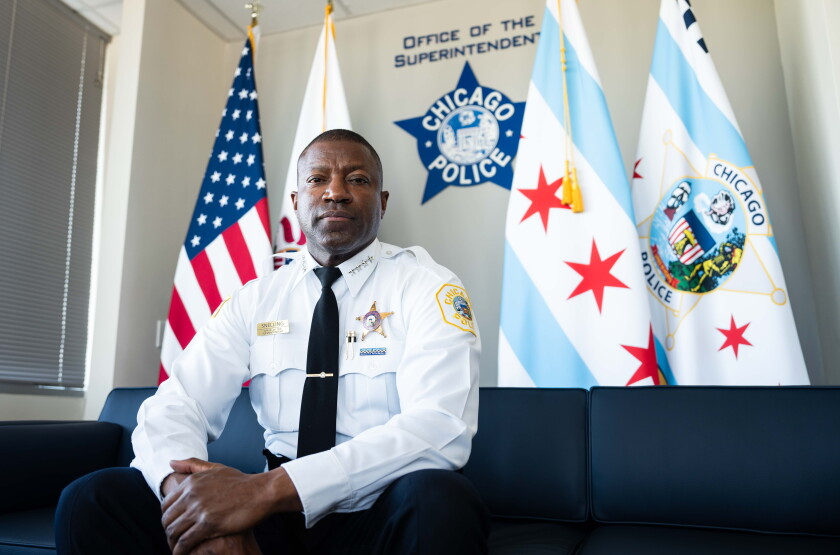
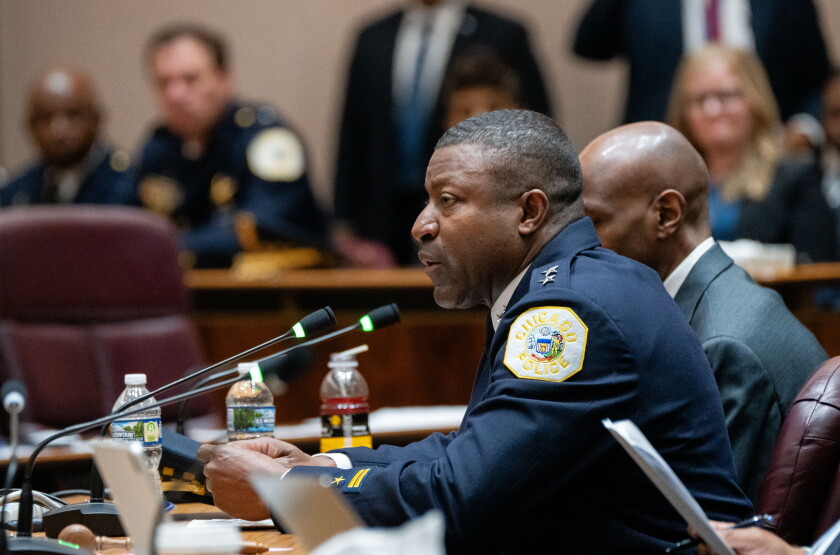
When Mayor Brandon Johnson introduced Larry Snelling as the next leader of the Chicago Police Department in August 2023, he touted his pick as a “son of Englewood” with decades of experience policing Chicago streets.
Less than three mostly controversy-free years later, Snelling announced on Wednesday he was stepping down as the city’s top cop — on his own terms.
As rumors swirled about his resignation and tension with the mayor, the police department sent out a lengthy memo on the superintendent’s letterhead, addressed to “my fellow Chicagoans.”
“I am closing out this chapter of my life with a heart full of gratitude for every Chicagoan and every community partner who embraced me during my time at the Chicago Police Department,” Snelling wrote. “Thank you does not fully express my appreciation for you, the people of Chicago.”
During Snelling’s tenure, murders fell to historic lows and the Democratic National Convention largely went off without a hitch. Snelling also had to navigate the unprecedented deployment of federal agents across Chicago during Operation Midway Blitz.
Snelling said he plans to retire on July 15. Earlier this week, he announced broad changes to his command staff and installed a new second-in-command, putting a lasting stamp on the department.
Police veteran Fred Waller, who has been a key aide to Snelling, will again serve as acting police superintendent during a search for a permanent replacement, Mayor Johnson said Wednesday.
Johnson credited “Snelling’s dedicated leadership and the work we’ve accomplished together to advance a community safety strategy rooted in strong partnerships and deep community engagement.”

Strife with City Hall
But behind the scenes, there was tension that alienated Snelling and made him determined to leave before the mayoral election, sources said.
City Council members who are among the police department’s staunchest supporters said Snelling was unhappy with Johnson’s decision to use each of his three city budgets to shrink the department by attrition — and he feared there may be more.
Snelling was nowhere to be found earlier this week when Johnson issued an executive order to begin the potentially costly process of delivering on his promise to create a standalone department focused exclusively on reducing and preventing gun violence.
Sources said Snelling was asked to attend, but he refused because he shares the fear that Ald. Brian Hopkins (2nd) voiced that day.
“I don’t know where the funding is going to come from,” said Hopkins, who chairs the City Council’s Committee on Public Safety. “My fear is that the mayor is gonna want to fund this by reducing the police budget. And that is absolutely the wrong thing to do.”
Equally upsetting to Snelling was Johnson’s decision to scrap the gunshot-detection technology known as ShotSpotter without honoring his promise to replace it.
Anti-police sentiment expressed by Kennedy Bartley, Johnson’s chief external affairs officer, was yet another source of contention.
Bartley told the Sun-Times last year that frustration over city budgets that favored police spending at the expense of long-neglected Chicago neighborhoods fueled her desire to “defund the police.” But she insisted her “worldview” had evolved since then.
Sources said Snelling never accepted Bartley’s apology or forgave those remarks. Three members of Johnson’s City Council leadership team demanded that Johnson fire Bartley for calling cops “f—ing pigs” and talking openly about cutting funding and even abolishing the police in a series of podcast interviews.
Bartley managed to weather the storm — and even got a promotion in the middle of a hiring freeze — after her public apology.
Ald. Matt O’Shea (19th), whose Far Southwest Side ward is home to scores of police officers, said Snelling’s exit is a “culmination of all of those things and more.”
“Larry Snelling made Brandon Johnson look good,” O’Shea said. “This administration has benefited from having such a strong leader in the police department. But they didn’t reciprocate.
“He’s too classy to go out saying anything. But he just got fed up with this administration and the people who are the decision makers in it that aren’t interested in working with the police department, or partnering with the police department or acknowledging all of the hard work that the police department does to keep us safe.”

A storied career
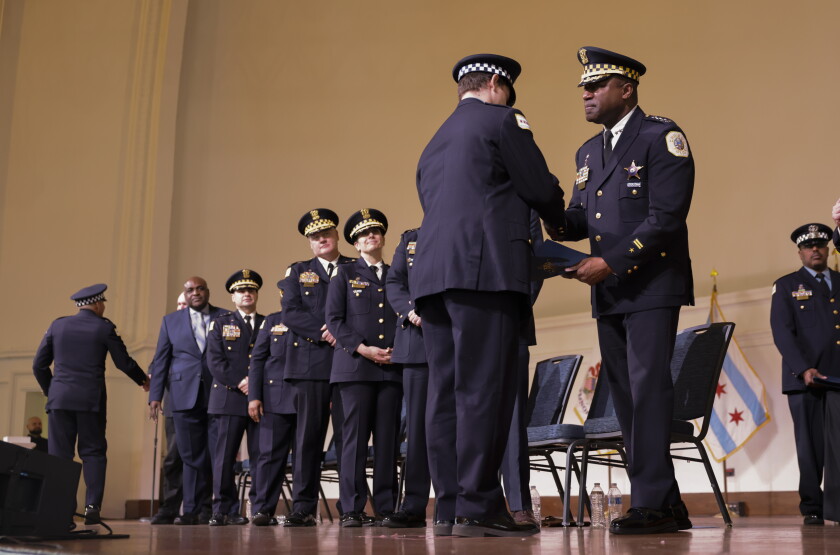
Snelling joined the police department in 1992 as a patrol officer on the South Side. He worked his way up the ranks before being named superintendent, serving as an instructor at the police academy, deputy chief of Area 2 and chief of counterterrorism.
The mayor hoped selecting a veteran like Snelling to lead the department would help boost flagging morale and help address an exodus of officers. Snelling’s predecessor, former Dallas police chief David Brown, had faced controversies and a crisis of confidence.
Snelling vowed to improve officer wellness and training and to use Johnson’s “whole of government” approach to reduce violent crime with a heavy focus on “forgotten” crime victims.
He was lauded for the police department’s handling of the protests that cropped up during the Democratic National Convention in 2024. Johnson called it the “best convention this country has ever seen” after there were few injuries or complaints against officers.
“We saw people yelling in their faces, yelling obscenities, and they maintained their cool throughout,” Snelling said of his officers. “They didn’t take the bait. So as a result of it, you didn’t see the activity that people expected to see.
“So again, please, can we stop talking about 1968?” Snelling asked, referring to a previous Democratic convention here that devolved into chaos.
Midway Blitz, the Trump administration’s aggressive deportation campaign in the Chicago area last fall, tested Snelling and his officers in different ways.
Chicago cops responded to demonstrations that followed immigration sweeps, and they were at times caught in the fray and sprayed with tear gas. Snelling said the protests that grew after a federal agent shot Marimar Martinez could have turned into “a full blown riot” if local officers hadn’t shown up.
But critics also claimed Chicago cops had helped federal immigration agents in some cases, despite city and state prohibitions against such assistance. Snelling dismissed the criticism, saying his officers had “showed up to keep down violence.”
And violence was down. Since 2023, violent crime rates have continued to drop citywide, following a pandemic spike. Last year, Chicago saw its fewest murders in 60 years.

What’s next?
Snelling is now about to max out his police pension. With nearly three years under his belt, he’s also nearing the shelf life for a big city police chief in general, and a Chicago superintendent in particular.
The Community Commission for Public Safety and Accountability will soon launch a search for his permanent replacement. At the end, the civilian oversight panel will submit three finalists to the mayor, who can select one or send them all back. His pick will ultimately require approval by the full City Council.
Anthony Driver, the former president of the commission, helped choose Snelling and is likely to lead the next search as a rank-and-file member of the panel. Driver said the superintendent had spurred a shift in public morale and “stabilized the department while reaching record-low levels of violence.”
“He wasn’t easily moved by political headlines,” Driver said. “He was a person who led from the front. He didn’t give orders that he himself wouldn’t go out and do. You saw him on the lines at the DNC. You saw him on the line at different events.”
For now, Snelling’s close allies will lead the department.
Waller finds himself in a familiar position, having served as interim superintendent following Brown’s retirement. He’ll be supported by Antoinette Ursitti, the newly appointed first deputy superintendent.
Anthony Riccio, who previously served as the department’s No. 2, said Snelling’s permanent successor will have to win over officers with what they say “in the first several days.” Riccio said both morale and the quality of policing can plummet when officers feel they aren’t supported by their boss.
“With the successes Larry has had, we want to see someone build on that,” he said. “He’s leaving big shoes to fill.”
Ald. Chris Taliaferro (29th), the former police sergeant who chairs the Police Committee, took Snelling’s departure in stride and started looking ahead..
“We all come and go in our tenure,” Taliaferro said. “The things Supt. Snelling was able to do for the city [were] incredible. What we’ve got to do as a city now is find someone who will continue the work he has done and do it even better than what he’s done.”
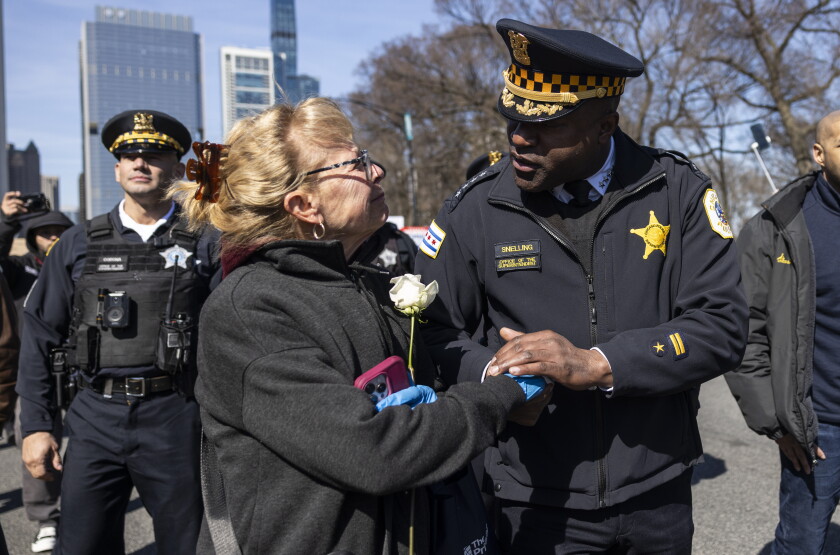
|
Ashlee Rezin/Sun-Times

|
Anthony Vazquez/Sun-Times
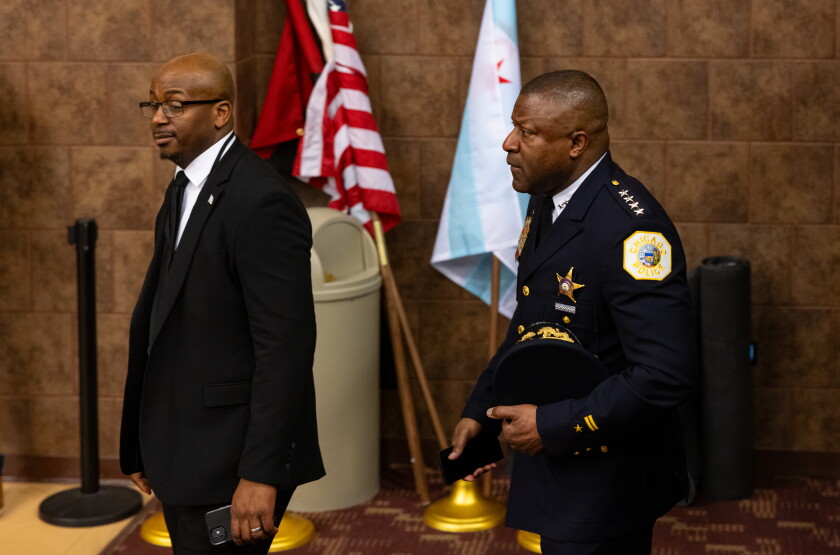
|
Candace Dane Chambers/Sun-Times
|
Ashlee Rezin/Sun-Times
|
Candace Dane Chambers/Sun-Times

|
Ashlee Rezin/Sun-Times

|
Anthony Vazquez/Sun-Times
|
Anthony Vazquez/Sun-Times
|
Ashlee Rezin/Sun-Times

|
Pat Nabong/Sun-Times

|
Tyler Pasciak LaRiviere/Sun-Times
|
Pat Nabong/Sun-Times

|
Anthony Vazquez/Sun-Times
|
Pat Nabong/Sun-Times

|
Ashlee Rezin/Sun-Times
|
Ashlee Rezin/Sun-Times
|
Pat Nabong/Sun-Times

|
Pat Nabong/Sun-Times
|
Pat Nabong/Sun-Times

|
Ashlee Rezin/Sun-Times

|
Ashlee Rezin/Sun-Times

|
Tyler Pasciak LaRiviere/Sun-Times

|
Ashlee Rezin/Sun-Times