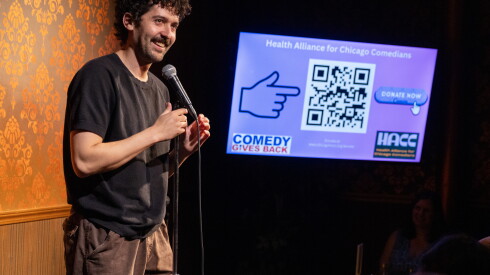
Local stand-up comedian Deanna Ortiz juggles multiple gigs to cover her living expenses and bills.
“I’m always, like, ‘OK, this is going to help cover rent, and that’s going to help cover this bill,’” she says. “By the end of the month, it works out because it has to.”
One of those bills is the $80 she pays each month for health insurance through the Affordable Care Act marketplace, known in the state as Get Covered Illinois.
She is among the local comedians who could benefit from a pilot program being created by the newly formed Health Alliance for Chicago Comedians that would help 10 local comedians pay monthly insurance premiums through the ACA’s next open enrollment period later this year.
“A lot of my medical anxieties and nervousness, when it comes to healthcare, comes from buying … literal medication that I need to breathe, like an inhaler,” Ortiz says.
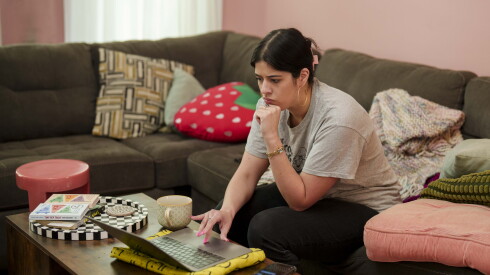
Elizabeth Grossman co-founded the new group after hearing about a similar effort for musicians in Texas. She was taking a stand-up comedy class at the Lincoln Lodge in Chicago at the time and started asking local comedians about their access to healthcare.
Grossman wants comedians to be part of larger arts advocacy efforts, saying comedy is often an overlooked form of art even though Chicago is known for producing comics who have gone on to a national stage.
“This is an art form that makes Chicago a unique place, a place people want to live, a place people want to visit,” Grossman says. “But we don’t have the infrastructure to support artists in the same way here.”
Multiple jobs with few benefits
Comedians face a conundrum when it comes to accessing affordable healthcare. If they work a traditional job that provides employer-based insurance, it limits the time they can spend improving their craft, Grossman says. So comedians end up working multiple jobs, usually in the hospitality industry, with flexible schedules but few benefits.
Victoria Vincent, previously a radiation therapist, pivoted to a full-time career in comedy about two years ago. Since then, she’s met other comics who have gone years without a routine physical — or insurance altogether — while others have turned to crowdfunding to pay for cancer treatments, she says. That’s one of the reasons why she joined the new Health Alliance’s advisory board.
“It’s addressing a community that [maybe] not everyone can relate to, but they can relate to the issue of trying to get healthcare in America and how difficult that is,” Vincent says. “It’s made even harder when you’re in a career like this, when there’s limited access to getting care.”
The group started surveying Chicago-area comics about their healthcare needs in late January. Out of 59 comics polled, 11 were uninsured, and another 15 bought insurance through Get Covered Illinois. Others had insurance from a spouse or partner, their parents, Medicaid or another job.
Out of six comics who reported making most of their income through comedy, only three are able to afford paying for insurance through the exchange on their own, and one is uninsured.
“We are trying to find who are those people that have the talent, have the drive and have the desire … that are not able to advance in their careers” because of the financial burden, Grossman says.

Nick Mayer, the group’s co-founder, is among the comedians juggling multiple part-time jobs to make ends meet. His health insurance through Get Covered Illinois costs $380 per month, up from $180 last year, he says.
While the cost is stressful, Mayer says he can still afford to keep the insurance. But he thinks he could quit one of his four part-time jobs if it was more affordable.
Mayer had gone without health insurance for several years, and at one point he even joined a health share program for Christians — though he jokes the program wasn’t cheap enough to make him convert.
Months after buying insurance through the Affordable Care Act, he got sick from a camping trip and was diagnosed with Lyme disease. He was able to quickly get treatment, but he now has to do routine checkups.
“Ever since then, I was like, ‘I gotta have health insurance for whenever this happens,’” Mayer says.
Vincent, who also buys health insurance through Get Covered Illinois, saw her monthly premiums go up $110 this year to $470. She can still afford to buy health insurance, and she, like Mayer, prioritizes it because of health concerns. But it’s more difficult to find convenient in-network providers such as therapists. That’s a change from when she had health insurance through her employer.
“I pay a lot of money per month to maintain having abysmal insurance, in my mind,” Vincent says. “I’m paying way more than I ever paid from my regular job.”
Building a community
Ortiz has sometimes shown other comics how to buy insurance through the ACA marketplace. She recalls seeing so many people who dismiss symptoms, saying they just have a cold and don’t need to seek medical care.
“I’m the one that’s like the mom, like, ‘No, you should actually go,’” Ortiz says.
The alliance has received sponsorship from Comedy Gives Back, a national nonprofit that provides grants to comedians experiencing financial or mental health challenges. It also recently held a kickoff comedy show to raise funds.
Mayer hopes this assistance model could help inspire other creative fields or gig workers when employers are increasingly using part-time or contract labor without providing benefits such as health insurance, he says.
“I’m really optimistic that this is going to be the start of a really foundational community sense of mutual aid for comedians, something that can get everybody working for better conditions,” Mayer says.
“It seemed for a long time … like a very individual industry that you need to worry about yourself, and you need to get yourself booked, and you need to make it. Instead of, like, let’s just create a healthy kitchen that everybody can cook in.”