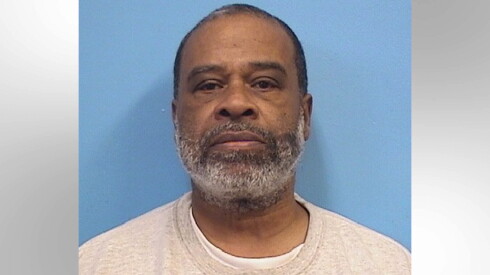
A Cook County judge on Monday threw out the conviction of Anthony Garrett, finding that his written confession in 7-year-old Dantrell Davis’ murder was likely tortured out of him.
Circuit Judge Adrienne E. Davis’ 37-page written order made it clear she didn’t buy sworn testimony by Richard Zuley, 80, a retired Chicago detective accused of orchestrating Garrett’s alleged beating in custody after the 1992 fatal shooting, which rattled Chicagoans and led to widespread news coverage.
Davis wrote that Zuley’s testimony was “not credible.”
“The court vacates [Garrett’s] conviction and sentence and suppresses his handwritten statement,” Davis said from her bench at the Leighton Criminal Courthouse, ordering a retrial and Garrett’s transfer from an Illinois prison to Cook County Jail.
Wearing blue prison garb, Garrett, 68, wept as the judge read from her ruling, his attorneys said.
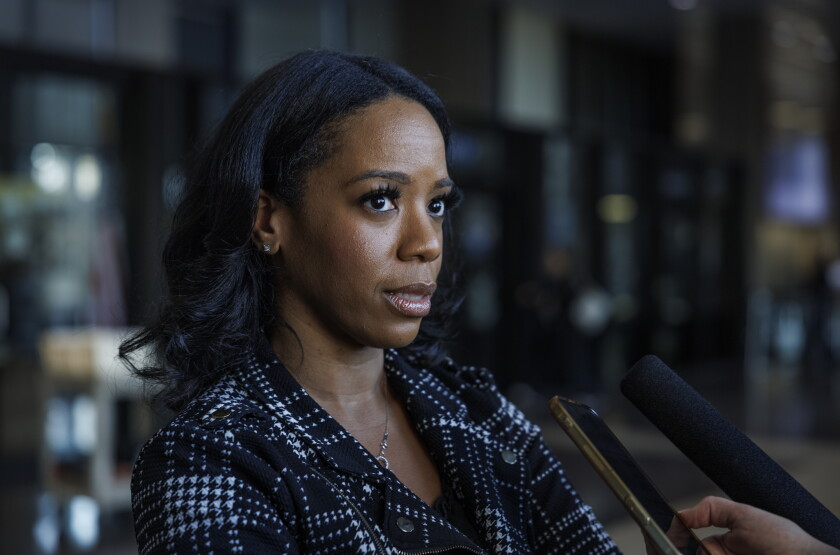
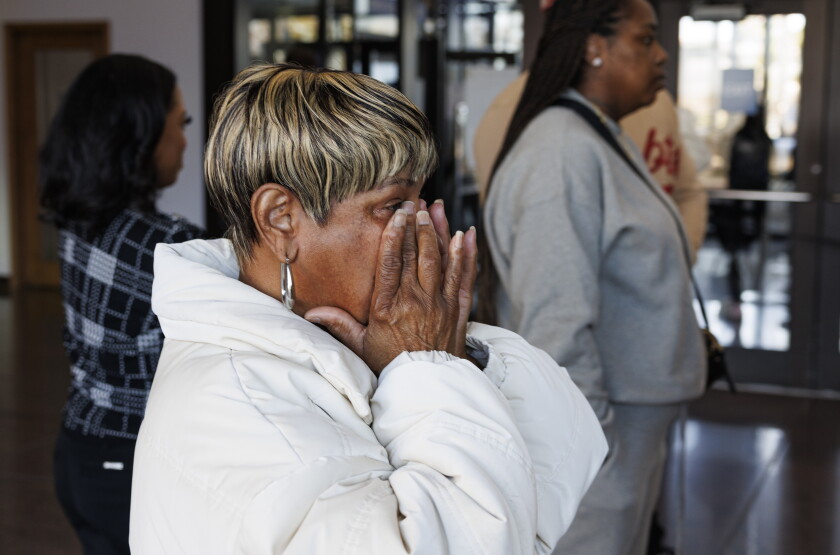
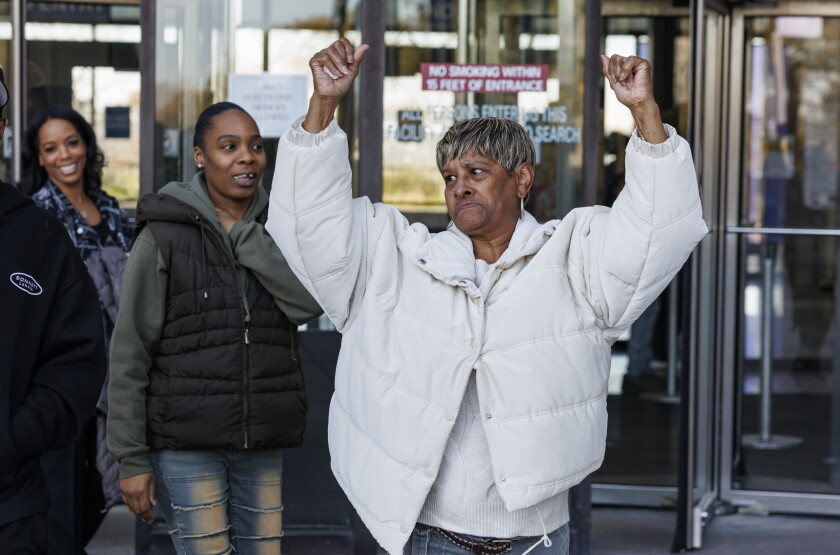
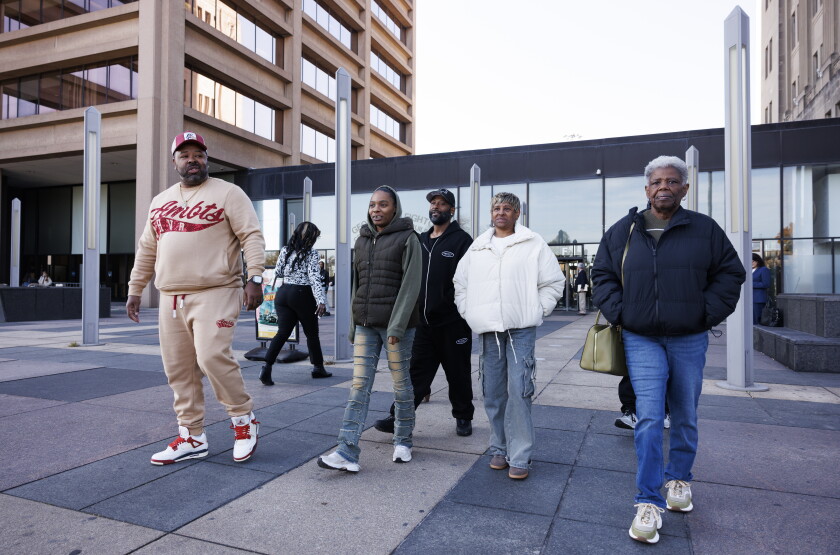
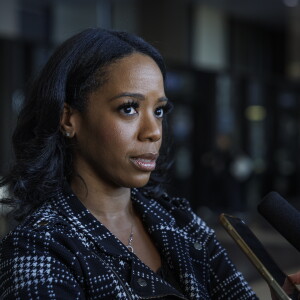
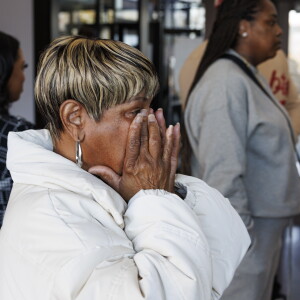
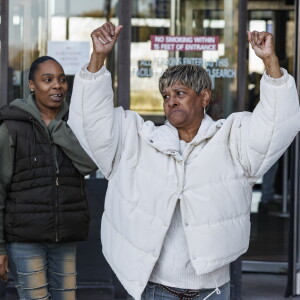
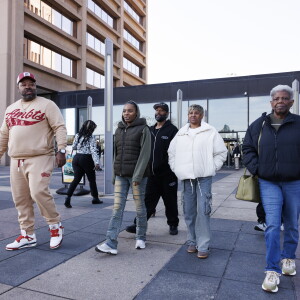
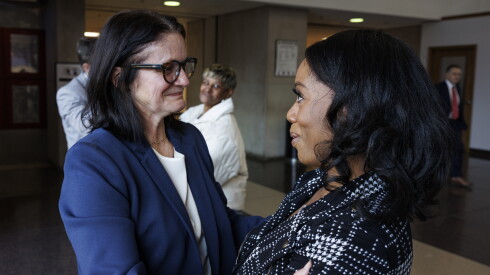
More than a dozen friends and relatives of Garrett were elated. His daughter, Tamika Henderson, has been waiting for his release since she was 9 years old.
“I just feel so much joy inside,” she said after the hearing. “I’m holding back tears. This is wonderful. It has been a long time coming.”
|
Anthony Vazquez/Sun-Times
|
Anthony Vazquez/Sun-Times
|
Anthony Vazquez/Sun-Times
|
Anthony Vazquez/Sun-Times
Henderson said the case’s effects on her life include her last name, changed from “Garrett” by her maternal grandmother after her father’s arrest.
The family called on State’s Attorney Eileen O’Neill Burke’s office to drop the charges.
But Linda Walls, who heads the office’s post-conviction unit, indicated that prosecutors might appeal the ruling. Walls declined to comment outside the courtroom.
O’Neill Burke’s office sent a statement: “We are currently reviewing the court’s ruling to determine the next legal steps.”
Garrett’s attorneys asked for his release from custody. Davis ordered a Dec. 7 hearing on that request and the possible appeal.
In the ruling, Davis said there was a preponderance of evidence that officers at the Chicago Police Department’s former Area 6 detective station beat Garrett’s confession out of him, and that bringing that confession into the murder trial violated his due-process rights.
But Davis denied Garrett’s claim that prosecutors violated his rights by failing to turn over evidence that Zuley had a “pattern and practice” of torture. She also denied his claim that this evidence proved his actual innocence.
“Our biggest hopes were to win on the claims that we won on,” said Jennifer Blagg, Garrett’s lead attorney. “So we are very happy with the ruling.”
It followed an evidentiary hearing that spanned six months and ended in May.
Blagg tied Garrett’s alleged torture to Zuley-led coercion in a string of cases from 1987 to 2003. The cases included four murder convictions later thrown out.
Blagg also likened Garrett’s treatment to torture when Zuley was a U.S. Naval reservist at Guantánamo Bay, Cuba. She recounted testimony last November by Mohamedou Ould Slahi, who appeared via Zoom from Rotterdam, the Dutch city.
Slahi, a Sept. 11 terror suspect, alleged that Zuley subjected him to months of torture in 2003 at the notorious detention camp at Guantánamo.
Slahi, 55, wrote a memoir about the experience that formed the basis of a 2021 film drama starring Jodie Foster and Benedict Cumberbatch.
“The real Dick Zuley, I would submit to the court, is the one Mohamedou Ould Slahi saw,” Blagg said in her closing argument.

But O’Neill Burke’s office urged Davis to disregard claims against Zuley in other cases.
Armando G. Sandoval, one of the prosecutors, called them “allegations, not findings,” and said they had “no connection to Garrett.”
“I’m not saying everything Slahi says is false,” Sandoval said. “But the court should be careful of treating the book … or the movie as objective.”
Sandoval also cast doubt on claims by Garrett that two large men wearing sports jerseys beat Garrett at Zuley’s behest while he was shackled to an eyebolt, and that the two men focused many of their blows on a part of his leg where physicians had implanted a rod after a gunshot wound.
The prosecutor pointed to testimony that Garrett, after his interrogation, was not limping and did not seem to be injured.
Sandoval pointed to Garrett’s initial claim that the beating took place with a rubber hose. The story changed years later, Sandoval said, when Garrett claimed it was carried out with the hose and a phone book.
“His account shifts,” Sandoval said. “That’s important.”
Dantrell was killed on Oct. 13, 1992, as he walked to school with his mother in Cabrini-Green, a former North Side public housing complex. Police said a sniper shot him from an upper floor of a building.
Garrett, convicted by a jury in 1994, was sentenced to 100 years in prison. Held now at downstate Centralia Correctional Center, he is not scheduled for release until 2039, according to the Illinois Department of Corrections.
In 2023, an Illinois Torture and Relief Commission finding detailed an “overwhelming” history of “lengthy and consistent” complaints alleging psychological and physical torture involving Zuley, who was hired by CPD in 1970 and worked more than three decades for the department.
Slahi, who knew Zuley as “Capt. Collins,” testified the detective led “enhanced interrogation techniques,” including isolation, temperature extremes, beatings, sexual humiliation, sleep deprivation, waterboarding, barking dogs, a mock execution at sea, and round-the-clock mistreatment with strobe lights and a looped recording of the U.S. national anthem.
After 70 days of torture, Slahi testified, the detective convinced him that U.S. authorities were allowing his mother to be kidnapped and raped. Slahi admitted he never saw Zuley lay a hand on him but added that he wouldn’t know because he was usually blindfolded.
Slahi testified he eventually confessed to anything his interrogators fed him, starting with plans to attack Toronto’s CN Tower. He said he also falsely confirmed that many individuals had Al Qaeda links.
Slahi was held at Guantánamo for 14 years without charges before he was released to his native Mauritania in 2016. His memoirs about those years were published as a book that led to the film, “The Mauritanian,” directed by Kevin Macdonald.
At the November 2025 hearing, a prosecutor pressed Slahi about visits to Afghanistan in the early 1990s. Slahi answered he was working for U.S. allies there and cut Al Qaeda ties years before the Sept. 11 terrorist attacks.
In Garrett’s case, Zuley testified this past February and April. The former detective said he didn’t know of anyone handcuffing Garrett to the eyebolt or subjecting him to any physical or mental abuse.
Zuley testified he left other detectives in charge of Garrett overnight. The next morning, according to the former detective, Garrett confessed to shooting at members of a rival gang near Dantrell. Garrett later signed a handwritten confession.
Threats and physical abuse, Zuley testified, were less reliable than “rapport building” for extracting information from suspects.
Judges have vacated at least four murder convictions involving Zuley. The exonerees are Lathierial Boyd, Lee Harris, Carl Reed and David Wright.
President Donald Trump’s administration blocked Garrett’s attorneys from questioning Zuley about his work at Guantánamo.