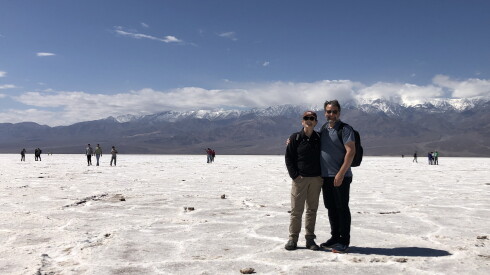
For the first time in nearly 30 years, Jodi Graf can take a deep breath.
Graf, an avid hiker and once a long-distance runner, started having trouble with her breathing in 1997. She was eventually diagnosed with a severe lung disease that continued to get worse over the years.
In December 2023, while she was being evaluated for a lung transplant, her doctors in Houston found a cancerous mass on her lungs. She was too sick to treat the mass with chemotherapy or for surgery to remove it. And most hospitals won’t perform a lung transplant until a patient is cancer-free for at least five years — except for one in Chicago.
“Northwestern is one of the only places in the world that will give you lungs if you have a cancer diagnosis,” said Graf, a NASA robotics engineer. “I didn’t despair because I knew there was another option.”
Graf, 61, eventually got a lung transplant last November at Northwestern Medicine. She’s one of many patients in a new landmark study from Northwestern that found patients with advanced lung cancer are far more likely to survive if they receive a lung transplant compared to patients who received standard cancer treatment.
The medical community has long considered it too risky to transplant lungs into patients with advanced cancer because of the potential risk for cancer cells to spread to the new lungs.
But the new study, published Wednesday in the Journal of the American Medical Association, challenges that notion, said Dr. Ankit Bharat, Northwestern’s chief of thoracic surgery and a co-author of the study.
Lung cancer is the leading cause of cancer-related deaths in the U.S. It’s also one of the most common parts of the body for other types of cancers to spread to, Bharat said.
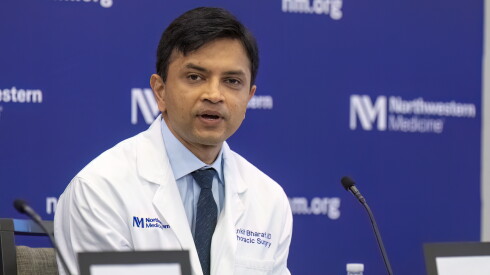
Dr. Ankit Bharat, chief of thoracic surgery and director of Northwestern Medicine Canning Thoracic Institute, co-authored the study, published Wednesday in the Journal of the American Medical Association, showing how patients with advanced lung cancer benefited from lung transplants.
Tyler Pasciak LaRiviere/Sun-Times
The study included 404 adults with end-stage pulmonary disease, including 98 patients with Stage 4 lung cancer. Of that group, 17 received a lung transplant, and 89 were treated with standard cancer treatments from September 2021 through June 2025. The patients in the study received a lung transplant only if the cancer was isolated to their lungs, had caused significant damage to their lungs and if they had exhausted all other standard treatments, like immunotherapy and chemotherapy.
“Those patients were not only dying from cancer, but they couldn’t breathe. They were likely on a ventilator, and they basically had no life left,” Bharat said.
During the nearly four-year study period, every transplant patient was alive after a year, while less than half of patients treated with medical therapy alone lived.
The lung transplant also turned the patients’ conditions around. One of Bharat’s patients was about to withdraw care when the lung transplant was offered. He survived.
“That’s one of the most profound aspects of this study is how patients benefited from it,” Bharat said. “They were at the end of their lives and had no other hope, no other treatment options. Then we were able to extend their life and give them a higher quality of life, too.”
Bharat told the Chicago Sun-Times the idea for the study came while he and his colleagues were treating patients hospitalized with COVID-19 early in the pandemic.
The experience made Bharat wonder if that approach could be replicated with patients suffering from advanced lung cancer that was isolated in the lungs.
“We were the first in the nation to understand how COVID was killing people and destroying the framework of the lungs,” Bharat said. “Our observation from that was that the only way to save these patients was to replace these lungs, which was very controversial at the time because these were really sick patients.”
After being sick for many years and carting around oxygen tanks, Graf said she finally can think about her future again. She and her husband talk about when they want to retire. They’re planning a hiking trip out West with their two adult sons. She hopes to travel to the Netherlands in the spring to bike through tulip fields.
“I went from thinking I probably won’t have a future, but now I am able to think about my future,” Graf said. “I’m really enjoying being able to breathe.”