A federal ban on intoxicating hemp-derived products is set to take effect nationwide late next year, but the psychoactive goods that have soared in popularity through a loophole could be outlawed much sooner in Chicago under a proposal before the City Council.
Hemp industry leaders were blindsided by the federal ban tacked onto the spending bill that President Donald Trump signed last month to reopen the government. Barring additional action from Congress, hemp-THC products will be illegal in November 2026.
Local business owners on Tuesday said they were just as stunned by 13th Ward Ald. Marty Quinn’s proposed ordinance that would ban most sales of intoxicating hemp beverages, gummies and other products in the city within 10 days of council approval.
“This ordinance turns respected Chicago businesses into criminals,” said Glenn McElfresh, co-founder of the hemp beverage company Plift. “It would discard millions of dollars in sales taxes at a moment when the city is facing a billion-dollar budget gap. And most importantly, this ordinance puts real people’s livelihoods on the line.”
Quinn’s proposal, which will be considered Wednesday by the council’s Committee on License and Consumer Protection, would only allow hemp products to be sold at cannabis dispensaries. That’s already the case in his Southwest Side ward and six others where alderpersons have pushed through hemp bans within their own boundaries.
Hemp products, sometimes marketed to kids, have become ubiquitous at smoke shops and convenience stores since 2018 federal legislation inadvertently allowed for highly concentrated THC to be extracted from hemp. The chemical composition is nearly identical to that of marijuana and can give users the same high.
Under the federal ban, essentially all intoxicating THC will be considered marijuana next year. Quinn’s measure would fine businesses up to $5,000 for selling hemp-THC products in the meantime.
“We can’t lose sight of this industry that’s been created through a loophole and what it’s brought to our communities in terms of shady, dodgy storefronts selling products to kids,” Quinn told the Sun-Times.
But McElfresh and other entrepreneurs from Illinois’ $100 million hemp beverage industry refused to be lumped in with “the mystery gas station synthetics and unregulated, often imported items that have shaped public misperceptions.”
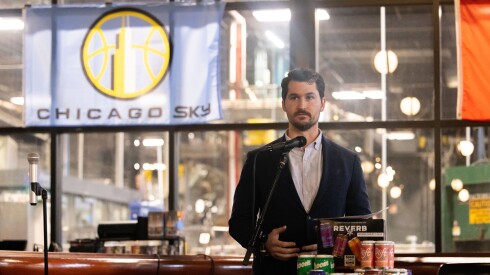
“We are reputable businesses with longstanding Chicago roots,” McElfresh said during a news conference against Quinn’s proposal at Revolution Brewing’s Avondale taproom.
Revolution founder Josh Deth, whose craft brewery got into the hemp beverage market this year, said those drinks are “now our top priority for innovation,” with consumers drinking less alcohol since the pandemic. A citywide ban would force him to consider job cuts.
“I’m going to be a business owner walking into City Council asking for more regulation, and, ‘Please, can we pay some taxes and generate some money for the government?’ It’s not every day that that happens,” said Deth, who expressed optimism that hemp industry lobbyists could persuade Congress to pass new regulations to avert next year’s ban.
“They would not have passed a 365-day delay if they did not want to revisit this issue, so there’s a clear opening there,” Deth said.
Quinn said he was confident his citywide proposal would pass the committee hurdle, but he wasn’t sure how it would fare before the full City Council. Twelve co-sponsors signed onto the measure.
Mayor Brandon Johnson had banked on $10 million from regulating and taxing hemp products in his initial city budget proposal to help close a billion-dollar shortfall, but his team was left scrambling for other revenue when the federal ban was announced.
“The mayor, in my opinion, has been on the wrong side of this. He’s thinking dollars, not safety,” Quinn said.
Johnson’s office has said “the mayor’s top priority is to ensure that hemp consumption is regulated and safe in the city of Chicago.”