Revelations from Chicago’s “Broadview Six” case are now surfacing in controversial Trump administration prosecutions across the country, as defense attorneys question whether the feds have abused the secretive grand jury process.
The latest example came Wednesday, when defense attorneys for indicted journalist Don Lemon in Minnesota told a judge “the alarming pace” of federal prosecutors’ loss of trust “has reached a tipping point” — and then pointed to the brewing scandal in Chicago.
Meanwhile, Chicago U.S. Attorney Andrew Boutros announced “sweeping reforms” to how his office handles grand juries. The new process, his office said, “will be more transparent, effective, and impactful while greatly reducing the likelihood of mistakes and errors.”
Defense attorneys in the Broadview case were not impressed, however. Joshua Herman, who represents former congressional candidate Kat Abughazaleh, called it “telling, too little, too late.”
Boutros also said he and the Justice Department had taken “swift action related to internal personnel matters,” though he didn’t share additional details.

The “Broadview Six” case against six Operation Midway Blitz protesters fell apart days before trial after a judge discovered improprieties during grand jury proceedings. The alleged misconduct by prosecutors came to light only after a lengthy push by defense attorneys to get the judge to review unredacted transcripts of what occurred.
Charged along with Abughazaleh in the case were Oak Park village trustee Brian Straw, former Cook County Board candidate Catherine “Cat” Sharp, 45th Ward Democratic committeeperson Michael Rabbitt, musician Joselyn Walsh and onetime Abughazaleh campaign worker Andre Martin.
They were accused of joining a larger crowd that surrounded an immigration agent’s vehicle last September. The crowd pushed, scratched and otherwise damaged the agent’s SUV. Of that crowd, federal prosecutors charged only six people, all largely involved in local Democratic politics, raising questions about selective prosecution and freedom of expression.
Charges were dropped against Sharp and Walsh in March. The remaining charges were dismissed Thursday after U.S. District Judge April Perry uncovered the alleged misconduct.
Shockwaves from the case have begun to reach courts outside of Illinois. Lawyers for Lemon, charged in January with a conspiracy against the right to worship at a church, wrote in a filing Wednesday that “the past 15 months have seen an unprecedented and growing distrust in the Justice Department’s use of the grand jury process.”
While judges have long afforded federal prosecutors a level of trust, known as the “presumption of regularity,” Lemon’s lawyers wrote that the “presumption has been thoroughly eroded through case after case of documented abuse of the grand jury process.”
Pointing to Chicago’s “Broadview Six” case, they also accused prosecutors here of “increasingly unprofessional responses” as defense attorneys pushed for access to grand jury transcripts. Specifically, they noted prosecutors had accused defense attorneys of “whingeing” and “histrionics.”
One of Lemon’s lawyers is Joseph Thompson, a former high-ranking federal prosecutor in Minnesota who also once served as a federal prosecutor in Chicago.
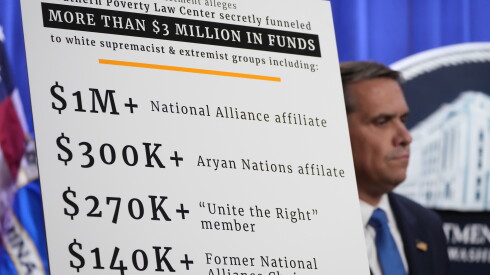
Lawyers for the Southern Poverty Law Center also flagged the events of the “Broadview Six” case to a judge on Tuesday, in support of their own effort to access grand jury transcripts. A federal grand jury in Alabama charged the organization in April with fraud.
Grand juries are meant to be a check against overzealous prosecutors. However, they’ve long been viewed cynically as easily manipulated by prosecutors. That said, they’ve more recently been seen as a bulwark, with grand juries rejecting charges on multiple occasions in 2025.
The panels are generally made up of 16 to 23 people who meet in secret and hear only from prosecutors and their witnesses.
In Chicago, Boutros on Wednesday announced reforms to grand jury procedures that his office said were “being implemented for the first time anywhere in the country.” The most specific reform cited in a press release, though, was “extensive, deep-dive training from national experts outside the office.”
“These remediations should also be deeply curative and put to rest once and for all the divergent practices that have existed across the office for decades, including from one assistant U.S. attorney to another as well as from one generation to the next,” Boutros said. “That’s because these are clear, bright line rules that everyone must abide by, which should streamline and simplify the decision-making and disclosure process, as opposed to bedevil it.”
Rabbitt lawyer Nancy DePodesta said she welcomes the new training in Boutros’ office. However, she pointed out that problems in the Broadview case went beyond the grand jury. The judge noted last week that much of the alleged misconduct had been redacted from transcripts of the proceedings given to her by federal prosecutors.
DePodesta said she was “concerned by the total lack of attention to efforts by some in the office to conceal the misconduct.
“Training does nothing to address the larger issue — the cover up — which must not get lost in this case,” DePodesta said.