Like that kid at your high school who was somehow always a step ahead of everyone else in listening to the next cool band, Chicago theater audiences recently have been given plenty of opportunities to crow about seeing future hits before the rest of the country.
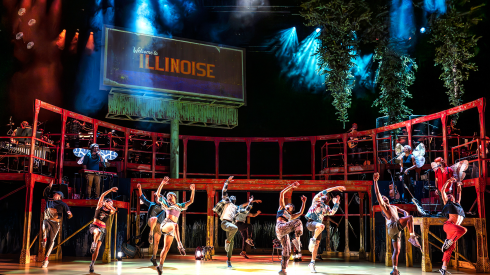
“The Notebook,” for example, is playing now at the Nederlander Theatre on tour after a Broadway run, but its world premiere took place at Chicago Shakespeare Theater in 2022. “Illinoise” had a major-theater debut also at Chicago Shakespeare, in 2024, from which it went off-Broadway, then to Broadway (where it won a Tony for Best Choreography), and is now coming back for another Chicago Shakes go-round in 2027.

Other recent musical examples include “The Who’s Tommy,” “Spamalot” and “Kinky Boots.” Over at Steppenwolf, “Purpose” and “Little Bear Ridge Road” both scored recent “Best Play” nominations for Tony Awards after world premieres here (“Purpose” came out victorious, while “Little Bear Ridge Road” did not).
What’s behind this run of Chicago-launched shows to bigger stages and accolades? What determines whether a show makes it out of Chicago at all?
The first thing to recognize about the life cycle of a show is that the show is alive. That is to say, it’s always evolving, and not only in its so-called out-of-town tryout phase. (That is to say, the town it’s “out of” is New York.)
“That’s what I love about musicals,” said producer Kevin McCollum, whose resume lists lines for “Rent,” “Avenue Q” and “In the Heights,” all of which won him Tonys. “They’re living organisms.”
For “The Notebook,” McCollum came to Chicago Shakespeare to propose an out-of-town tryout. McCollum had a pre-existing connection with the theater, on projects such as the North American premiere of “Six” and the American premiere of “Ride the Cyclone,” and dating back to the germ of his time attending high school in Deerfield.
From a producer’s perspective, a theater like Chicago Shakes has a built-in audience. And in Chicago, it’s a high-quality audience, McCollum said.
“They’re sophisticated, they’re smart, they’re generous, but they also tell you where you are,” he said. They won’t mince words on misfires. “Chicago audiences are very honest. You know where you stand.”

It makes sense for theaters to take the gamble. The theater gets a buzzy new work, lots of good publicity if they partner with shows that succeed, and in many cases, a small percentage of revenues for the ongoing life of the show.
Kimberly Motes, the executive director of Chicago Shakespeare Theater, acknowledged the hot streak lately for her theater with shows transferring to Broadway and elsewhere. In addition to “The Notebook” and “Illinoise,” in the past few years Chicago Shakes also transferred “Paranormal Activity,” “The Lord of the Rings” and “Sunny Afternoon” — all of which germinated in England before heading to Chicago — to prominent stages in other cities.
These shows are partnerships between the outside producers and the theaters, sometimes from as early in the process as acquiring rights to use source material. Theaters can help with casting, design, publicity and anything else where they have networks and experience in place. The commercial producers bring their own networks and investors. “The commercial producer may provide the resources for things that are beyond what we would normally do if we were producing it ourselves,” Motes said.
Motes said it’s not just the sophistication that enamors Chicago to producers, but also the openness. “In other markets it might be arms folded, leaning back, saying, ‘Show me.’ Chicago audiences lean forward, open their arms and say, ‘Show me!’” she said.

And clearly, it’s cheaper. McCollum said the jump from Chicago to Broadway took “The Notebook” from a $3 million endeavor to a $15 million endeavor. Once on Broadway, there’s a black-and-white definition of success: “A hit is a show that returns the money,” McCollum said, meaning the show earns back in revenue what was initially invested.
A longtime adage states that one out of five Broadway shows recoup their initial investment. But perhaps the more critical problem now is the reluctance to open them: Last season, the New York Times noted only six new musicals opening on Broadway, compared to 15 the year prior, and detailed how the rising costs of staging them far exceeds ticket prices. Plays appeared to fare better.
But looking only at recouping investment is shortsighted, McCollum said. Even setting aside the question of artistic versus commercial success, shows can have long and complicated lives. They exist in counterpoint with the zeitgeist, McCollum said, and you never know when they might get renewed recognition.
Stephen Sondheim’s “Merrily We Roll Along,” for instance, flopped in its 1981 debut, but has had a significant afterlife, including a successful revival in 2023. As another example, the production of “Chicago” that has run for nearly 30 years on Broadway is a revival.
The Broadway run is meaningful for advertising to audiences — you can say a show is a Broadway show once it’s had one — but it isn’t the be-all and end-all. “Broadway is an important part of the life of the show,” McCollum said. “I think you have to look at it as the launch event.”
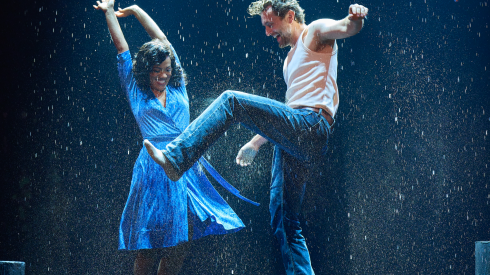
A possible next phase after a Broadway run begins — but not necessarily after it ends — is touring. Some shows excel in New York and fizzle on tour; others the opposite. McCollum said “The Notebook” did not recoup on Broadway, even though it had a solid nine-month run. But so far the tour has done well, and in yet another evolutionary phase, the producers are licensing productions in other countries, such as the Philippines, Brazil and Germany.
Although it seems counterintuitive, it can be good for a tour when a show closes on Broadway, because the assets of the New York production can be repurposed. Sets, costumes and sometimes performers can go on the buses and trucks and save the producers having to re-create or recast.
Which brings us back to “Illinoise.” Shows don’t have to tour to live on beyond their New York run; sometimes they just need a theater to champion a remount. Motes and Chicago Shakes wanted “Illinoise” back.
“It did not have the national tour,” Motes said. “As we were planning the 40th anniversary season, Edward Hall, our artistic director, and I felt like this was unfinished business.”
Unfinished business is one way to put it. Another might be rebirth.