In a room transformed into a lush forest, a dad knelt beside his nervous daughter, gently reassuring her.
“I know this may be scary, but these butterflies aren’t dangerous,” he explained. “They just want to spread their wings and fly.”
The Peggy Notebaert Nature Museum hosted its annual Flutter into Fall event Saturday, celebrating monarch butterflies as they prepare for their journey south to Mexico. Children and adults learned about the monarch’s migration patterns, enjoyed arts and crafts, took in cultural performances and watched butterflies be released into the sky.
“Education of people is important for the betterment of our environment, and that helps these species,” said Jeffery Wolfthal, public programs manager at the Nature Museum. “The more you understand and appreciate something, the more likely people are to do something to protect it.”

Allen Lawrence, curator of entomology at the museum, manages its tropical butterflies. He said events like Flutter into Fall can help children see how their interest in insects can grow into a career.
“When I was young, I went through that bug-collecting phase many kids do,” Lawrence said. “I just never outgrew it.”
Climate change and weather conditions from season-to-season can dictate whether monarchs sustain its life cycle. Despite Chicago’s stormy summer weather this year, Lawrence said this was a good year for the species.
Lawrence is a member of the Illinois Butterfly Monitoring Network, a community science program. The organization teaches residents to safely capture and mark monarchs for research. During the event, Lawrence led a demonstration showing visitors how the process works.
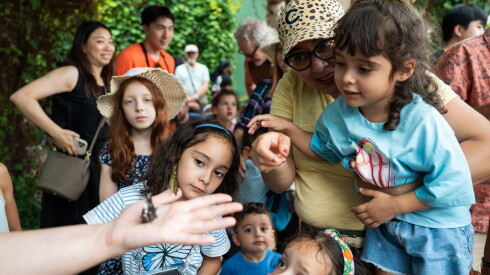
Brisa Nuno has visited the museum numerous times with her family, but had never seen how butterflies are tracked.
“I found it interesting to know how to identify the female and the male monarchs,” she said.
Once the butterflies were marked, Lawrence led the group in a countdown before releasing them into the wild.
“I wasn’t expecting the butterfly to fall,” said Brisa’s daughter, Eloise Nuno. “But then it flew.”
Upstairs, tropical butterflies that had recently emerged from their chrysalises were released into the Judy Istock Butterfly Haven.
“I’ve never been around them like this where there’s so many of them,” Kervin Charles said. “You normally just see one or two during the day, but it’s nice to be around so many of them, different varieties.”
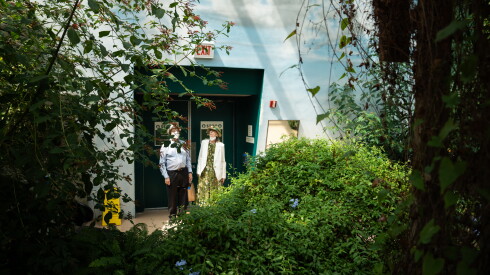
Charles and his family traveled from Merrillville, Indiana, for the Flutter into Fall event. Before entering the haven, they watched a performance by Xochitl-Quetzal Danza Azteca.
Organizers said the event was meant not only to educate visitors about the science of monarchs, but also about the cultural significance of the species. Monarchs span much of North America during their migration and are symbols of resilience. In Mexican culture, they are also associated with Día de los Muertos, where their arrival is sometimes viewed as representing a spiritual connection between the living and the departed.
“Butterflies remind you of happy times,” Charles said.