The Obama Presidential Center recently opened to great fanfare at a June celebration that included former presidents, celebrities and hundreds of Chicago residents. While tickets are required to enter the museum, the overall center is open to the public and serves a public purpose, according to the Obama Foundation and other supporters of the space.
But the debate over whether the former president was entitled to use Jackson Park for his museum was a long and contentious one. Critics opposed the use of space in a historic public park when private alternatives existed.
These types of legal disputes are far from new. In fact, a prominent Chicagoan from the 1800s likely would have been among the voices of dissent, according to his biographer.
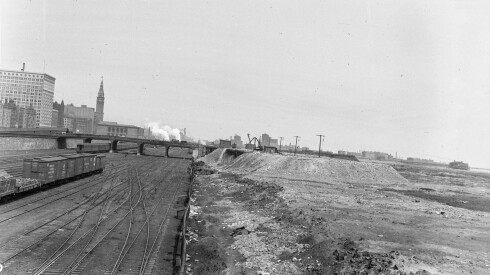
Aaron Montgomery Ward was responsible for one of the city’s most drawn-out fights over public parkland.
The name may be familiar from the now-defunct chain of department stores that bore his name after his death, or as the catalog guy who revolutionized mail-order shopping over 150 years ago. His lesser-known legacy, perhaps, is his fight over Grant Park.
Ward spent 22 years and many thousands of dollars fighting to keep Chicago’s premier downtown park “forever open, clear and free” from buildings. But why did he do it? And why isn’t he celebrated more for his crusade?
The answer involves Ward’s personal aversion to publicity and his stated desire for accessible greenspace for all residents.
Ward vs. nearly everyone
It might be easiest to think of Montgomery Ward & Co. as the 1870s version of Amazon.
“It was just about everything that you could possibly want,” said Roberta Reb Allen, author of a forthcoming Ward biography. “He was basically responsible for the development of the mail-order industry.”
From his warehouses in Chicago, Ward shipped all kinds of goods, from buggies to booze and everything in between, to rural customers via the railroad. He also promised customer satisfaction or your money back, rare during this period. That business model and its radical guarantee made Ward one of the wealthiest men in America and was later emulated and scaled up by Sears, Roebuck & Co.

It also gave Ward deep enough pockets to initiate an onslaught of litigation against Chicago’s business and political elite on the many occasions in which they attempted to build on Grant Park.
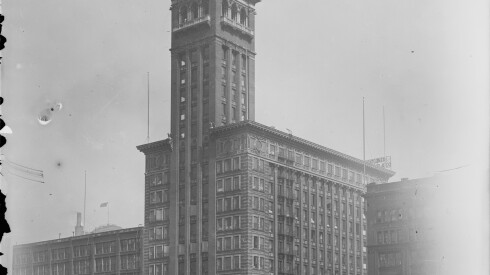
He bought land on Michigan Avenue in 1887 to build the Montgomery Ward Tower Building, and here began his mission to thwart all manner of developments.
“Ward at one time or another was confronting the federal government, the Illinois legislature, the city council, the South Park Commissioners, the trustees or directors of the Crerar Library, of the Field Museum, the Olympic Committee, Illinois Central,” Allen said, reeling off Ward’s opponents. “He had a lot of people who were not very happy with him.”
Ward’s legal theory for opposing developments in Grant Park hinged on maps that were used to first sell lots along what was called Lake Park in the 1830s. Some maps included a notation on the park land that read, “Public ground: A common to remain forever Open, Clear, & free of any buildings or other Obstructions Whatever.”
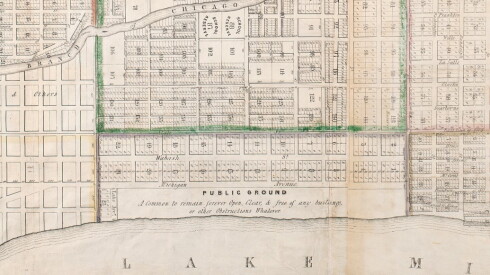
“People who wanted to build and buy a lot on Michigan Avenue had this promise based on these maps that were used in selling the lots that there would be no buildings obstructing their view,” said legal scholar Tom Merrill, co-author of “Lakefront: Public Trust and Private Rights in Chicago.” “So they went for higher prices.”
Ward’s attorneys cited these maps in dozens of lawsuits and injunctions aimed at stopping all kinds of structures in Grant Park: a bicycle track, an armory, a circus tent and many more, including the Crerar Library and the Field Museum (today located in Hyde Park and south of Grant Park respectively, thanks to Ward).
But Ward also let some developments slide. When construction began on the Art Institute in 1892, he issued no protest. He also gave his consent for the construction of a temporary post office in 1895, an “ungainly building,” according to Merrill. But it’s easy to read that decision as self-serving: Merrill noted that at that exact time, Montgomery Ward & Co. had become the single largest customer of the U.S. Postal Service.
The Chicago Tribune first called Ward “watch dog of the lake-front” in 1896. Over 22 years, Ward’s cases reached the Illinois Supreme Court four times. The high court sided with Ward every time, ruling that buildings could only go up in Grant Park with the consent of adjacent property owners, Merrill said.
Next time you visit Buckingham Fountain, try to imagine the Field Museum there instead, in its intended location. Daniel Burnham and Edward Bennett’s dazzling Plan of Chicago involved an expanded Grant Park, with the Field Museum of Natural History as its centerpiece. At the beginning of two related lawsuits that went to the Illinois Supreme Court, Ward offered the directors of the Field Museum something of a truce: They could build their museum in the middle of Grant Park as long as they stopped there.
“They wouldn’t agree to that,” Merrill said. “They had this vision of Grant Park being filled with lots of neoclassical monumental buildings, and they didn’t want Ward messing up their vision.”
Ward’s decades-long opposition was “far more bitter than I think most people realize,” Allen said.
Ward’s mysterious motives
In current value terms, Ward spent over $1 million in legal fees defending Grant Park. But why?
“For whatever reasons — maybe mixed motives — he was passionate about this,” Merrill said.
Merrill has considered several possible reasons for Ward’s litigiousness: that he was an environmentalist ahead of his time; that he was a populist looking out for poor Chicagoans; that he hated noise and disorder; that he was driven by how a particular project would affect real estate value on Michigan Avenue. But Merrill noted that Ward was inconsistent with his interventions. Sometimes he opposed small structures, sometimes large ones, sometimes temporary ones. Perhaps Ward was just competitive.
“He had achieved great success initially, and he kind of got into it,” Merrill said. “I think he sort of got the taste of blood in his mouth for fighting these cases in court because he was winning so much, and so he just kept doing it.”
Because of his extreme privacy, both Allen and Merrill note, it’s difficult to pin down Ward’s motives. He wrote no memoirs, he declined write-ups in little books of important Chicagoans and he only gave a single interview to the Chicago Tribune, in 1909 amid his contentious Illinois Supreme Court battles.
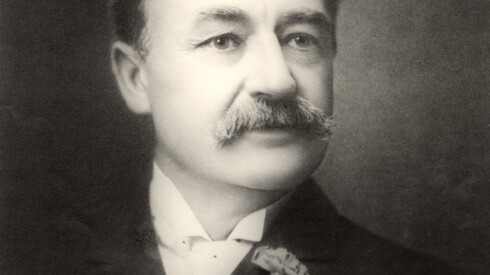
“Had I known in 1890 how long it would take me to preserve a park for the people against their will, I doubt if I would have undertaken it.” Ward told the Tribune. “Here is a park frontage on the lake, comparing favorably with the Bay of Naples, which city officials would crowd with buildings, transforming the breathing spot for the poor with a showground of the educated rich. I do not think it is right, and the highest court in the state has thrice upheld me.”
After spending years digging into Ward’s backstory for her forthcoming biography, Allen takes him at his word.
“I do not think that you do a fight for 22 years if you do not have a vision of what you want to leave, and he wanted that park to be for the people,” Allen said. “In the end, he did not disappoint me as a person. I think he was real.”
Julia Bachrach, a Chicago historian and preservation consultant who worked for the Chicago Park District for over two decades, came to a similar conclusion.
“I feel that Montgomery Ward deeply, into the core of his soul, felt that Chicago’s lakefront needed to be preserved as the playground for the people,” Bachrach said. “I think that he had this very compelling, burning desire to make sure that civic leaders, that the South Park Commission, that the decision makers did the right thing. And he felt that that was the right thing.”
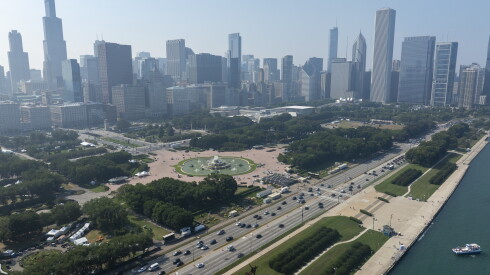
The ultimate friend of the park
Ward’s legacy is a lasting one for Friends of the Parks, a Chicago organization that has frequently fought to keep public land free of obstructions.
He is frequently cited in fights over who gets to build what on public land, “because he’s very appropriate in one way or another,” said Fred Bates, a longtime board member of Friends of the Parks. “Star Wars” director George Lucas’ failed to build a museum on the lakefront. The Obama Presidential Center went up on existing parkland (in that case, Friends of the Parks opposed the project but did not sue to stop it.)
“If we have a saint, it’s probably Montgomery Ward,” Bates said. “‘Forever open, clear and free’ is more than a mantra, it’s an almost biblical way of saying this is so important to our city and its health that any intrusion on that concept is troubling.”
But these days, Bates considers Ward more of a spiritual guide than a legal one. That’s because the Ward decisions were narrow; they only apply to the actual geographic parameters of Grant Park.
“If you live in some town in Illinois like Joliet or Peoria and there’s some park in the middle of the town that was on some original plat that says ‘forever free of buildings’ or ‘forever to be used as a park,’ you can’t use this common-law dedication right if the city wants to put up condominiums, according to the Illinois Supreme Court in 1970,” Merrill said, referencing a case called Paepcke v. Public Building Commission. “I mean, they might change their mind, but who knows.”
As for institutions with Ward’s name on it, there aren’t many outside of those associated with his business. Allen said that might be because memories of Ward often get swallowed up by the company, from which Ward took a step back in 1903. The business later saw bad press for feuding with President Franklin Roosevelt during World War II; it struggled through the rest of the 20th century before liquidating in 2001.
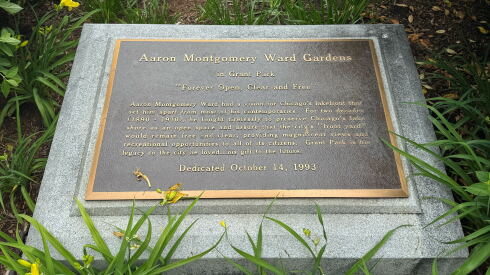
The man, however, is the namesake for the Montgomery Ward Memorial Building, and a flagship facility of Northwestern University’s School of Medicine, so named after Ward’s widow donated $8 million in the 1920s. Aaron Montgomery Ward Park in River North was named in 2010 after a request from Friends of the Parks. And in acknowledgment of his efforts to protect the lakefront, there’s the Aaron Montgomery Ward Gardens, dedicated in a section of Grant Park in 1993.
“Unlike many millionaires and billionaires today, he did not try to toot his own horn or promote himself in any way whatsoever,” Merrill said.
Perhaps the main reason there are not more tributes to Ward is the fact that for 22 years, Ward fought the rich and powerful Chicago elite — the exact people who put up monuments and names on institutions. Ward, although rich and powerful himself to be sure, was not the type to do that for himself.
Justin Bull is a producer for Curious City.
More about our question-asker

Jeanette Sey lives in the northwestern suburbs and often visits Downtown Chicago for events like the Air and Water Show or the Printers Row Lit fest. She doesn’t think the name Aaron Montgomery Ward is displayed prominently enough near the lakefront.
“Well, of course everybody knows him as a retailer,” Jeanette said. “But what I don’t think most people know is that he spent 20 years to preserve the lakefront for everybody to enjoy.”
She wondered why Chicago does not have more tributes to Ward.
“I just think it’s kind of an injustice, and he kind of hinted that he wasn’t going to be appreciated for it,” she said. “He suggested that ‘I don’t think I’ll be remembered for this,’ so it’s kind of a fulfilling prophecy.”
Jeanette doesn’t think the Aaron Montgomery Ward Gardens near Michigan Avenue and 11th Street are enough of a tribute because they are not close enough to the lakefront.
“I think the Montgomery Ward Lakefront Trail has a nice ring to it,” she said.
In a statement, the Park District said it has no current plans for any more Ward fanfare. Given the available evidence, it seems that’s the way Ward would have wanted it.