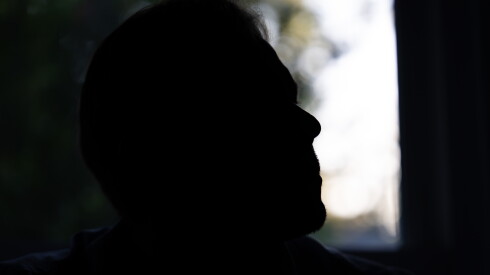
A loud bang jolted the Tiulenevs as they sat around the dinner table on a windy night in southern Russia in the fall of 2024.
Someone had hurled a Molotov cocktail toward their home, setting it ablaze. Later, the family found a note in the yard saying they should be sent “to hell,” indicating the attack was targeted.
It came after they had spoken out repeatedly against Russia’s war on Ukraine, despite laws that made it illegal to publicly criticize the invasion.
“Good thing we weren’t asleep,” says the family patriarch, Dmitrii Tiulenev, in his native Russian. “Otherwise, we would have been burned alive.”
The family’s cries for help fell on deaf ears.
Then, prosecutors sent Tiulenev an alarming letter: He and several family members were being called in for questioning over their anti-war stance. “They’re about to lock you up,” Tiulenev recalls his lawyer telling him.
The family fled to neighboring Georgia and stayed for almost a year — until the attorney told them Russian authorities were looking for them abroad. They quickly applied for visas to Mexico and packed whatever belongings they had, hoping to reach the United States.
“Where else could we go?” says Tiulenev. “The safest place in the world that doesn’t turn over its political dissidents is America.”
Ultimately, though, the family was separated at Mexico’s border with the United States.
Two of Tiulenev’s adult children and his son-in-law were sent to a detention center in California, where they’ve been held for nine months. An immigration judge denied their applications for asylum and other protections in April 2026, finding their evidence of political persecution too speculative. The judge ordered them removed to Russia, but they’ve appealed.
Another judge released Tiulenev, his wife and their three youngest children on electronic monitoring after they spent 100 days at another facility in Texas. They’ve settled in Chicago’s north suburbs — for now.
The Tiulenevs are part of a wave of Russians who left their country after its full-scale invasion of Ukraine in 2022 and sought refuge in the United States. The number of Russian asylum cases rose sharply in the two years that followed, according to federal immigration court data analyzed by the Chicago Sun-Times and WBEZ.
But since 2024, attorneys and advocates say, many Russian asylum-seekers have faced a harsher path: longer detention, limited access to lawyers and evidence and a greater risk of losing their cases.
Those barriers have become even more serious as immigration judges deny a growing share of asylum claims. The shift has come amid the second Trump administration’s broader efforts to increase deportations and move cases faster through the system.
For those deported, the real danger begins when they land back in Russia.
Attorneys and advocates say that Russians known for opposing the war could be screened by security officials at the airport, questioned, searched, monitored and detained. They could then face years navigating a Russian justice system accused of subjecting government critics to unfair trials, degrading prison conditions and torture.
“If we landed in Moscow, [Russian] agents would separate us at Sheremetevo [Airport] and throw us into jails,” Tiulenev says. “And they would take the kids — that is 100% certain.
“And only because we spoke our minds.”
Standing against the war
The Tiulenevs wound up in the Russian government’s crosshairs after one of the family’s adopted children, Danya Milokhin, appeared in a viral video in November 2022.
Milokhin, one of Russia’s best known TikTok stars, joined a Ukrainian blogger in singing both nations’ anthems as a symbol of unity.
Soon, Milokhin became the target of a smear campaign. Russian officials called him a “traitor” on social media, propaganda outlets published critical articles about him and political commentators slammed him on national television.
Milokhin moved to the United Arab Emirates. But his family remained in Russia, where they faced threats and harassment.
Still, the family continued to speak out online against the war, knowing public criticism could be punished as a crime. That’s because Russian authorities have used wartime censorship laws to prosecute people for criticizing the military and speaking out against the invasion.
Now, the family’s fight has continued in exile, thousands of miles from home.
Calls from the California detention facility are the only way they have all stayed connected. During one recent conversation, Tiulenev’s 22-year-old daughter, Viktoriia, asked how the younger children were doing as she sat in custody.
“The kids are having nightmares,” Tiulenev told her over the phone.

An attorney for the three detained adults says the family submitted evidence that they opposed the war and caught the attention of Russian authorities. The evidence included news articles, a summons for questioning and records showing a criminal case had been opened against them.
But some judges are asking for more proof that a person will be harmed if they’re deported, the attorney says.
“It’s actually kind of a miracle if a person wins asylum at this point. But with this particular case, I had more conviction that it would win than with other cases,” says the attorney, who spoke on the condition of anonymity, saying she fears reprisal from the Trump administration for her work on immigration cases.
In April, a judge refused to grant asylum to the three detained family members, ruling the evidence they provided wasn’t enough to prove they faced a real risk of arrest in Russia.
Their attorney says a growing number of immigration judges have made similar rulings in cases involving Russian asylum-seekers in the last two years. Some judges view Russia’s punishment of anti-war speech as prosecution under Russian law, not political persecution covered by U.S. asylum law, the attorney says.
“To me, it sounds ridiculous,” she says. “Because they’re saying that Russia can draft any law it wishes, imprison under this law anybody it wishes, and we have to just accept it.”
The judge also denied other forms of protection that could have prevented the U.S. from sending her clients back to Russia, including protection under a United Nations treaty that prohibits deporting someone to a country where they face the risk of torture.
That threat hangs over the Tiulenevs, but there’s still hope they can be reunited. On Friday, the three detained family members were granted a bond hearing that’s expected to happen in the coming weeks.
“We will keep moving forward,” Tiulenev says. “Being separated from your children for so long is the hardest thing a parent can go through.”
Detention makes asylum cases harder to win
Russian America for Democracy in Russia is a Washington-based nonprofit that has historically supported political prisoners, advocated against Russian President Vladimir Putin’s government and organized pro-democracy Russians in the United States.
But some of RADR’s work shifted in 2024, when more Russian asylum-seekers started being detained at the southern border, instead of being released while their immigration cases moved forward.
“Something changed, and it changed so drastically that we couldn’t look away,” says Dmitry Valuev, RADR’s president. “We feel that we are between two fires. On one hand, there is [the] Russian government that pressures us. And on the other hand, there are regulations and limitations here in the United States that create additional obstacles.”
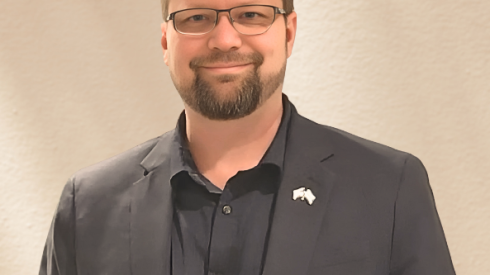
RADR was formed in 2021 after the arrest of Alexei Navalny, the Russian opposition leader whose anti-corruption work helped energize pro-democracy Russians.
Navalny died in 2024 in an Arctic penal colony. Russian officials initially said he died of natural causes, but several European governments later said toxicology analyses showed he had been poisoned with a rare toxin.
RADR now connects detained Russians with lawyers, translators and volunteers. But even strong asylum cases can be hard to prove from inside an immigrant detention facility, Valuev says.
Detainees might need criminal records from Russia, medical documentation or online posts to prove they face a specific risk of persecution if they return. But they might not be able to gather, translate or organize the documents in time to present their cases.
Russians still win relief more often than most asylum-seekers, but their success rate has fallen.
Immigration judges, who are Department of Justice appointees, have granted asylum to 28% of Russians so far this year, according to the Sun-Times/WBEZ analysis of court records provided by the Deportation Data Project, a collective of lawyers and academics. That’s down from more than 60% percent during the Biden administration.
A 2025 Justice Department memo told immigration judges to look earlier at whether some asylum claims are legally sufficient to move forward.
The memo doesn’t single out Russians, and it doesn’t tell judges to deny cases. But attorneys say it fits into a larger push to move cases faster through immigration court. They say it gives judges another way to end cases before asylum-seekers get a full hearing — even as detained people are trying to gather records, translate documents and find lawyers from inside detention facilities.
Valuev says he worries some immigration judges don’t fully grasp how Russia uses criminal investigations, extremist labels and anti-war laws against political opponents.
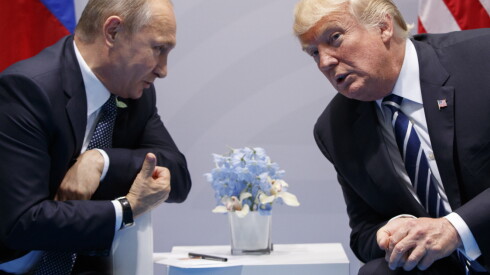
“Some judges don’t understand the context of what things are like in Russia, how Putin’s dictatorship operates in general,” Valuev says.
RADR’s experience shows how Russia targets pro-democracy work abroad, he says.
Russia has labeled RADR an “undesirable organization,” a designation that can make it a crime for Russian citizens to support or work with the group. Valuev says he and his wife were also sentenced in absentia in Russia on terrorism charges tied to their work supporting Ukraine and Russian political prisoners.
“There is a real threat for anti-Putin, anti-war individuals,” he says.
‘It’s impossible to feel truly happy’
Julia Bikbova, an immigration attorney in Northbrook, says preparing a standard asylum application can take 70 to 100 hours of an attorney’s time, with more time needed to prepare evidence, briefings and testimony before a hearing. When their clients are in custody, it’s harder for lawyers to meet freely with them, collect their records and help prepare their testimony, she says.
Anna Shumova, a board member of Russian Seattle for Freedom, says the nonprofit sees the barriers of detention up close.
The group supports Russian immigrants and asylum-seekers, including people held in detention facilities. Among other things, it helps detainees find lawyers, translate documents and raise money for legal fees and phone calls.
Shumova says detained asylum-seekers often struggle to reach lawyers and have limited time to speak when they do. That makes it hard to build a strong asylum argument.
“It is really very difficult to be detained when you don’t know how long it will take,” Shumova says. “It could be tomorrow, it could be in one year, and nobody knows.”
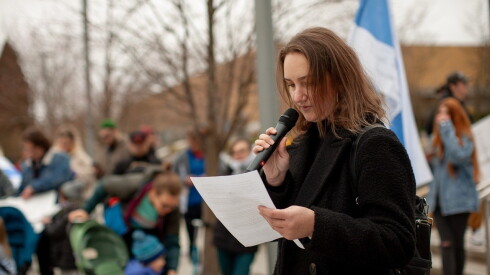
Tiulenev says, “It’s impossible to feel truly happy when a part of your family remains behind bars.”
“Though we left detention, we still feel trapped,” he says of the family members now living in the Chicago suburbs.
If his long-detained family members end up being deported, they’ll return to a country where they could face criminal charges, incarceration or worse.
Maxim Krupskiy, a legal scholar at the University of Illinois Urbana-Champaign who studies Russian repression, says Russian laws against “fake news” and “discrediting the army” are used to punish critics of the country’s government and military.
“In a word, the Russian authorities treat them as traitors,” Krupskiy says.
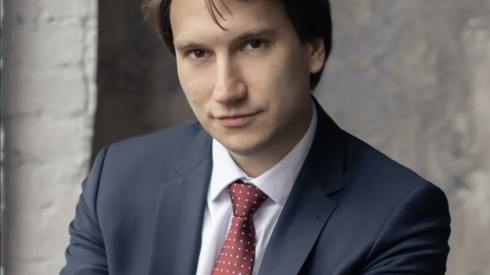
He says the risk is not limited to famous activists. Ordinary people can face prosecution for anti-war comments, social media posts or public statements. If someone has an open criminal case in Russia under those laws and is deported back, he says they’ll likely be arrested.
“It is virtually certain that this person will be arrested on Russian soil and subsequently convicted,” Krupskiy says.
Tiulenev says he fears that his family will be sent back to a country where opposing the war can be treated as a betrayal. “They would liquidate us just like they liquidated Navalny,” he says.
But Tiulenev says he doesn’t regret his family’s decision to flee Russia.
“What is there to regret?” he says. “Our opinion on the war hasn’t changed. If we had to go through this again, I would. Because it’s wrong to launch rockets at the homes of civilians.”