Not a lot of classical music performances sell out nowadays. The time when Lyric Opera of Chicago could sell 103 percent of its capacity (because of people handing back tickets they couldn’t use as a donation) is nearly 30 years in the past.

However, this fall sees some scarcity creeping back into the classical sphere. Haymarket Opera Company’s September production of Monteverdi’s “L’Orfeo”: sold out. Yo-Yo Ma’s one-night-only gig at the Chicago Symphony Orchestra on Nov. 11: also no dice. Music of the Baroque’s Mozart concert in Skokie, the first two recitals in Northwestern’s Skyline Piano Series: nope and double nope. Get your calendars out — the time to book is now.
Score & Screen
Where: The CheckOut, 4116 N. Clark St.
When: Ongoing
Access Contemporary Music has for 20 years run the festival series Sound of Silent, where they screen soundless films with live-performed, newly composed scores. It harks back to the early days of cinema, where a live musician would accompany pre-talkie movies on a theater’s pipe organ. Now that ACM runs its own chamber venue, the CheckOut, they are dimming the lights for a Sound of Silent sibling series, Score & Screen, merging the silent-film-and-chamber-ensemble formula with their signature boozy slushies many Wednesdays. While recent years’ Sound of Silent events have solicited submissions of contemporary movies, Score & Screen will focus on films from the golden era of silents, a lesser-known (and public domain!) cache of work. The first several weeks of Score & Screen feature the “Fantômas” series of 1913 and 1914, an early French take on the supervillain. Tickets from $18.
Klaus Mäkelä’s fall residency
Where: Chicago Symphony Orchestra, 220 S. Michigan Ave.
When: Sept. 24–Oct. 10
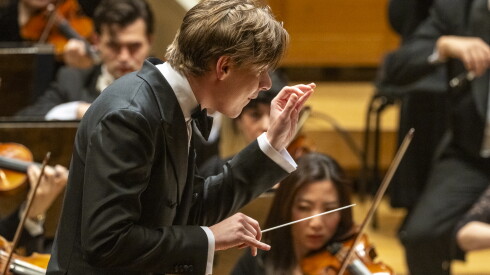
So is Klaus Mäkelä the official head of the Chicago Symphony Orchestra yet? Nope, even though he gained the title “music director designate” almost two and a half years ago, it’s still one more season until they cross out that last word. Starting next season, he will be in town 10 subscription weeks a year, but this season it’s just five, three of which are stacked together this fall. Mäkelä’s first program features fellow Finn Jean Sibelius’s Symphony No. 7, a composer whose work Mäkelä has championed. Second is a CSO specialty, Gustav Mahler’s Symphony No. 9. And third, the rarely performed oratorio “Belshazzar’s Feast,” by 20th-century British composer William Walton, brings in the Symphony Chorus to kick things up the extra notch of poshness for the CSO’s gala, Symphony Ball. After that, no Mäkelä until a week in May and another in June (which is Beethoven 9, so you might also want to fast-forward your early-summer planning). Tickets from $45.
JACK Quartet
Where: Guarneri Hall, 11 E. Adams St., Suite 350A
When: Sept. 30
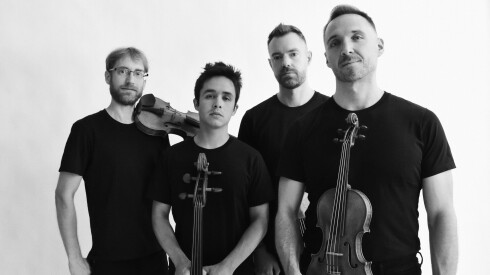
For 20 years, the JACK Quartet has been at the forefront of the avant-garde classical string quartet repertoire. In those two decades, they have undergone personnel changes, such that the quartet’s name no longer represents the first initials of its members (JACJ doesn’t have the same ring to it), but they soldier on performing outer-space new music that isn’t for everyone, including a few pieces from past tours performed in utter darkness. On this visit, they world-premiere a piece called “Dahlia,” written by the Princeton composer Juri Seo. They also bookend the program with two quartets by Turkish composer Cenk Ergün that work outside Western music’s standard equal-tempered tuning system, and play a piece by one of their violinists (and former Chicagoan) Austin Wulliman. They also will keep the lights on. Tickets from $10.
Voces8
Where: Rockefeller Memorial Chapel, University of Chicago, 5850 S. Woodlawn Ave.
When: Oct. 2
Choral singing requires more versatility of the voice than casual observers sometimes appreciate. Sometimes the singer needs to produce an unobtrusive, background timbre, other times one that cuts through the ensemble to highlight a solo line. To be great at it, a singer must have a flexible instrument and high-level listening skills, and the humility to participate as an equal member of an ensemble. The British vocal octet Voces8, if you’ve never heard them before, excels at every subtlety that exists in choral music, running the repertoire gamut from early music to the choral explosion of the past few decades. As is indicated by the huge streaming numbers on their well-produced videos, the choir-loving public has reached a consensus: Voces8 is probably the best chamber choir in the world today. Tickets from $14.
Don Giovanni
Where: Lyric Opera of Chicago, 20 N. Wacker Dr.
When: Oct. 10–Nov. 1
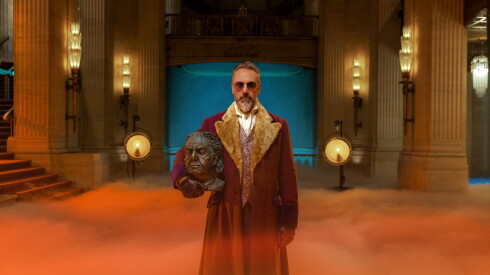
An impressive cast breaks the champagne bottle on Lyric Opera of Chicago’s 2026-27 season, as Mozart’s “Don Giovanni” returns in Lyric’s own home-cooked production, originally the season opener in 2014-15. Christian Van Horn, a veteran of many a Lyric show dating back to his days in the company’s training center, sings the titular rake. (The role is covered for two performances by Kyle Ketelsen, who knows the production well from portraying Leporello in ’14.) The revival, notable in its premiere for the profligate onstage groping, will be led by its original director, Robert Falls, a guy who seems as busy in his retirement from the Goodman Theatre as he was when running it. Tickets from $47.
Jlin and Third Coast Percussion
Where: Museum of Contemporary Art, 220 E. Chicago Ave.
When: Oct. 15
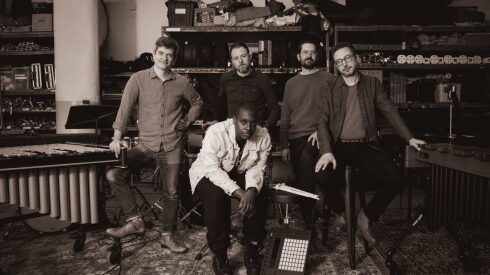
In past collaborations, when Third Coast Percussion has created music with the Gary, Indiana-based electronic music artist Jlin, she has brought them some new riffs, and the fivesome worked together to create orchestrations that would sound cool for the quartet to play onstage. Her suite “Perspective” for them was a finalist for the 2023 Pulitzer Prize for Music (losing to Rhiannon Giddens and Michael Abels’s “Omar,” see below). This time, for material for its 25th (!) album, “Vernacular,” Third Coast Percussion worked with Jlin to create music that all five of them will perform together, getting its local premiere here, a week in advance of the album drop on Oct. 23. Watch for this album in the Best Chamber Music/Small Ensemble category at the Grammys — TCP has been nominated six of the past seven years. Tickets from $10.
Ubuntu Festival
Where: Jacob H. Carruthers Center, 700 E. Oakwood Blvd.
When: Oct. 22–24
The 60-year-old Association for the Advancement of Creative Musicians has long stood as a bastion for new and experimental music, primarily by Black composers and performers, but only now are they launching a festival. The Ubuntu Festival draws its name from the philosophy of shared humanity encapsulated in the word “ubuntu,” a word common to multiple African languages and that has been variously translated. The AACM chooses “I am because we are” as its preferred expression. Each of the festival’s three evenings consists of four short concerts in succession, accessible with a single ticket purchase. Some of the featured performers include the well-traveled saxophonist Edwin Daugherty and vocalist Dee Alexander on Oct. 22, vibraphonist to keep an eye on Thaddeus Tukes on Oct. 23 and the AACM percussion and experimental ensembles on Oct. 24. Tickets from $40.
Omar
Where: Lyric Opera of Chicago, 20 N. Wacker Dr.
When: Oct. 23–28
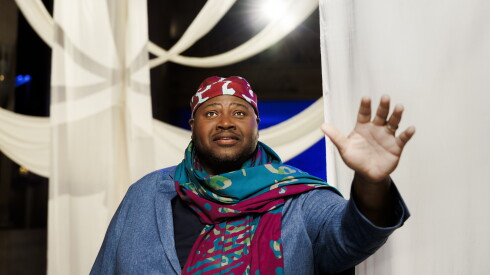
The push to mount contemporary, English-language operas at Lyric Opera of Chicago has brought some powerful, vital music to their prominent stage, such as “Dead Man Walking,” “El último sueño de Frida y Diego” and “Fire Shut Up in My Bones.” This season, the company delivers “Omar,” based on the true story of Omar ibn Said, a scholar of Islam in West Africa who was kidnapped by slavers in the early 19th century and brought to South Carolina. The creators of the opera are Michael Abels, whose scores for Jordan Peele’s movies have garnered accolades, and Rhiannon Giddens, a MacArthur genius whose resume exceeds the space allotted to this blurb, so suffice it to say she knows a lot about American roots music and how to play it on all the instruments (including her voice). Lyric is giving this show the criminally low number of three performances, so booking is a sooner-rather-than-later situation. Tickets from $70.
Nikolaj Szeps-Znaider’s residency
Where: Chicago Symphony Orchestra, 220 S. Michigan Ave.
When: Oct. 22–31
The Danish conductor Nikolaj Szeps-Znaider has such a good rapport with the Chicago Symphony Orchestra that they invited him for a two-week stay. The first program’s centerpiece is the Dvořák Cello Concerto with soloist Jian Wang, a terrific piece played by a terrific soloist, more than just a consolation prize if you missed out on Yo-Yo Ma tickets. The second program offers Brahms’ “Ein Deutsches Requiem,” in a thoughtful placement in the calendar near the Day of the Dead. Brahms began composing the piece soon after the death of his mother, eschewing the liturgical requiem texts and instead selecting biblical passages to provide consolation to the living, a gesture akin to the building of an ofrenda with objects particular to a beloved who has passed away. The fifth movement, which includes the text “I will comfort you, as a mother comforts,” is heartbreaking. Tickets from $45.
Mass in B Minor
Where: Multiple locations
When: Nov. 22–23
If you polled classical music aficionados on the unanswerable question of what’s on their shortlist for the greatest single piece of all time, you’d hear a lot of Beethoven 9, some Ring cycles and a lot of votes for Music of the Baroque’s November offering: Johann Sebastian Bach’s Mass in B Minor. It’s the biggest work of contrapuntal architecture from the composer who influenced the direction of Western music more than any other. The MoB orchestra and chorus amass their formidable forces, under the baton of the estimable Jane Glover, for the two-hour-plus piece, from the keening Kyrie at the opening, through the bubbly Gloria, the agonized Crucifixus, the solemn Sanctus and ending with the uplifting Dona Nobis Pacem. The quartet of vocal soloists includes the sensitive British baritone Roderick Williams and the nightingale-voiced soprano Joélle Harvey.Tickets from $36.