The day a Chicago woman named Rachel learned Blue Cross Blue Shield of Illinois was “downcoding” her longtime psychiatrist’s claims and cutting his pay, she immediately got to work.
She reached out to elected and state officials to see what, if anything, could be done to reverse the insurance company’s new policy that left her psychiatrist getting paid so little for each visit that he was considering dropping her insurance entirely.
“I’m going to do absolutely everything I can do to avenge my wonderful psychiatrist,” said Rachel, who asked to withhold her last name out of fear that speaking out could negatively impact her professionally.

As of July 1, Blue Cross Blue Shield changed the way it evaluates some medical claims that health professionals regularly submit, resulting in lower payment for the same service than in the past, according to mental health clinicians, doctors and advocates who spoke to the Chicago Sun-Times and WBEZ. Providers can appeal each decreased claim, but many say that’s too burdensome given the large volume of impacted claims. They worry the financial hit they are experiencing could lead to reduced patient access or even affect their ability to retain staff.
This downcoding trend has become so common among health insurers that state lawmakers passed a law in July to prohibit these automatic reductions in reimbursements. But it doesn’t go into effect until 2028.
The BCBS claims at the center of this change are for the “bread and butter” codes physicians use for reimbursement, said Stephen Gillaspy, deputy chief for health policy and healthcare financing at the American Psychological Association. These are for visits that insurance companies consider to be part of “evaluation and management services.”
“If you call your primary care doc and say you’re feeling sick and you go in, they’re going to bill you for an [evaluation and management services] code,” Gillaspy said.
But earlier this year, BCBS announced on its website, “When we review your claim for dates of service beginning July 1, if services billed do not support the level of E&M services billed, your reimbursement will be for a lower level of service validated.”
In a statement, BCBS defended the change in how it’s processing claims, saying it is committed to “expanding access to quality health care.”
“Our enhanced claims review process is well designed and intended to appropriately support accurate payments of correctly coded claims for the level of service that was provided,” the company said.
Most clinicians submit claims for evaluation and management services, but providers in the Chicago area say they are seeing a trend of BCBS automatically decreasing claims for specific kinds of visits — ones involving more complex cases or longer visits. So far, providers are reporting this most acutely in mental health and pediatric practices, according to medical professional organizations.
Many wonder if the change is driven by an artificial intelligence tool because of how many claims are downcoded in bulk. BCBS did not comment on whether it was using an AI tool.
Dr. Josh Levin, a suburban pediatrician, said about 40% of claims for higher level sick visits at his practice were downcoded in recent weeks by BCBS, resulting in lower payments. This is unsustainable, he said, and could eventually lead to access issues if they can’t afford to hire more doctors.
One Chicago practice that includes psychiatrists and psychotherapists had 2,400 claims reduced out of the blue by BCBS in July alone, according to one psychiatrist. He asked not to be identified out of concern it could negatively impact the practice.
It’s routine for BCBS to audit the practice’s claims but that’s not what led to the reduced claims, the psychiatrist said. During an audit, the insurer typically reviews records provided by the practice to back up why they bill under certain codes. But he and others say Blue Cross Blue Shield never reviewed records or requested additional documentation.
“For patients that we have been billing the same code for the past five years, all of a sudden Blue Cross Blue Shield is saying ‘We’re not going to pay you for that code, we’re going to pay you for a code that reimburses at a lower dollar amount,’” the psychiatrist said.
New state law aimed at preventing downcoding
This change comes as Illinois Gov. JB Pritzker signed into law the Transparency in Downcoding Act, which is meant to limit what doctors and experts say is a growing problem among a range of insurance companies.
A survey from the Illinois State Medical Society earlier this year found that 72% of medical practices had experienced automatic downcoding and underpayment by insurers.
Illinois’ new law prohibits health insurers from using an automated process, such as with artificial intelligence or an algorithm, to determine if claims submitted by doctors or physician assistants should be reduced. It also ensures doctors are notified when a claim has been downcoded and reimbursed at a lower level, and prevents downcoding to discriminate against doctors who regularly treat patients with complex or chronic conditions.
But the law, which doesn’t go into effect until 2028, doesn’t protect all medical providers, said Julietta Mkrtychian, chief of staff for state Rep. Lindsey LaPointe, a Chicago Democrat.
“The bill itself isn’t going to be the thing that saves all the providers from our insurance companies’ bad behavior,” Mkrtychian said. “We definitely have to think more expansively.”
State lawmakers may have to consider passing another bill, she said, or potentially look to the Illinois Department of Insurance for help in instances of downcoding.
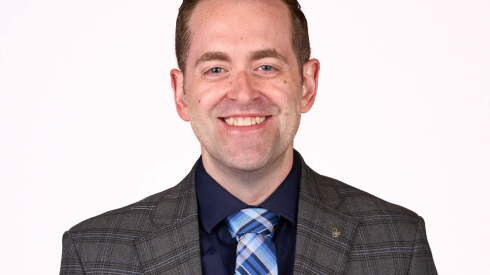
The new law does not cover prescribing psychologists like Derek Phillips, director of psychiatry at Arcus Behavioral Health & Wellness in Chicago. There’s a limited number of prescribing psychologists who practice psychotherapy, do psychological testing and prescribe certain medications for people with a range of mental health conditions, from anxiety to schizophrenia. In recent weeks he’s had dozens of his claims reduced by Blue Cross Blue Shield, which means both he and the practice he works for earn less for the same amount of work.
The small practice likely won’t be able to tackle appealing each downcoded claim, especially because each one is assessed individually.
“We only get paid based on what we’re reimbursed by insurance companies,” Phillips said. “So if they pay less, we make less.”
‘It’s a huge access issue’
For some doctors, the financial cost of Blue Cross Blue Shield’s decision to downgrade claims and lower reimbursement rates may be too much to bear. And it comes when finding a therapist is already a struggle for many people.
Rachel, the Chicago patient with BCBS insurance, said her psychiatrist informed her and his other patients that he doesn’t think he can continue with BCBS patients as long as the policy is in effect.
She is willing to pay for her visits, even at nearly $200 per session. She usually sees her psychiatrist twice a year.
“I’m going to pay out of pocket to see him because I can,” Rachel said. “And I have no intention of finding another psychiatrist that doesn’t have years and years of my personal relationship with them. But so many people will not be able to pay out of pocket for this.”

One analysis in Illinois found that 32% of adults who needed counseling or therapy weren’t able to access it, according to KFF, which conducts health policy research and polling. And the change in claims processing by one of the largest insurance companies could make this even even more challenging, said Tony Ohlhausen, director of research and policy for the National Alliance on Mental Illness-Illinois.
“They’re going to be less likely to take clients who have more complex needs if they’re seeing those more intensive services be denied and only approved for lower rates,” Ohlhausen said. “It will be making people’s insurance policies less useful when it comes to mental health treatment.”

Ohlhausen said NAMI Illinois, which advocates to increase access to mental health support, has heard from both independent clinicians and larger providers grappling with reduced claims.
Dr. Levin, the suburban pediatrician who said about 40% of his practice’s claims for higher level sick visits were downcoded by Blue Cross Blue Shield in recent weeks, said algorithms don’t see what he sees.
The algorithms that are looking only at a diagnosis miss the nuance doctors observe when treating patients — especially in small children, he said.
“In pediatrics, we are not only treating the medical problem, but also dealing with the fact that kids often can’t tell us what’s wrong with them. They can’t speak about their symptoms, they may have developmental issues or behavioral issues,” Levin said. “Distilling this down to a simple, ‘This code or that code,’ is really missing the whole picture of how pediatrics is practiced.”