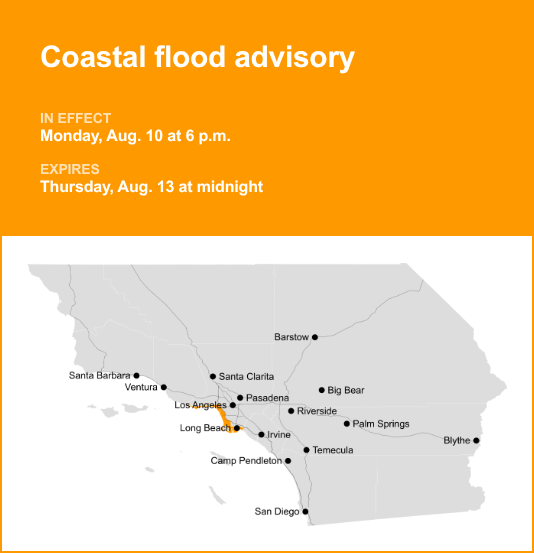
Malibu and Los Angeles County Beaches are the focus of a coastal flood advisory issued at 1:22 p.m. on Saturday by the National Weather Service. The advisory is valid from Monday 6 p.m. until Thursday Aug. 13, at midnight.
“Minor coastal flooding expected during the evening high tides,” the NWS Los Angeles/Oxnard CA said. “Coastal flooding impact concerns will peak each evening between about 8 p.m. and 10 p.m. due to astronomical high tides of 7.3 to 7.5 feet.”
“Flooding of sea water is likely, around the time of high tide, over vulnerable low-lying coastal areas such as parking lots, beaches, and walkways. Significant damage to roads or structures is NOT expected,” according to the NWS. “Take the necessary actions to protect flood-prone property. Do NOT drive around barricades or through water of unknown depth.”
Breaking down weather alerts: advisories, watches, and warnings
Flash flood warning: Take action.
A flash flood warning is issued when a flash flood is either imminent or already occurring. In flood-prone areas, it’s crucial to move immediately to higher ground. A flash flood is a sudden and violent inundation that can develop within minutes to hours, and it can even happen in areas not currently experiencing rainfall.
Flood warning: Take action.
A flood warning is declared when flooding is on the verge of happening or is already underway.
Flood advisory: Be aware.
A flood advisory is released when flooding is not expected to reach a severity level necessitating a warning. Nonetheless, it can still cause considerable inconvenience and, without exercising caution, potentially lead to situations that threaten life and/or property.
Flood watch: Be prepared.
A flood watch is issued when conditions are favorable for flooding. It doesn’t guarantee that flooding will occur, but it signifies that the possibility exists.
When floods strike: Guidelines from the NWS for your protection
In flood-prone regions or while camping in low-lying areas, understanding and following the NWS flood safety guidelines can be a lifesaver:
Seek higher ground:
If you’re in a flood-prone area, or if you’re camping in a low-lying spot, move to higher ground as a first step.
Follow evacuation orders:
If local authorities issue an evacuation order, heed it promptly. Prior to leaving, secure your home by locking it.
Disconnect utilities and appliances:
If time allows, disconnect your utilities and appliances. This reduces the risk of electrical hazards during flooding.
Steer clear of flooded basements and submerged areas:
Steer clear of basements or rooms where water has submerged electrical outlets or cords. This helps prevent electrical accidents.
Swift evacuation for your safety:
If you notice sparks or hear buzzing, crackling, snapping, or popping noises, evacuate immediately. Avoid any water that may be charged with electricity.
Stay away from floodwaters:
Never attempt to walk through floodwaters. Even just 6 inches of swiftly moving water can forcefully knock you off your feet.
Seek higher ground when trapped:
In the event you become trapped by moving water, make your way to the highest point available and contact emergency services by calling 911.
During periods of heavy rainfall, especially in low-lying and flood-prone areas, the risk of flooding escalates. Remember this crucial advice: never attempt to drive through water on the road, even if it appears shallow. According to the NWS, as little as 12 inches of rapidly flowing water can carry away most vehicles. Stay safe by being prepared and informed.
For more local weather alerts, visit our Weather Advisory page