Marz Community Brewing Co. recovered from the post-pandemic downturn with the help of hemp-derived THC beverages.
Their infused line, which includes low-dose and high-potency THC seltzers with playful names like Bong Water and High Tea, has grown to account for nearly half the company’s production at its headquarters in McKinley Park and its Logan Square nanobrewery and taproom.
“It truly rescued our business and allowed us to expand,” Marz founder Ed Marszewski said.
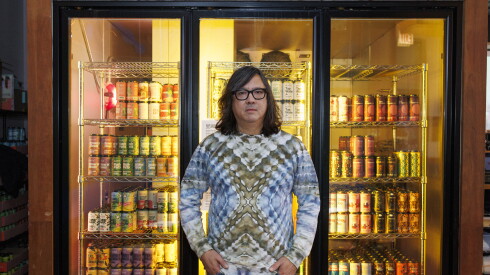
Strong local demand for THC drinks even pushed the company to relocate some of its beer production to Louisville, Kentucky, where its partner Against the Grain Brewery has co-packed and brewed several Marz beers the last few years.
But with the state’s looming Nov. 12 deadline banning nearly every intoxicating hemp product on the market, Marszewski and many other Chicago businesses must make some tough decisions.
“We’re going to have to lay people off,” Marszewski said. “We won’t have enough income to pay them.”
The ban is part a wide-ranging bill, signed by Gov. JB Pritzker in June, that overhauls cannabis and hemp regulations. But the Illinois Healthy Alternatives Association and a group of hemp businesses filed an emergency motion on Friday for a temporary restraining order saying the law is unconstitutional and would “obliterate the businesses of thousands of Illinois farmers, infusers, distributors, and retailers.”
The state’s timetable mimicked federal guidelines set in President Donald Trump’s 2025 spending bill that also outlawed hemp potency limits beyond 0.4 milligrams of THC per container. Previously, hemp-based THC products were federally defined as having less than 0.3% THC, the active ingredient in cannabis.
In September, the federal deadline was extended to Dec. 11, but Illinois has stuck with the original November deadline — keeping the pressure on beverage manufacturers, retailers, restaurants, grocery stores, entertainment venues and other stakeholders.
With Illinois businesses required to exit the category a month ahead of other states, local breweries are at a particular disadvantage against neighboring competitors, according to Jonathan Fritz, partner at Hopewell Brewing Co., which launched its popular lemon-lime-flavored THC drink Choom in 2024 before expanding to sparkling waters and teas.
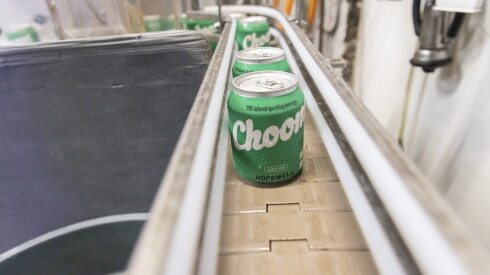
Hopewell Brewing Co. launched its popular lemon-lime-flavored THC drink Choom in 2024 but will be winding down the product following new regulations for hemp-based THC products.
Manuel Martinez/WBEZ file
As part of an inventory wind down, the company is offering 50% off Choom products at its Logan Square headquarters, where it also co-manufactures THC beverages for other brands.
“Our state legislators have missed the mark here, and this decision directly damages local craft businesses like ours,” Fritz said.
Hopewell’s THC line has been carried at Parson’s Chicken & Fish, Foxtrot and other stores, accounting for nearly a third of its on-premises sales, the company told the Sun-Times last year.
Revolution Brewing, Chicago’s largest independent craft brewer, halted production of its Reverb THC beverage line in the summer.
Revolution owner Josh Deth hopes Congress can find a resolution and that Illinois lawmakers follow suit by allowing distribution through licensed liquor establishments, a carve-out strongly favored by alcohol suppliers, distributors and retailers.
“There’s clear customer demand for low-dosage THC beverages for both drinking at home and going out, and we’d love to keep innovating within the THC drink space if we are allowed too,” he said.
London-based research firm Euromonitor International estimated the hemp-based THC beverage market will skyrocket to $4.1 billion by 2028, an eye-popping 1,615% increase from $239 million in 2023.
New license and fee
Humboldt Park-based Perfectly Dosed makes THC emulsion ingredients for about 50 Illinois beverage brands, breweries and restaurants. It’s planning to move some warehousing and fulfillment services out of state if restrictions are prolonged.
Several of its partners and suppliers extract hemp in Colorado, which has emerged as a potential build-out site due its safe harbor laws.
“We do have to consider that as an option,” Perfectly Dosed co-founder Glenn McElfresh said. “The question that a lot of businesses are facing, including ourselves right now, is where do we invest that future CapEx [capital expenditure] for our business?”
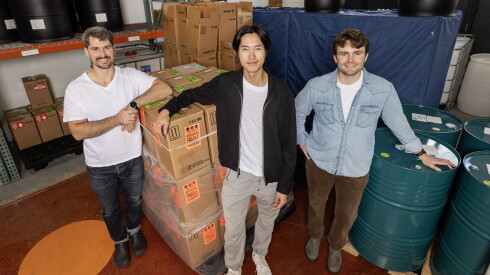
Perfectly Dosed Vice President of Government Affairs Glenn McElfresh, CEO Alexander Choi and Vice President of Business Development Liam Rigney at the company’s headquarters in Humboldt Park. The co-founders plan to move some warehousing and fulfillment services out of state if Illinois’ hemp restrictions are enacted and prolonged.
Barry Brecheisen/For the Sun-Times
His assessment of the Illinois market has changed drastically since about a year ago when he told the Sun-Times that Chicago could become the heart of the hemp beverage industry.
“Because of the law, we can’t definitely say we’re going to build in Illinois,” McElfresh said.
Perfectly Dosed plans to apply for a newly established hemp product manufacturing license administered through the Illinois Department of Agriculture.
Licenses will be required for any business or person handling, processing and extracting hemp in Illinois, as well as manufacturing any product with hemp-extracted cannabinoids or any hemp-derived product, according to the Illinois Department of Agriculture.
Manufacturing licenses will be issued after applications and on-site inspections are completed and a $5,000 fee is paid.
The department didn’t share how many businesses have already applied for a license but said in a statement that it’s working with “several applicants as they complete the process.” It also said that it’s “accepting applications for both hemp manufacturing and industrial hemp processor licenses on a rolling basis, with no application deadline.”
Cresco Labs CEO Charlie Bachtell said it supports regulatory standards for all THC products. The Chicago-based vertically integrated company operates 10 stores in Illinois, including two in Chicago.
“Consumers deserve to know what they’re buying and that they can rely on production and testing standards for products they ingest,” he said.

Tim O’Hern, chief operating officer of Nature’s Grace and Wellness in Fulton County, expects several products sold outside licensed cannabis channels to transition into the regulated market.
“THC beverages represent one of the fastest growing product categories in the regulated cannabis industry,” O’Hern said. Nature’s Grace operates nine stores in Illinois, including three in Chicago.
Cannabis product sales in Ohio’s regulated market increased significantly since the state implemented a hemp products ban in March, benefiting companies like Chicago-based Verano Holdings, which operates six stores in the state.
“According to state data, total receipts were up 25% at the end of the third quarter versus the end of the first quarter, a notable positive trend that correlates with the start of the hemp ban, which indicates hemp consumers are shifting towards licensed dispensaries,” Verano Holdings founder and CEO George Archos told analysts last month.
Under Illinois’ new guidelines, hemp-derived THC products over the federal potency threshold must be sold only at state-licensed cannabis dispensaries and be taxed the same as cannabis products. In Chicago, excise taxes on cannabis purchases are among the highest in the country at 22% to 37%, depending on product potency, according to figures from the Illinois Department of Revenue. Illinois medical patients pay a reduced 1% sales tax.
Marszewski believes there’s no marketplace for hemp-infused beverages at dispensaries, which lack shelf and inventory space and primarily sell high-potency flower, pre-rolls, vapes and edibles.
Infused beverages, according to industry insiders and sales data, typically account for about 1% of dispensary sales.
“The majority of those businesses are vertical monopolies, and they will not purchase anyone else’s products,” Marszewski said. “They will never sell a Marz product in their facility.”
Retailers pull inventory
River North-based Green Thumb Industries, one of the largest vertically integrated cannabis companies in the country, helped push the mainstream adoption of hemp drinks and other products at music festivals, concert and sports venues, with key distribution partnerships at Lollapalooza, the United Center and Salt Shed.
The United Center and Salt Shed were the first major U.S. arenas and music venues to carry THC-infused drinks.
“In compliance with the upcoming change to federal law and new Illinois regulations set to take effect, the United Center will no longer offer beverages that include hemp-derived THC as of November 12, 2026,” a company spokesperson said in a statement.
Despite consumer demand, the Salt Shed will also comply with the new regulations, said Sam Shechtman, senior manager of business development at 16 on Center, the venue’s parent company.
Last year, the hospitality company expanded THC beverage offerings at Thalia Hall in Pilsen and the Empty Bottle in Ukrainian Village.
“We look forward to future legislative changes that will establish a clear, regulated pathway for THC beverages to return to venues like Salt Shed,” Shechtman said. “In the meantime, we look forward to continuing our strong partnership with Green Thumb Industries at the Salt Shed.”
Green Thumb’s Rolling Meadows-based subsidiary, Rythm, operates the Rise hemp dispensary at Salt Shed.
Rythm this month reported in its third quarter earnings that hemp-derived product sales increased 15% to $6.4 million during the quarter. It said legislative changes “would prohibit the Company from selling its current hemp-derived THC products in their existing form, including through the retail and venue channels,” such as Riot Fest, United Center and Navy Pier, where it’s the official THC beverage partner.
“THC beverages are emerging as a fourth adult beverage category, alongside beer, wine and spirits, earning national shelf space and a presence at major entertainment and cultural venues,” Rythm chairman and interim CEO Ben Kovler said in a news release. “Consumers continue to embrace THC beverages despite the forthcoming changes to federal law. We believe their future depends on drawing a clear line between regulated and unregulated products through a responsible regulatory framework that protects consumers and provides a viable path forward.”
The popularity of hemp-derived THC beverages at South Loop Market’s Logan Square location helped offset years of declining beer sales, owner Anas Masoud said.
Demand prompted Masoud to dedicate two cooler doors for the infused beverages, which account for about 20% of sales in its wine and spirits department.
Masoud is stocking up on inventory as he weighs other revenue streams, including the return of CBD drinks or hemp-infused beverages that comply with new federal requirements.
“This is hurting all the small business owners,” he said. “We’re still a small mom-and-pop retailer.”