Sheil Shukla keeps a lot on his proverbial plate. The internal medicine physician, husband, father of three and creative wrangler of showstopping, vegan South Asian dishes published his second cookbook, “Kari: Reimagined Plant-Based Indian Recipes,” on Aug. 18. ($35, DK [Penguin Random House]).
The followup to 2022’s “Plant-Based India,” “Kari” and its 75 plant-based recipes lean more personal, drawing on the author’s lived experiences as the son of Gujarati immigrant parents who was raised in the Milwaukee suburbs and formed his culinary viewpoint in Chicago. Named for and centered on curry, it offers up aromatic, make-ahead sauces and simple accompaniments that can work into folks’ weekly cooking repertoire with a little planning.
“‘Kari’ is a melding of the Indian recipes I know, the Thai and Japanese and Vietnamese recipes I love — taking a little from different experiences I’ve had around the country, experiencing the true melting pot we have and should continue to have in the U.S. — tailored to the home kitchen,” Shukla said.
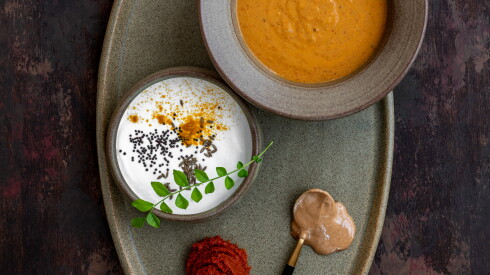
Growing up, Shukla’s eating life was anchored in the homestyle western coastal Indian cooking prepared by his mother and grandmother, like simmered daal with rice, seasonal shaak (vegetables) and rotli (thin wheat flatbreads). The family traveled and dined out often — inspired by Asian food especially, from rich, creamy North Indian and Punjabi to sweet, sour, fiery Thai. Shukla and his brother relished the rarer Americanized indulgences, like chicken tenders and Olive Garden fettuccine Alfredo.
Shukla moved to Chicago for undergrad in 2011 and studied molecular biology and graphic design, keen to pursue creative arts as he worked toward a career in medicine. He’s now a practicing physician in Glenview and Vernon Hills, while he and wife Rachel raise a toddler and two young twins. A vegan since 2015, Shukla, 33, has documented his plant-based cooking journey on Instagram, where he’s known as @plantbasedartist, culminating in “Plant-Based India,” which showcases the beauty and health benefits of properly zhuzhed plants.
Now, he turns his attention to curry (or gravy as it’s sometimes denoted throughout “Kari”). Derived from the Tamil word “kari,” it describes a wide-ranging set of aromatic dishes from numerous Asian cultures. Over the centuries, colonizers erased the regional nuance from the term, instead lumping all spiced gravies and stews under the umbrella term “curry.” In the book, Shukla defines kari as a dish consisting of an “aromatic sauce with vegetables and/or proteins, attributed to South Asian and East Asian traditions” — be it sweet, sour and umami-rich Thai gaeng; mellow, savory Japanese kare; or citrusy, lemongrass-scented Vietnamese ca ri.
“The curries in the book explore that overlap and my own sort of creativity in creating dishes that aren’t part of one cuisine, but part of every one at the same time,” Shukla said. Importantly, he added, they don’t overpower the produce, pushing back on the “common criticism of Indian cuisine that it’s too heavily spiced.”
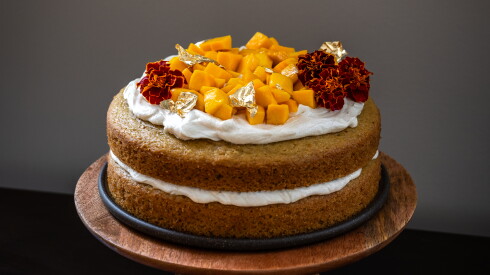
For instance, Tofu Katsu Makhani — or, “the recipe that started the book” — mingles Japanese and North Indian influences. Tangy, creamy cashew- and tomato-based makhani sauce scented with cumin and fennel stands in for rich, savory Japanese-style curry and crunchy battered tofu for the traditional tonkatsu (pork cutlet).
In case you’re wondering, Shukla and his wife don’t whip up dozen-ingredient gravies on any old Tuesday. Instead, they like to prepare foundational simmer sauces on the weekends to form “flavor bases” that they can pull from the fridge or freezer during the week to build simple weeknight meals. The book includes a handy matrix of sauces (Tikka Masala, Beet Korma, Makhani Sauce, Lemongrass Yellow Curry) and numerous lower-lift applications for them (nachos, crispy potatoes, noodle soup, bread pizza). Elsewhere, multicultural chutneys, dressings and glazes shine up pan-fried tofu with broccoli and dress endive and apple salad, pasta or rice.
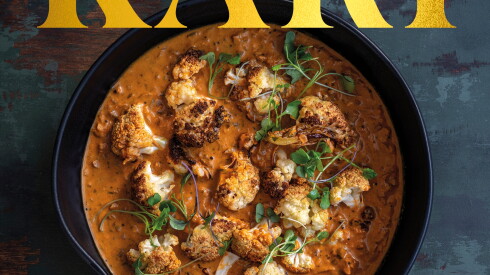
“The ultimate goal is having these core sauces or chutneys throughout the [year] that can be used and applied to whatever you have on hand or whatever’s in season — corn in summer and hard rind squash in winter,” he said. A Midwest farmers market vegetable index in the back of the book groups recipes by ingredients commonly found at Chicago-area markets throughout the year.
As we reach the last gasps of Midwestern summer, many of us are staring down a veritable crush of corn and summer squashes. But don’t fear the gourd. Shukla offers up crisp, golden zucchini and corn pakoras, the beloved, versatile Indian snacks made by dabbing presalted vegetables in spiced besan (chickpea flour), frying them till crunchy. They’re served alongside a bold chutney — in this case, sweet, warmly spiced mango, with unexpected depth and roundness from a blob of miso.
“If you find yourself wondering what to do with that haul of farmers market veggies or an unfamiliar squash, making pakoras is generally a good move,” Shukla said. “These fritters are a joyous celebration of summer. It’s really about the combo with corn and onions and the mango chutney that makes it.”
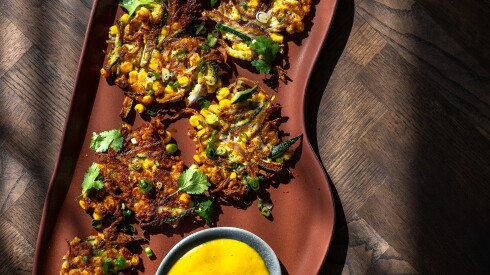
Zucchini Corn Pakoras from Sheil Shukla’s cookbook, “Kari.” The plate was made by local ceramic artist Dubhe Carreño (This Quiet Dust Ceramics) as part of her “Shoreline collection.”
Sheil Shukla
Zucchini Corn Pakoras with Mango Miso Masala Chutney
Serves 4 as an appetizer or snack
Tempting though it may be, don’t skip presalting the vegetables, Sheil Shukla said. “This draws out the moisture from the veg that then, when combined with the chickpea flour, becomes the batter that keeps everything together.”
Ingredients
1 large zucchini, cut into thin matchsticks (about 3 cups/300 g)
1 small red onion, thinly sliced (about 1 cup/150 g)
1 cup (125 g) fresh or frozen corn kernels
2 to 3 scallions, thinly sliced
Salt
2 garlic cloves, minced (about 2 teaspoons)
2 teaspoons minced ginger
½ teaspoon cumin seeds
¼ teaspoon ajwain (carom) seeds, optional (see Note 1)
Freshly cracked black pepper, to taste
½ cup (60 g) besan or chickpea flour, plus more as needed
Neutral oil, for frying
For serving
Chaat masala or salt, optional
Chopped fresh cilantro leaves, optional
½ cup (120 ml) Mango Miso Masala Chutney (recipe follows)
Directions
Combine the zucchini, onions, corn, and scallions and 3⁄4 teaspoon salt in a large bowl, massaging the salt evenly into the vegetables with clean hands. Set aside for about 10 minutes, squeezing the vegetables every few minutes, until the vegetables release liquid and feel wet; you may see about 1 tablespoon liquid accumulating at the bottom of the bowl.
Stir in the garlic, ginger, cumin seeds, ajwain seeds (if using), and black pepper. Incorporate the besan with clean fingers, 1 tablespoon at a time, until the mixture just starts holding together and the vegetables are thinly and evenly coated in the batter. Add a sprinkling of water with your fingers if the mixture is too dry.
Place a cooling rack on top of a paper towel-lined baking sheet (for easier cleanup).
Heat about ½ inch (1 cm) oil to 350°F (180°C) in a large skillet over medium heat. You’ll know the oil is ready when you place a small amount of the pakora batter into the oil and it sizzles immediately.
Working in batches, place small heaps (2 to 3 tablespoons each) of the pakora mixture in the skillet, 1 to 2 inches (2.5 to 5 cm) apart, and flatten slightly. Cook until the pakoras start to brown on the bottom, 3 to 4 minutes. Flip and flatten slightly, and cook until browned on the other side, 3 to 4 minutes.
Transfer to the cooling rack to drain any excess oil. Top with a light sprinkle of chaat masala and cilantro, if using. Serve immediately with the chutney (see Note 2).
Notes
1. Ajwain seeds, which provide an herbal, thyme-like flavor, are often found in pakoras. It’s worth buying a small quantity to try.
2. These pakoras can be made up to 2 hours ahead and reheated in the oven on a parchment paper–lined sheet pan at 400°F (200°C) for about 5 minutes, until crisp and heated through.
Reprinted with permission from “Kari” by Sheil Shukla, copyright © 2026 by Sheil Shukla. Photographs by Sheil Shukla. Published by DK, a division of Penguin Random House, LLC.
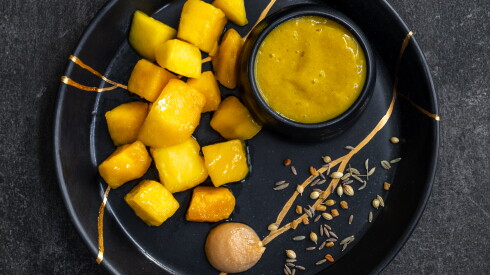
Mango Miso Masala Chutney
Makes 2¼ cups
Ingredients
1 tablespoon olive oil
2 garlic cloves, minced (about 2 teaspoons)
2 teaspoons minced ginger
1 teaspoon coriander seeds
1 teaspoon cumin seeds
1 teaspoon fennel seeds
2 cups (280 g) frozen mango chunks
3 tablespoons maple syrup
¼ teaspoon ground red chile
¼ teaspoon garam masala
¼ teaspoon ground turmeric
Salt
1 tablespoon white miso
Directions
Heat the oil in a large saucepan over medium heat. Add the garlic and ginger and cook, stirring frequently, until fragrant and softened, about 2 minutes.
Add the coriander seeds, cumin seeds and fennel seeds, and stir until fragrant and starting to brown, about 30 seconds.
Add the mango, maple syrup, chile, garam masala, turmeric, ½ teaspoon salt and 1½ cups (360 ml) water, and stir well to combine.
Simmer until the mango is easily mashed with a fork, about 5 minutes.
Let cool. Then transfer to a blender, add the miso, and blend until completely smooth. Taste and adjust for salt.
Serve as desired, or store in a glass jar or squeeze bottle in the refrigerator for up to five days or in an airtight container in the freezer for up to three months.
Reprinted with permission from “Kari” by Sheil Shukla, copyright © 2026 by Sheil Shukla. Photographs by Sheil Shukla. Published by DK, a division of Penguin Random House, LLC.