Kenneth Gunn got his first taste of a Chicago hate crime as a kid growing up in racially changing Englewood attending an elementary school “on the white side” of the neighborhood.
Gunn lived on the “the Black side” of Ashland Avenue. He and his brother were allowed to go to Earle Elementary School on the west side of Ashland, but were warned to “come straight home right after school or you might run into a little trouble.”
Gunn’s older brother ignored the warning and was “beaten by the neighborhood bullies,” the nominee told the City Council’s Committee on Health and Human Relations at his confirmation hearing Thursday.
The Gunn brothers were then transferred to an all-Black school on the east side of Ashland Avenue for their 7th and 8th grade years after parents who feared the West Side was “becoming too Black” demanded a boundary change.
“That was my first introduction to hate crimes,” Gunn said Thursday. “It hurt like hell to leave my friends, just like it did when my white friends moved away a few years earlier.”
On Thursday, Gunn relived that bitter memory and promised to bring the sensitivity he gained from that experience to what is slated to be his new job as head of Chicago’s Commission on Human Relations.
The Health and Human Relations Committee confirmed his appointment with only one dissenting vote, setting the stage for final City Council approval on Wednesday.
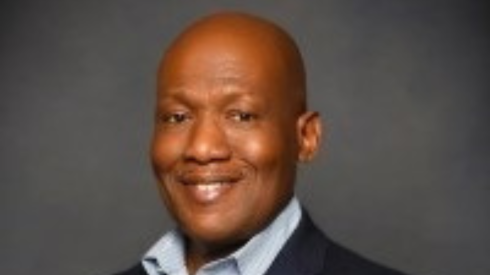
A civil rights attorney who has spent more than three decades with the commission, Gunn would replace Nancy Andrade, who resigned in March to protest what critics contend was Johnson’s attempt to whitewash a long-awaited report that was supposed to focus solely on antisemitism.
Last month, Johnson unveiled a strategy to combat hate crimes that Jewish leaders condemned as an insensitive and inadequate response to the surge in anti-Jewish hate crimes.
Johnson’s plan called for creating a “Jewish Engagement Council to serve as a direct bridge for dialogue” between residents, community leaders and the mayor’s office, and an “Interconnected Chicago Council” to address “fragmentation between communities.”
The commission-approved version that prompted Andrade’s resignation was triggered by a 58% rise in reported anti-Jewish hate crimes from 2023 to 2024.
It recommended a task force to combat anti-Jewish hate, mandatory training on antisemitism for city employees, teachers and students in the Chicago Public Schools, and a dedicated unit within the Chicago Police Department specifically trained to combat hate crimes.
Although Jews were “most heavily impacted” by hate crimes committed in 2024, Gunn favors the mayor’s version of the report because of its flexibility and the “broader spectrum” it applies to “how we respond to hate.”
“It’s not just Jewish voices saying, this is happening and we have to address it. You have all these people around you to help do it. You can get the best of the best to address these,” Gunn said.
Ald. Ray Lopez (15th) accused Gunn of acquiescing to the Johnson administration’s effort to “dilute the impact of Jewish hate that’s running rabid in this city and in government, while also trying to elevate numbers to a level of questionable comparison.”
“I find that to be a false equivalence … to say that something that is in the single digits should be looked at and viewed from the same lens when we know that particular community has been completely ostracized, demonized from this building and beyond,” he said.
South Side Ald. Lamont Robinson (4th), who chairs the City Council’s LGBTQ Caucus, urged Gunn to focus on the “high rates of hate crimes to our trans brothers and sisters, particularly those that are African American.”
“I’m curious to know how your office can work to figure out how we can set the example in the country of solving a lot of the murders that go unsolved. How do we educate the community?” Robinson said. “How can I educate my colleagues [who] still don’t understand … there are LGBTQ+ folk in all 77 neighborhoods?”