As the Health Alliance for Chicago Comedians launched, Elizabeth Grossman started to hear from other artists — like musicians and actors — seeking solutions for accessing healthcare.
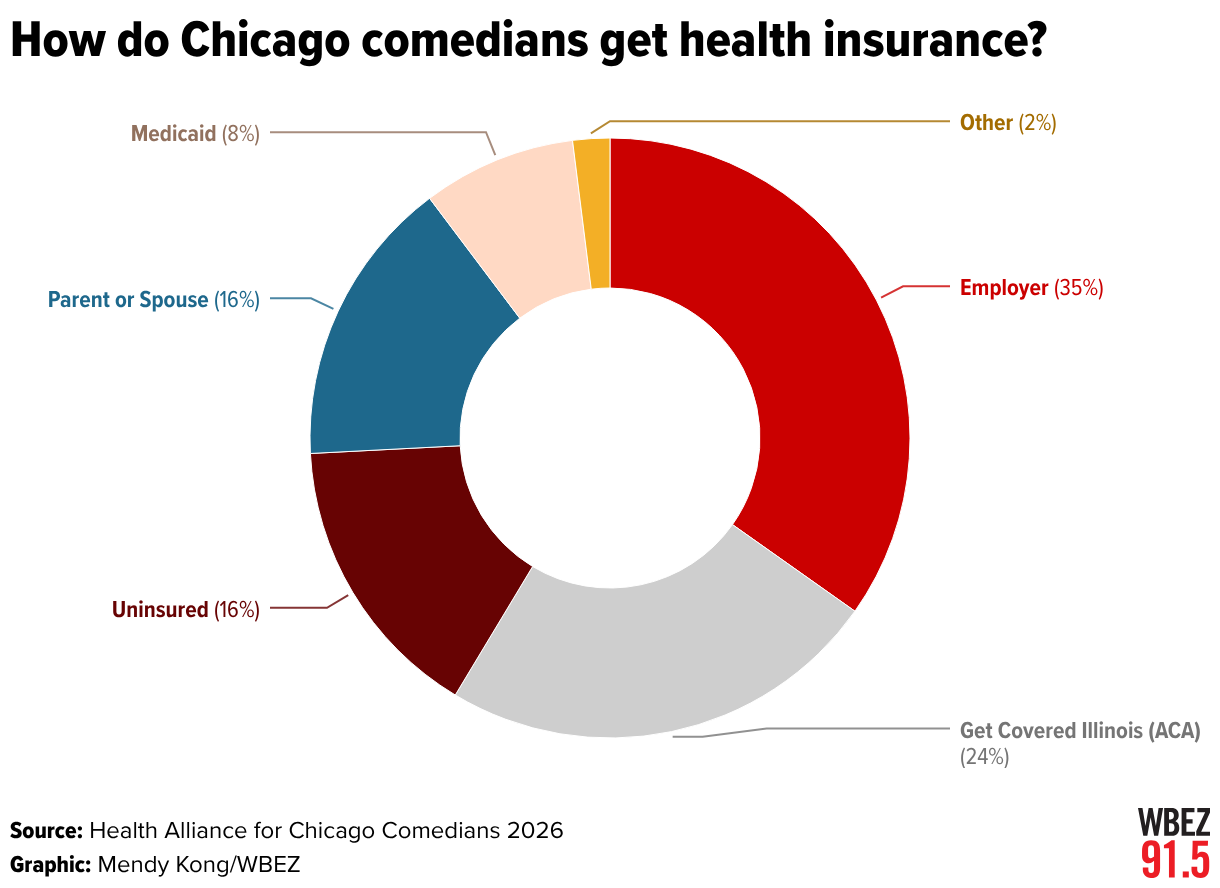
This week, the Chicago-based group released its first report detailing their survey of 110 comedians who either lived in Chicago or performed in the city during the first half of this year. Of those surveyed, nearly 16% are uninsured.
Another 24% buy their insurance through Get Covered Illinois, the state’s Affordable Care Act market exchange, according to the report. Another 8% depend on Medicaid, a federal health program for low-income individuals.
For Grossman, the survey results highlight how comedians are among those at risk of losing access to affordable healthcare due to changes on the federal level to the ACA and Medicaid. Last year, Congress allowed COVID-era enhanced tax credits to expire. Those subsidies had made buying health insurance through the ACA more affordable.
The percentage of uninsured Chicago comedians is higher than the national rate for people age 64 and under. Of that group, about 10% lack health insurance, according to KFF, which conducts health policy research and polling.
“I think it’s a really good microcosm of the rest of the world,” Grossman, who co-founded the alliance, said about the survey results. “They’re artists but they run the gamut in terms of other jobs that they have, or income levels, or background.”
Nearly 35% of comedians indicated they get insurance through their employer, and another 16% access it through a parent or spouse, the survey found.
Other sectors of the arts also are seeing the need for more help in getting health coverage, especially since the COVID pandemic, said Michael Anderson, the managing advisor for the Chicago Dance Health Fund. The fund provides grants to dancers for health and wellness as well as for those undergoing critical medical care, such as cancer treatments.
“As healthcare becomes more and more expensive, I think a lot of artists, especially dancers I’ll speak for more specifically, who are usually younger … they’re under-insured or they have very high premiums,” Anderson said. “They have very expensive plans. So the need for something like the Chicago Dance Health Fund or some of these other organizations are just paramount for artists that are working today.”
The Health Alliance for Chicago Comedians aims to launch a pilot program later this year that would subsidize the cost of health insurance through Get Covered Illinois for about 10 local stand-up comics. So far, they’ve raised $20,000 toward that program, Grossman said. They would like to raise closer to $60,000, and they also anticipate tracking data on the pilot’s participants.
“Our hypothesis is that providing this little bit of cushion for them is really going to help, that this is something that is holding them back that either they’re not touring or they’re not making as much money as they want to do,” Grossman said. “That we are going to see people really thrive.”
In the survey, some comedians indicated they didn’t participate in tours because they couldn’t afford to or were worried about getting sick without insurance on the road, Grossman said.
Some of the comedians they have been surveying are tied to the Lincoln Lodge, a nonprofit independent comedy venue in Logan Square. The Lincoln Lodge is exploring joining a group health insurance program through the Greater Ravenswood Chamber of Commerce, said Kelsie Huff, director of marketing and training center program development for the venue.
They are looking into whether comedians who perform at the Lincoln Lodge also could join the plan as a way to get health insurance, Huff said, adding that comedians, like other artists, aren’t paid well because society doesn’t value art.
“The average comedian, just like the average artist — just like, I dare to say, the average American — is being devastated by the healthcare insurance,” Huff said.