Federal grand jurors listened to more than an hour of testimony last fall about a tussle between Operation Midway Blitz protester Cole Sheridan and then-U.S. Border Patrol Cmdr. Gregory Bovino — an event that lasted a matter of seconds.
Prosecutors said the Oct. 3 struggle left Bovino with a strained groin muscle. They said they had body-camera footage that captured part of the incident. And they delivered the testimony of at least two law enforcement officials while seeking an assault charge against Sheridan.
But it wasn’t enough. The grand jury wanted to hear from Bovino.
That rare insight from the grand jury room was revealed in court records unsealed this week at the request of the Chicago Sun-Times. They contain additional evidence that, far from being a rubber stamp for prosecutors, Chicago grand jurors repeatedly pushed for more information before handing up indictments during Midway Blitz, the deportation campaign marking its one-year anniversary Tuesday.
Prosecutors wound up dropping Sheridan’s case four days after the panel sought Bovino’s testimony. By then, video had surfaced that undermined the prosecution. And a judge accused Bovino of lying under oath that same week.
Meanwhile, a grand jury considering a separate case asked for so much information that a prosecutor conceded the feds “cannot realistically obtain all of the evidence the grand jury has requested.”
Ultimately, it appears Chicago grand jurors joined their counterparts across the nation — most notably in Los Angeles and Washington — in forming a bulwark against the aggressive prosecutions that accompanied the Trump administration’s deportation efforts. Chicago panelists specifically refused to indict at least three of 33 known Midway Blitz defendants.
One grand juror famously called the tainted “Broadview Six” case a “crock of sh–.”
The panelists did not reject every case brought by the feds. Rather, grand jurors in Chicago indicted 14 of the Midway Blitz defendants. They include Marimar Martinez, the woman whose shooting by a Border Patrol agent is now under investigation by the Chicago Police Department.
Martinez’s charges were later dropped. In fact, prosecutors secured convictions against only two of the 33 defendants, with one case still pending. U.S. Attorney Andrew Boutros has said his office reviewed hundreds of potential cases and wound up declining many charges.
The new insight into grand jury proceedings became available Thursday through procedural records that were previously kept under seal because of the strict rules governing grand jury secrecy. They were filed after initial charges were brought against two Midway Blitz defendants: Sheridan and Nathan Griffin.
Prosecutors sought additional time to indict both of them last fall, and they justified their request in the sealed records. U.S. District Chief Judge Virginia Kendall, who supervises grand jury operations, approved each request.

Neither defendant was ever indicted, though. Grand jurors directly rejected the effort to indict Griffin, in a once-rare rebuke of prosecutors known as a no-bill. Chicago’s federal court has since adopted a rule requiring public disclosure of a no-bill under similar circumstances.
The feds’ struggle here and elsewhere put an unusual spotlight on an arm of the federal courts long viewed with cynicism. Generally made up of 16 to 23 people, grand juries operate behind closed doors and hear only from prosecutors and witnesses before deciding whether to indict. Federal Rules of Criminal Procedure forbid prosecutors, panelists and others from discussing the proceedings.
It’s long been said that prosecutors can convince grand jurors to indict a ham sandwich.
Boutros’ office did not object to the Sun-Times’ request to unseal the records, allowing the rare glimpse into the grand jurors’ response to Midway Blitz.
“Given the unique and intense interest in Operation Midway Blitz cases, the office elected not to oppose the request for disclosure of these sealed attachments so the public can see for themselves that the government’s handling of Midway Blitz cases was no different from how it handles federal criminal cases in this district,” Boutros’ office said in a statement.
Boutros spent his summer weathering a scandal directly tied to grand juries. A prosecutor from his office is accused of misconduct while securing an indictment last fall against the group of Midway Blitz protesters known as the “Broadview Six.”

Sheridan’s case was considered by the same grand jury but not the same prosecutor, records show.
Rather, Sheridan’s case was handled by a different prosecutor who still played a role in the “Broadview Six” case: Assistant U.S. Attorney William Hogan. He delivered the news to Kendall Thursday that Boutros’ office would not object to the Sun-Times’ request for the records.
The judge said she expected a different response from Boutros’ office. Though she granted the media organization’s request, she questioned whether the public’s interest in the records really outweighed the need for grand jury secrecy.
She told a Sun-Times lawyer, “it’s not normally something that you are allowed to have.”
Push for Bovino’s testimony
Federal prosecutors filed an initial assault charge against Sheridan on Oct. 4, using a document known as a criminal complaint. That gave them until Nov. 3 to secure an indictment over Sheridan’s run-in with Bovino.
The incident took place outside an immigration holding facility in west-suburban Broadview that became a hotbed of protests during Midway Blitz.
Authorities did not use Bovino’s name in the criminal complaint. Rather, they identified him in a sealed filing Oct. 31, when they asked Kendall for five additional days to secure an indictment.
Sheridan has said Bovino lied about what happened. Reached Thursday by the Sun-Times, he compared his prosecution to the investigation of late financier Jeffrey Epstein, accused of sexually abusing underage girls.
“If you can, with absolutely no evidence, just send a random person to jail and potentially get an indictment out of it, then what can you do with, you know, a massive tranche of emails [and] documents,” Sheridan said. “That’s got no legs?”

Boutros and other federal officials vowed last fall to “take swift action … when criminal offenders assault, obstruct, or impede law enforcement personnel or destroy federal property.”
Prosecutors told Kendall that “Sheridan pushed back against and grappled with Chief Bovino after Chief Bovino had lawfully ordered Sheridan to move back to a safe area.” They said “Sheridan’s resistance caused him, Chief Bovino” and an unidentified Border Patrol agent “to go to the ground in a tangle.”
Bovino suffered a strained groin muscle, according to prosecutors. That led to medication, an MRI and “an order by the treating physician that Chief Bovino not engage in any physical activity for several weeks,” they wrote.
Bovino seemingly ignored that advice, because he continued to appear regularly as the public face of Midway Blitz. He has since retired.
An investigation into the Sheridan incident followed, involving interviews and a review of body-worn camera video, prosecutors said. Grand jurors heard evidence for an hour and 15 minutes on Oct. 30, including testimony from a Homeland Security Investigations case agent and a “deputy chief,” according to the newly unsealed records.
Boutros’ office redacted the names of the federal officials who testified from the unsealed records.
Still, the grand jury did not hear from Bovino himself. The Border Patrol boss had been ordered into a five-hour deposition that day by U.S. District Judge Sara Ellis, who oversaw litigation concerning the feds’ use of force during Midway Blitz.

Twenty-five minutes after grand jurors were supposed to call it a night, they asked to hear from Bovino, prosecutors wrote. Because it was late, they decided to recess for a week and asked that Bovino appear Nov. 6.
That prompted the feds to ask for a new indictment deadline.
Kendall obliged. But then, Boutros’ office said it “obtained new evidence in the form of a cell phone video that showed the incident from a different angle than we had previously seen.
“Based on the new video evidence, the office decided to dismiss the complaint and not seek an indictment,” it said in a statement.
Sheridan has said the video “demonstrates that, not only did I have no kind of altercation with Bovino, I wasn’t even in front of him.”
Meanwhile, had Bovino testified Nov. 6, grand jurors would have heard from him the same day that Ellis handed down her historic order restricting the feds’ use of force during Midway Blitz — and accused Bovino of lying during his deposition.
A rare rejection
While being taken into custody on Oct. 24 for allegedly closing a vehicle door on the leg of a Border Patrol agent at West Belmont near North Broadway, Lake View comedy club manager Nathan Griffin insisted, “I didn’t assault anybody,” prosecutors said.
“Shutting a door isn’t a f—ing crime.”
Grand jurors ultimately took his side — after asking for a lot of evidence.
The feds brought the case against Griffin to a grand jury Nov. 19, four days before their indictment deadline, the newly unsealed records show. They spent an hour going over the evidence, which included testimony from an FBI agent and a review of video and still images.
Twenty minutes after the panelists retired to consider the case, a prosecutor learned they wanted more.
Grand jurors wanted to hear from two agents, the records show. They wanted to hear from “onlookers present at the scene” — and to see the onlookers’ cellphone video. They wanted “fixed camera footage,” and they wanted to review medical records regarding the agent’s injury.
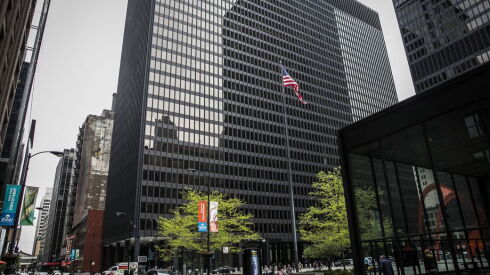
Assistant U.S. Attorney Jeffrey Snell conceded, “the government does not possess and cannot realistically obtain all of the evidence the grand jury has requested (such as testimony and cellphone video from onlookers to the event whose identities are unknown).”
The two agents in question were no longer even in Chicago, Snell noted.
But he told Kendall the feds would present what they could on Dec. 3, so the judge gave them 10 additional days to seek an indictment.
Then, when the new deadline rolled around, Snell dropped the case against Griffin.
That prompted a hearing before U.S. Magistrate Judge Keri Holleb Hotaling, who’d earlier found probable cause to support the case against Griffin. She wanted to know what happened.
Snell initially told her “an indictment was not returned.” But after some prodding by the judge, he acknowledged the grand jury had delivered a no-bill.
Griffin was free to go.
‘You’re the umpire’
The public doesn’t normally get to know this much about the inner-workings of the grand jury. In addition to the records unsealed this week, transcripts were released this summer from grand jury proceedings in the “Broadview Six” case.
That’s how the public came to know that a grand juror called that case a “crock of sh–.”
The six Midway Blitz protesters had been accused of conspiring to impede a federal agent as he drove his SUV toward the Broadview immigration facility, the scene of Sheridan’s arrest.
Boutros dropped the “Broadview Six” charges May 21, after U.S. District Judge April Perry revealed three types of alleged wrongdoing by Assistant U.S. Attorney Sheri Mecklenburg. She’s accused of speaking with grand jurors outside the grand jury room and excusing members of the panel who didn’t agree with the feds’ case.

She’s also accused of “vouching,” a forbidden practice in which prosecutors put their personal credibility on the line to support criminal charges. It’s considered improper because grand jurors are expected to hand up indictments based on the evidence — not the goodwill of a prosecutor who already has the upper hand in the grand jury room.
“I don’t charge people unless I’m absolutely sure,” Mecklenburg told grand jurors Oct. 9.
Mecklenburg’s conduct had been redacted from transcripts initially given to Perry — the “most problematic” issue of all, the judge has said. Hogan, the prosecutor who also handled Sheridan’s case, took responsibility for the redactions.
Fallout from the scandal revealed that Kendall sent a letter to grand jurors last fall, which has not been released publicly. Boutros also appeared before grand jurors Oct. 23. He said he did so because of “prior grand jury disturbances and potential tension” in the “Broadview Six” case — a likely reference to the grand juror’s “crock of sh–” remark.

Boutros reminded the panelists they are “the conscience of the community” and were there to call “balls and strikes.”
“You’re the umpire,” he said, “and you can’t come in and be an umpire in favor of [a] particular team.”
But he also told anyone “struggling with a certain type of cases, such as the immigration cases or other cases,” to raise their hand. No one apparently did so, but Boutros has since said that anyone who did would have had a private discussion with Kendall about their concerns.
That same month, grand jurors handed up their indictment against Martinez, the woman shot by Border Patrol agent Charles Exum. Boutros’ office dropped the charges against Martinez on Nov. 20, and she’s since called on state and local authorities to prosecute Exum.
Her indictment was one of two delivered Oct. 9 by a grand jury foreperson to U.S. Magistrate Judge Maria Valdez. The judge confirmed with the foreperson that day that the appropriate number of grand jurors — 12 — had concurred in the indictments.

She also told the foreperson, “you look tired.”
“It was a long day,” the foreperson replied, according to a transcript obtained by the Sun-Times.
She thanked the foreperson for their service and said, “you’re almost done.”
“I know,” the foreperson told her.
“I mean, a couple more months, right?” the judge said. “Are you excited?”
“Fingers crossed,” the foreperson said. “We’d like to continue.”
Read the court filings here: