Federal immigration enforcement has intensified across Chicago in recent weeks, but the Trump administration’s tactics have been far less publicized than during the height of its deportation campaign last fall, legal groups and immigration advocates say.
Last week, at least 20 people were arrested by the U.S. Immigration and Customs Enforcement in Chicago, and another 17 people have been arrested so far this week, according to reports from rapid response groups who document the arrests.
Those numbers seem to be an increase from recent months, said Marcela Rodriguez, co-chair of the Illinois Latino Agenda and a member of the nonprofit group Enlace Chicago.
The Southwest Side, particularly the neighborhoods of Back of the Yards, Brighton Park and Gage Park, have been targeted the most over the last two weeks, legal groups said.
The heightened ICE activity in Chicago comes amid an escalated deportation campaign by the Trump administration across the country.
On Tuesday, an ICE officer shot and killed a man in Houston during an attempted traffic stop.
During the five-day period at the end of June, ICE arrested more than 10,000 people. The figures indicate that while the administration no longer targets individual cities high-profile efforts, the arrests continue and are surging.
The vast majority of recent detainees in Chicago also have no criminal records, said Berto Aguayo, a lawyer and co-policy chair of the Latino Leadership Council.
“These numbers represent more than statistics,” Rodriguez said Thursday at a news conference in Back of the Yards with numerous immigration advocacy leaders. “They represent parents, children, workers, neighbors, small business owners and members of our community who deserve dignity, fairness and due process.”
Legal groups said those numbers also may underestimate the actual amount of arrests made because federal immigration agents have operated more discreetly compared to last fall, when caravans of agents dressed in military fatigues would roam streets, use helicopters, film arrests and boast about them on social media.
Still, many recent arrests have happened in public spaces, such as courthouses, schools and grocery stores.
“Despite claims that ‘Operation Midway Blitz’ has ended, it is not over,” Aguayo said. “Our communities continue to feel the impact. Families are still living with the consequences and litigation continues to this day over the continuing harm caused by this operation.
“So our message today remains the same: If you are vulnerable, please take precautions and limit going outdoors; know your rights, stay informed; connect with trusted community organizations and your neighbors.”
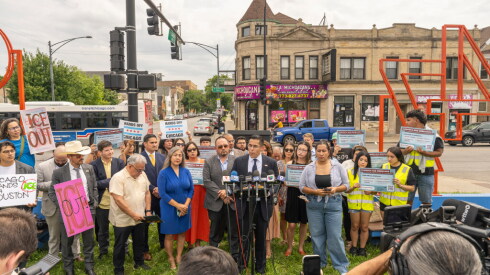
ICE operating less performatively has affected residents “in a good way and in a bad way,” Rodriguez said.
“In a good way because there is some relief that is felt in some ways for some people,” Rodriguez said. “But in a bad way because … I would be concerned that we become kind of comfortable with the quiet, even though it’s not really quiet — it’s just not as visible as it used to be. So that puts people in danger.”
Over the past month, the number of requests for legal immigration services made to the Resurrection Project have about doubled, from 900 inquiries to more than 1,700, the organization’s CEO Raul Raymundo said.
Other groups have seen the same increase in inquiries.
At Enlace Chicago, requests for services have gone up significantly in the last few weeks, Rodriguez said.
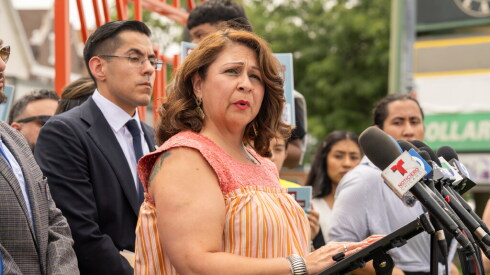
After the Trump administration’s “Operation Midway Blitz” slowed at the end of last year, the Brighton Park Neighborhood Council would receive a handful of ICE sighting tips a week. But over the last week, the organization has fielded two to three tips per day, said Karina Martínez, the BPNC communications coordinator.
Advocates called on residents to “safely document” immigration agents and any arrests they make. They also urged people with immigration court proceedings to prepare ahead of their court dates, have an emergency plan, and to memorize their lawyer’s phone number or the Illinois Coalition for Immigrant and Refugee Rights’ family support hotline: 855-435-7693.
Aguayo, the lawyer, called on Cook County Chief Judge Charles Beach to expand remote options for court proceedings.
“It’s not OK for someone to be going to a court hearing, a traffic hearing, and to have fear that they’re going to be detained for following the law,” Aguayo said.
Contributing: Associated Press