The Justice Department failed to get felony convictions against most of the 102 protesters arrested in Chicago and three other cities last year on charges of assaulting federal authorities — a record far below the norm in federal assault prosecutions.
All of the dozen cases that made it to trial, mostly in Los Angeles, ended in acquittal, mistrial or dismissal. Experts say that’s surprising for a department known for its ability to win at trial. The last three felony assault cases, in L.A. and Portland, Oregon, will go to trial this fall.
The findings from an analysis by The Associated Press of arrests during protests in Chicago, Los Angeles, Portland and Washington, D.C. — where President Donald Trump deployed or wanted to deploy the National Guard — come as the Justice Department is facing setbacks in politically charged investigations in Chicago and elsewhere, with grand juries repeatedly refusing to return indictments and trial juries granting acquittals.
“Prosecutors tend to win because they control what cases they pursue, and they have a lot of resources and discretion,” said Mary Fan, a former federal prosecutor who is a University of Washington law professor.
That the government failed to win any felony assault convictions at trial calls into question “whether or not these charges should have ever been brought in the first place,” Fan said.
Then-Attorney General Pam Bondi said people who interfered with federal law enforcement would face “severe consequences.”
Most of the arrests — 102 — were for felony assault on a federal officer, which can carry a sentence of up to 20 years in prison. Of those cases, 41% were dismissed, and 34% were pleaded down to misdemeanors. Ten people pleaded guilty to felony assault. Nine people got prison time.
Of those arrested on other charges, seven were sentenced to prison for offenses including arson and obstructing law enforcement. A handful of defendants have diversion agreements, meaning those cases will be dismissed if they demonstrate good behavior.
The analysis shows the Justice Department’s record failed to meaningfully improve since December, when an initial assessment showed early struggles to prosecute people on the charges for which they were arrested.
The Justice Department said in response to the findings that federal prosecutors are right to prioritize cases against people accused of assaulting federal officers and that “each case is based on the facts.”
“If there are mitigating factors identified in a case, then prosecutors must also act appropriately to inform the court, and in some cases downgrade or drop charges,” the department said.
It’s rare for federal prosecutors to lose at trial. In 2024, 82% of defendants charged with felony or misdemeanor assault were convicted at trial or with a plea deal, according to data from the federal Administrative Office of the U.S. Courts. AP’s analysis found that fewer than half of the protesters charged with felony or misdemeanor assault were convicted.
Michael Rabbitt was among six co-defendants accused of felony conspiracy to impede a government vehicle from accessing an ICE facility near Chicago last September. The vehicle slowly advanced despite being surrounded by protesters, leading some to put their hands on it, Rabbitt said.
After the prosecution dismissed charges against two of the defendants, defense lawyers requested transcripts of the grand jury proceedings that led to the conspiracy indictment. The government eventually dropped the conspiracy charge and proceeded on misdemeanor counts of impeding a federal officer.
The judge later reviewed the unredacted transcripts and admonished prosecutors for improper behavior before the grand jury. The charges were dismissed days before trial.
Rabbitt said he was proud they fought the charges.
“This case was bigger than us,” he said. “I’m proud that we won this case, not just for us, but for protesters across the country.”
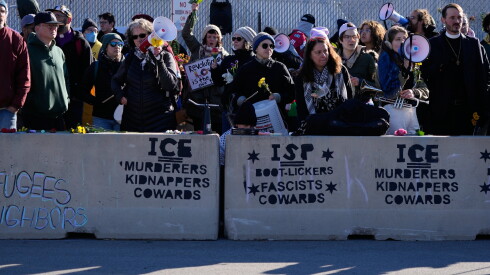
In Chicago, all but one of 19 felony assault cases were dismissed.
The U.S. attorney’s offices in Chicago, Washington and Oregon did not respond to requests for comment.