ComEd customers have footed the bill for billions of dollars spent by the utility in recent years to help ensure that power stays on in Northern Illinois even during the worst weather.
Yet the lights still went out in 2.4 million homes during storms this year. Sometimes, it was for an hour or less. But people in the south suburbs have been left without electricity for as long as five days.
Keeping the power on during increasingly extreme weather costs a lot. As a result, ComEd says it needs to raise more than $15 billion through rate increases so it can handle rising demand and deal with intense storms that experts say are getting worse because of climate change.
That’s on top of $4.4 billion being spent on a previously approved initiative to strengthen the electric grid — the system of lines, towers, poles and other equipment connecting power plants to homes and businesses. As a regulated utility, ComEd has to apply to the state of Illinois for any rate increases. And it has done so regularly over the past couple of decades.
It’s a cost that hopefully pays off.
To see what’s at stake, consider what happened recently in Gary, where people were left helpless as a storm with the velocity of a Category 2 hurricane tore through the city, knocking out power for two weeks. Many blamed the Northern Indiana Public Service Co. In a lawsuit, Northwest Indiana residents say the electric utility, known as NIPSCO, didn’t protect its power lines and utility poles from tree damage ahead of the storms. NIPSCO disputes that.
“Gary should be a warning to all utilities — in Illinois and across the nation,” said Sarah Moskowitz, executive director of the Illinois watchdog group the Citizens Utility Board. “It’s their duty to cost-effectively maintain the system and preserve affordability. If that duty takes a backseat to their profit margin, they risk disaster.”
In Englewood in June, more than 900 ComEd customers lost power for three or four days after a storm downed thousands of trees, complicating repairs. ComEd said its goal is to restore power in 12 to 24 hours after the most severe storms, but damage from such extreme weather can make that difficult.
In Chicago this year, ComEd said it has had 336,000 outages, most on the South Side and the Southwest Side.
For Renee Rudder, who has lived in South Deering for 36 years, power outages from storms have become a routine problem. Rudder said she lost electricity for a day and a half in July after one storm but faced a longer outage after a storm last summer that forced her to throw out $400 worth of groceries.
“We have a supply of flashlights and batteries and candles,” she said.
Still, she realizes people in Gary have had things much worse.
“I’m complaining about the three or four days, while they have been out two weeks,” Rudder said. “I try to count my blessings.”
Record year for storms
ComEd has 1.4 million customers in Chicago among the 4 million across its service area. It has had a busy year due to thunderstorms, tornadoes and furious winds. It’s already been the worst year for big storms, but not for total power outages, according to the company, which said it had nearly 3 million outages in 2011.
ComEd said the number of outages this year would be more than double what it’s been had it not made technology improvements in recent years to better deal with weather-related damage. Those steps helped avoid about 2.7 million additional outages this year, according to Dale Player, the utility’s vice president of engineering and “smart grid.” He said its upgrades include adding more than 10,000 devices that can automatically sense a power disturbance, isolate the problem and restore electricity.
Weather planning and response is now a big part of what ComEd does. The utility has its own staff meteorologist to anticipate severe weather.
It also is working with Argonne National Laboratory to better understand the impact of climate change on the electric grid.
Aging infrastructure
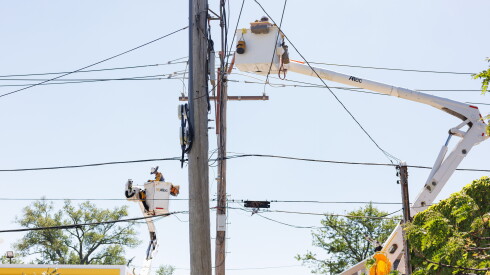
The utility and state officials say more must be done to strengthen parts of the grid that are many decades old.
Electric grid reliability is among the top priorities for the state utility regulator, known as the Illinois Commerce Commission, according to a spokesperson.
ComEd is required by law to point out to the state its weakest spots across Chicago and the rest of its service area, which covers Northern Illinois. The utility doesn’t provide exact locations, but an analysis two years ago identified areas of the West Side and South Side that are vulnerable, including parts of Roseland, South Deering and Washington Park on the South Side and North Lawndale on the West Side. Those areas have aging equipment and infrastructure that needs updating, said Sophie Thuis, who did the analysis with ComEd’s cooperation.
How power gets to your home

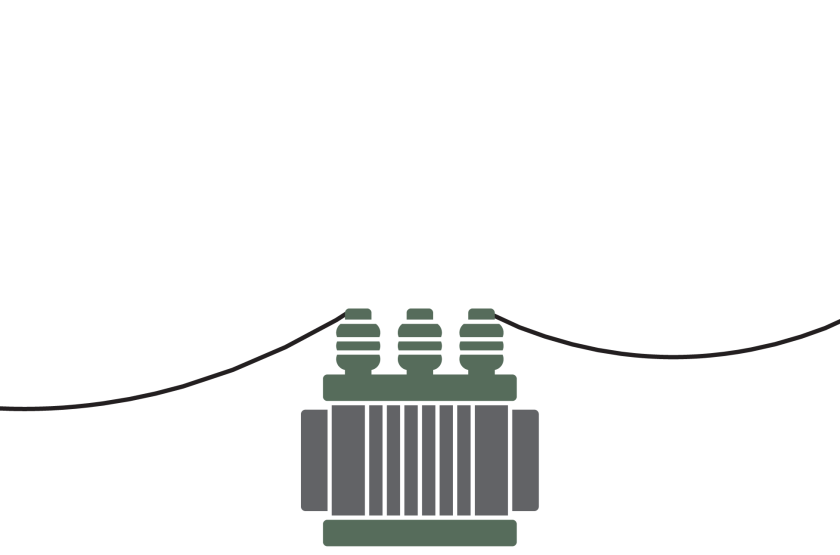
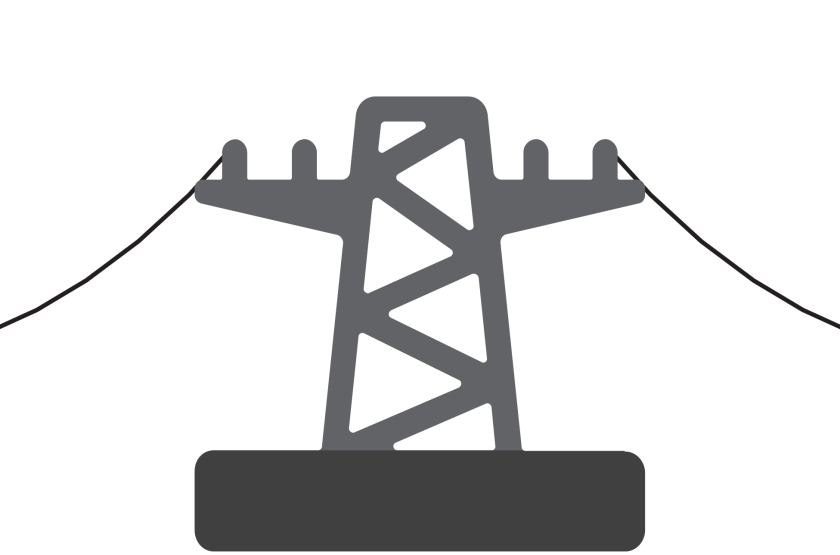
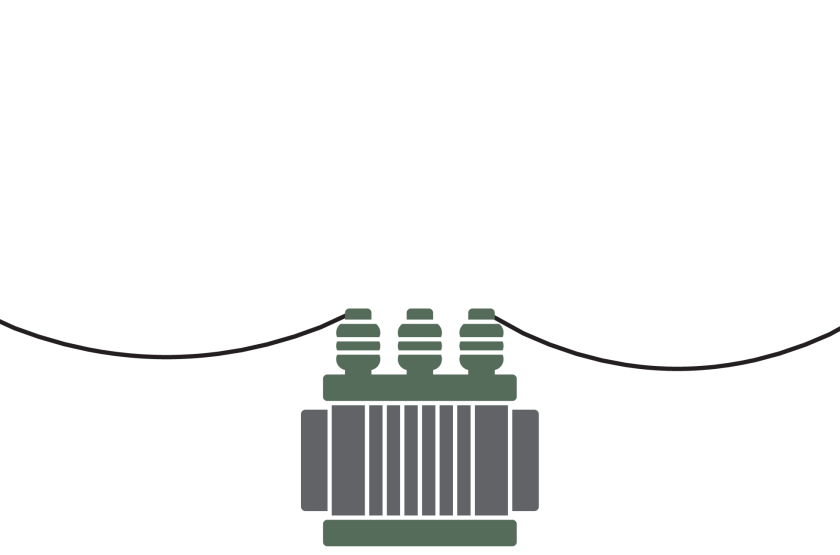
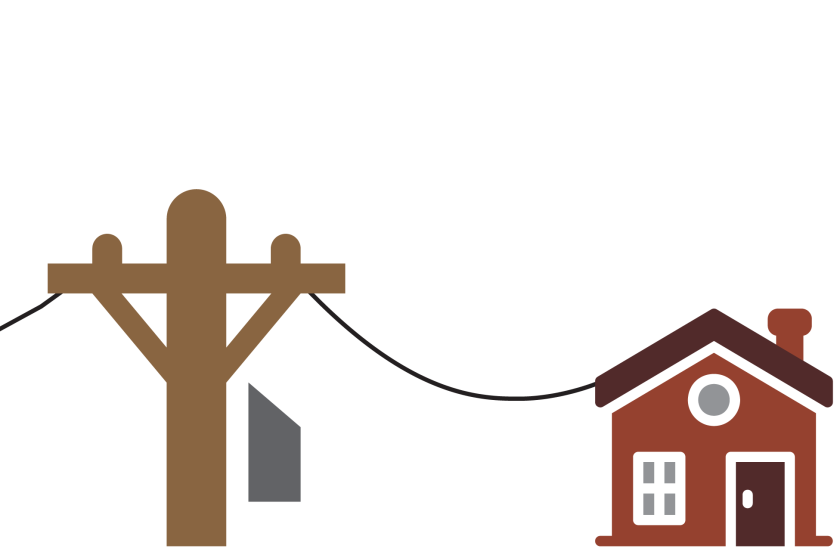

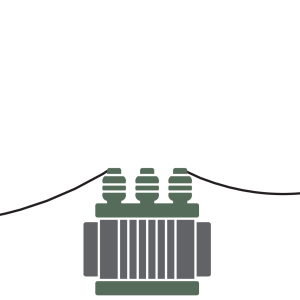
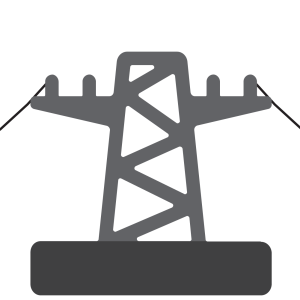
Sources: U.S. Energy Information Administration, National Energy Education Development Project
Graphic: Justin Myers/Chicago Public Media
“The neighborhoods singled out in the report have circuits that had issues across multiple years of reporting,” said Thuis, Midwest regional director for the not-for-profit Carbon League. “So [they] would be the highest priority for intervention.”
That doesn’t necessarily mean those areas face the prospect of a disaster like that seen in Gary. But extreme storms and aging mechanics don’t bode well for many neighborhoods. As a result of this study, ComEd has targeted these areas ahead of powerful storms.
Chicago ‘franchise agreement’
Since 1999, when then-Mayor Richard M. Daley blasted the utility for widespread blackouts during a heat wave, the company has stepped up investments in its infrastructure, technology and preparedness, all funded with its electricity customers’ money.
The state, not the city, regulates ComEd. But Daley cited the utility’s poor performance in saying the utility breached a long-term franchise agreement Chicago had with ComEd to provide electricity. That deal expired at the end of 2020. Despite then-Mayor Lori Lightfoot’s vows to extract more promises from ComEd, the arrangement never was renegotiated. So the utility continues to operate in Chicago under terms of the expired agreement.
“The city continues to have productive conversations,” a City Hall spokesperson said of that situation.
Ald. Matt Martin (47th) said Mayor Brandon Johnson should make reaching a new agreement with ComEd a priority.
“There could be and should be an agreement that holds ComEd accountable,” Martin said. “We definitely want to avoid what happened in Gary.”