Sunday’s race at Bristol Motor Speedway may begin under ideal conditions, but it likely won’t stay that way.
With temperatures expected to climb into the low 80s before dropping into the 50s later in the day, the race could unfold in two distinct phases — forcing teams to balance early-race survival with late-race speed.
On paper, the forecast looks simple: mostly sunny skies, light winds, and virtually no chance of rain. But at Bristol, even subtle shifts in temperature can change how the track feels — and how aggressively drivers can attack it.
That’s where Sunday’s race gets interesting.
Hot Start Could Test Grip Early
An afternoon high around 83 degrees means the race is expected to begin with a warmer, slicker racing surface.
While Bristol’s concrete can offer strong grip, heat can take some of that away — especially early in a run, when drivers are still searching for balance in traffic. That puts added emphasis on car control and tire management in the opening stages, where track position is already critical.
Even without extreme tire falloff, a hotter track can make it harder for drivers to stay consistent over longer runs. A car that feels stable in clean air can quickly become unpredictable in traffic — something that matters at a tight, high-tempo track like Bristol.
Cooler Temps Could Change the Race Late
The bigger storyline may come as the race progresses.
With temperatures expected to fall from the 80s into the upper 50s by the evening, the track is likely to gain grip over time. As conditions cool, drivers can push harder, braking points shift, and lap times can improve.
That doesn’t guarantee a dramatic swing in the running order, but it does open the door for the race to feel very different in its closing stages compared to how it begins.
A car that is comfortable early may not have the same edge later — and vice versa.
A Setup Balancing Act for Teams
That creates a familiar but important challenge: which phase of the race do you prioritize?
Teams must decide whether to:
- Build a car that handles better in hotter, slicker conditions early
- Or lean toward a setup that comes alive as the track cools later
In reality, most will aim for a compromise — but that doesn’t eliminate the risk. If the track evolves more than expected, in-race adjustments will become critical, especially during pit stops.
At Bristol, where rhythm and confidence matter as much as raw speed, even small changes in feel can have an outsized impact.
Clean Forecast, But Not a Static Race
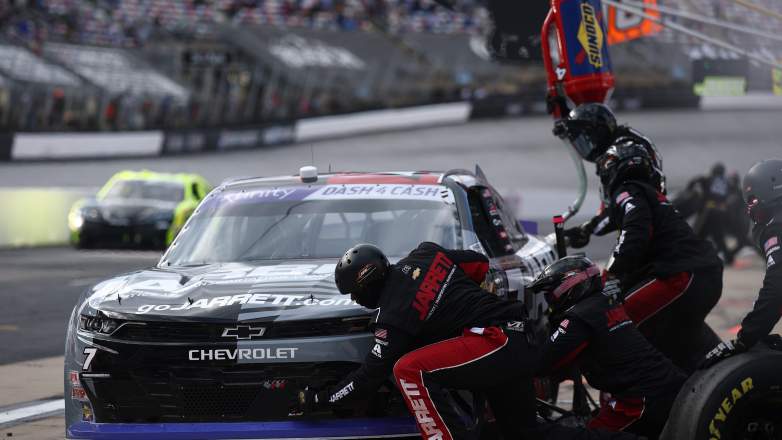
GettyPit strategy and in-race adjustments can play a key role at Bristol as track conditions evolve throughout the race.
The good news is that weather should not interrupt Sunday’s race. Rain chances remain minimal, meaning teams and fans are unlikely to deal with delays or strategy shakeups caused by caution flags tied to weather.
But that doesn’t mean weather will stay out of the story entirely.
Instead of disrupting the race, it may shape it — gradually, lap by lap, as conditions shift from a warm afternoon start to a cooler evening finish.
And at a track where margins are already razor-thin, that kind of change can matter.
Like Heavy Sports’s content? Be sure to follow us.
This article was originally published on Heavy Sports
The post Hot Start, Fast Finish: Bristol’s Weather Shift Could Change Sunday’s Race appeared first on Heavy Sports.