A measure on this November’s ballot asks Chicago voters if they’d like the city to establish a designated, permanent spot for large-scale festivals and events.
One of several nonbinding questions this election cycle, it arrives after pushback in recent years from some Chicagoans who oppose privately run festivals being held in the city’s public spaces, from Lollapalooza in Grant Park to Riot Fest in Douglass Park.
The measure, introduced by Ald. Nicole Lee (11th), will gauge public interest in Chicago designating a location for such festival-sized events. However, the measure itself is light on details and doesn’t come with clear next steps. The wording simply asks: Should Chicago develop a permanent festival and outdoor event space for large-scale events?
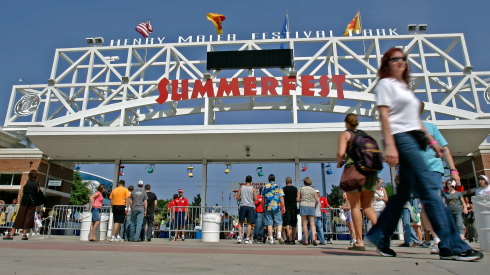
Some advocacy groups are urging voters to pass the referendum, envisioning a city resource similar to Milwaukee’s city-owned Summerfest grounds, operated year-round through a nonprofit.

Here in Chicago, the city already owns multiple outdoor venues, like the city-operated pavilion in Millennium Park, although that Frank Gehry-designed venue is typically used for free festivals, like Blues Fest and Jazz Fest. The city also owns Northerly Island, but it contracts operation of the island’s Huntington Bank Pavilion to Live Nation. That arrangement is scrutinized in a new Vanderbilt University report.
Lee did not return requests for an interview but told Block Club Chicago she’s not sure hosting festivals like Lollapalooza in city parks is “a good investment for us at the end of the day.” She added that she did not have specific ideas of where the grounds could go.

The resolution behind the ballot measure says a permanent festival and outdoor event space “would provide the City with a centralized location capable of supporting concerts, cultural festivals, food and beverage events, sporting exhibitions, community celebrations, and other large gatherings through purpose-built infrastructure, transportation access, and public safety accommodations.”
At least one prominent advocacy group says it wasn’t involved in the process of getting the question before voters. Organizer Sara Heymann and the group Únete La Villita in Little Village have spent years pushing for Riot Fest to leave Douglass Park on the city’s West Side. They argue the annual fest doesn’t benefit neighbors, damages the green space and happens too close to nearby hospitals.
Heymann said their group wasn’t involved in the ballot measure. Still, she supports the effort.
“I think that it is an amazing opportunity for the public to finally weigh in on how our parks are being used and the need that we’ve had for a really long time for a festival grounds,” Heymann said.
But Heymann also wants assurances neighborhood groups like theirs will have a seat at the table if the process of establishing a permanent event space moves forward.
“I hope this ballot measure is not the last time that the public gets a real say in how this festival grounds would be built. I’m personally voting yes and hoping that others vote yes, but with the caveat that the festival grounds isn’t just put together through, like, backroom deals or from private companies taking the lion’s share of the profit.”
Heymann pointed to Soldier Field, the South Loop area known as The 78 or the site of the former Damen Silos as possible spots where an outdoor event space could go. No matter where it is, Heymann wants it close to public transportation and fully accessible.
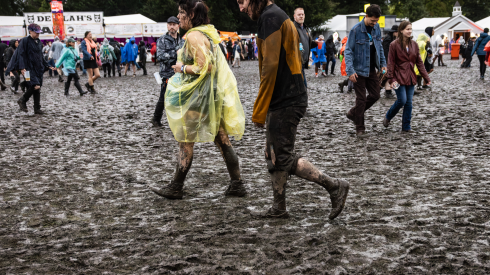
This year, both Lollapalooza and Riot Fest were held during rainy weekends, creating muddy conditions . While those festival organizers must pay to repair the fields where the events take place, the conditions also raised concerns among attendees with disabilities.
Supporters of the Chicago measure point to Milwaukee as a framework. A post on the Chicago EDM subreddit called on followers to vote in favor of the proposal: “A dedicated festival space like this will just elevate the Chicago festival experience for everybody. Permanent stages will ensure the most optimal setup for every fest, and dedicated bathrooms, as opposed to porta potties, will make the events that much nicer for us.”
In Milwaukee, Henry Maier Festival Park, on Lake Michigan, hosts not only Summerfest but also a variety of other concerts and cultural festivals very year.
How cities operate their outdoor music venues has been the subject of recent scrutiny. The Vanderbilt University study found half of Live Nation’s amphitheaters are publicly owned by a city or state, including Chicago’s Huntington Bank Pavilion on Northerly Island. The study’s authors argue those arrangements disproportionately favor Live Nation by forgoing competitive bidding, offering below-market rent and giving the corporation the chance to sell naming rights for publicly owned venues.
In total, the report found at least $420 million in taxpayer money nationwide has gone to benefit Live Nation, a multinational corporation that operates venues, owns Ticketmaster and manages artists. In April, a Manhattan jury found Live Nation acted as a monopoly and unfairly controlled too many aspects of the live entertainment industry.
Brian Shearer, the lead author of the Vanderbilt study, advocates for cities to either operate their own venues — like Red Rocks Park and Amphitheatre, owned and operated by the city of Denver — or use the “outsourcing with conditions” model. The latter would include a competitive bidding process, charging market-rate rent and allowing all artists, regardless of management, to appear. Live Nation often books only artists on its management roster to play these venues, the study notes.
“Cities should include in the contracts an insistence on making sure that the public is protected,” Shearer said. “Don’t let the venue operator charge excessive fees to residents. Don’t let the venue operator only have the venue open to the artists that they promote. We think these are sort of basic public protection terms that cities could be including in their contracts.”
In Chicago, if residents approve the ballot initiative, the next steps are unclear. The measure does not specify if the city would both own and operate the outdoor event space or contract it out.
Courtney Kueppers is an arts and culture reporter at WBEZ.