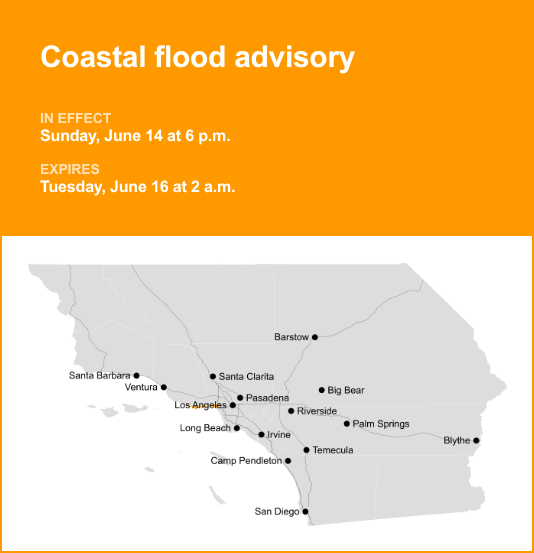
The National Weather Service issued a coastal flood advisory at 1:15 p.m. on Sunday valid from 6 p.m. until Tuesday June 16, at 2 a.m. for Malibu.
“Minor, but impactful coastal flooding expected,” according to the NWS Los Angeles/Oxnard CA. “Coastal flooding concerns will peak Sunday and Monday from 6 p.m. to 2 a.m. each day due to high astronomical tides of 7.5 ft to 7.9 ft.”
“Flooding of sea water is likely, around the time of high tide, over vulnerable low-lying coastal areas such as parking lots, beaches, and walkways. Significant damage to roads or structures is NOT expected. There is an increased risk of ocean drowning. Rip currents can pull swimmers and surfers out to sea. Waves can wash people off beaches and rocks, and capsize small boats nearshore,” the NWS said. “Take the necessary actions to protect flood-prone property. Do NOT drive around barricades or through water of unknown depth. Remain out of the water due to hazardous swimming conditions, or stay near occupied lifeguard towers. Rock jetties can be deadly in such conditions, stay off the rocks.”
Understanding the differences between advisories, watches, and warnings
Flash flood warning: Take action.
A flash flood warning is issued when a flash flood is either imminent or already occurring. In flood-prone areas, it’s crucial to move immediately to higher ground. A flash flood is a sudden and violent inundation that can develop within minutes to hours, and it can even happen in areas not currently experiencing rainfall.
Flood warning: Take action.
A flood warning is declared when flooding is on the verge of happening or is already underway.
Flood advisory: Be aware.
A flood advisory is released when flooding is not expected to reach a severity level necessitating a warning. Nonetheless, it can still cause considerable inconvenience and, without exercising caution, potentially lead to situations that threaten life and/or property.
Flood watch: Be prepared.
A flood watch is issued when conditions are favorable for flooding. It doesn’t guarantee that flooding will occur, but it signifies that the possibility exists.
Weathering the storm: Flood safety guidelines from the NWS
Floods can pose a significant threat, especially if you live in a flood-prone area or find yourself camping in a low-lying region. To ensure your safety, the NWS offers essential flood safety guidelines:
Move to higher ground:
If you reside in a flood-prone region or are camping in low-lying terrain, the first step to safety is relocating to higher ground.
Follow evacuation orders:
When local authorities issue an evacuation order, promptly comply. Before leaving, secure your home by locking it.
Disconnect utilities and appliances:
If time permits, disconnect your utilities and appliances. This precaution minimizes electrical hazards during flooding.
Avoid basements and submerged areas:
Steer clear of basements or rooms where water has submerged electrical outlets or cords. This helps prevent electrical accidents.
Swift evacuation for your safety:
If you notice sparks or hear buzzing, crackling, snapping, or popping sounds, evacuate without delay. Do not enter water that may carry an electrical charge.
Stay away from floodwaters:
Never attempt to walk through floodwaters, even if they appear shallow. Just 6 inches of fast-moving water can forcefully sweep you off your feet.
Seek high ground if trapped:
Should you become trapped by moving water, reach the highest point possible and dial 911 to contact emergency services.
When heavy rain occurs, there is a risk of flooding, particularly in low-lying and flood-prone regions. It is important to never attempt to drive through water on the road, regardless of how deep it appears. According to the NWS, as little as 12 inches of rushing water can sweep away most vehicles. Prioritize your safety by staying informed and prepared.
For more local weather alerts, visit our Weather Advisory page