It was supposed to be Brooks Barnhizer’s year.
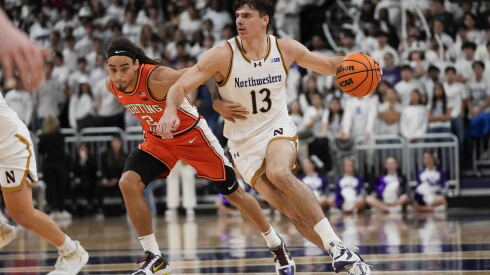
Barnhizer, a junior at Northwestern in 2023, was second on Northwestern University’s basketball team only to its star senior, Boo Buie. Boo was the attention-grabbing guard, making game-winning shots at the buzzer. Brooks was an all-around solid player who “stuffed the stat sheet” with points, rebounds, steals, assists, and blocks. Together, they took Northwestern University’s Men’s team to the NCAA Tournament for only the third time in the school’s history.
At the start of the 2024–25 season, all eyes were on Brooks to lead the team. The goal was not just to get back to the tournament, but to make school history and win more games there. He was prepared. Between seasons, he practiced with the team Monday through Friday, then hopped on a plane to New Jersey for extra workouts with NBA trainers Friday night, twice Saturday, and Sunday before flying back to Evanston.
“He is one of the hardest-working players I have ever coached,” said assistant coach Brian James, who retired from Northwestern this past June.
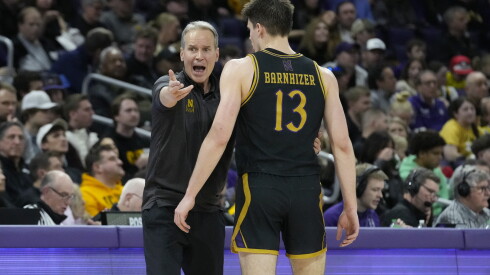
Brooks’s highly anticipated return was delayed, however, due to a summer injury to his foot, forcing him to sit out the first few games of the season to rehab instead.
On February 1, 2025, after playing 17 games and averaging 17.1 points per game, Brooks didn’t suit up. At the post-game press conference, Northwestern head coach Chris Collins couldn’t hold back tears as he announced that Brooks was out for the season.
Brooks had reinjured his foot five games prior. Despite needing surgery, he had not wanted to end his college career just yet. “Being the way Brooks is, he begged me to play . . . He said, ‘I gotta put the jersey on one more time,’” Collins said. After playing well in the game following the injury, they had decided to take it game by game.
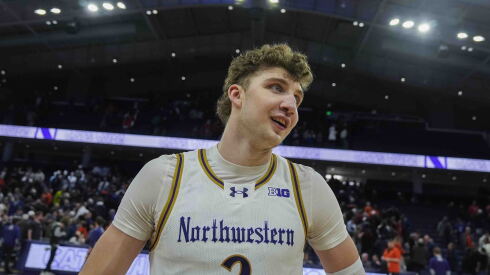
Eventually, Coach Collins asked Brooks to help Nick Martinelli, the team’s forward, learn how to run a team. “I put Brooks in charge . . . to be Nick’s whisperer . . . to be there every game, and be that strong voice and be that person who Nick sees to help him . . . becoming a star player,” Collins said.
It was supposed to be Brooks’s year. And then it wasn’t. It was Nick’s.
The silent operator
Put simply, envy is wanting what someone else has. While we all feel envy, we don’t talk about it. Not only is it unpleasant, but it’s also socially unacceptable.
Most people believe that the problem of envy is that it is inherently evil, that it ignites greed and hate and can cause people to steal, slander, or become violent.

In a new book out Oct. 20, 2026, “Envy: Why Wanting What They Have is the Key to Getting What You Want,” author Stacy S. Kim argues that the toxic emotion can be harnessed for good. “Envy can be the poison that flows from toxic comparisons or a potion that reveals purpose and connection,” Kim writes.
Lisa Hancock (Kim)
The real problem of envy, however, is that we are oblivious to how much and how often it operates in our lives and that we allow this to happen. It slips in, makes us feel uncomfortable, so we avoid or ignore it.
Doing so, we allow it to influence our thoughts and behavior. When we bottle up our negative emotions, they tend to seep out but in unexpected, uncontrollable, and unwanted ways.
I want to flip the switch on envy: Envy can be the poison that flows from toxic comparisons or a potion that reveals purpose and connection. You can dismiss envy as something bad, or you can examine your envy and harness it for good.
Envy in sports
Sports is not only a breeding ground for envy, but it also offers us public examples to see the many ways in which envy can operate in anyone’s life.
This is because contrasts are easy to make in sports. Envy is a result of making upward comparisons. If you have a lot of opportunities or the tendency to juxtapose your situation against someone else’s, you’re more likely to find instances when you’re behind and hence feel envy. In sports, the physical abilities of its players are measurable in concrete terms, and the competition between players and teams is on display for all to see.
“Differences are so obvious. In other domains, not so, but in sports, comparisons are harder to escape, especially in a context where the people involved are experts,” said Sara Protasi, a philosophy professor at the University of Puget Sound who studies envy.
Moreover, every sport has defined rules for behavior, space boundaries, and time limits. Perhaps this is why a bit of rivalry, physical force, and ambition in sports are socially acceptable and not hidden from view but sometimes even celebrated.
Sports therefore offer us examples of envy in plain sight so we can see just how insidious its power can be, not just for evil but for good. And here is where Brooks Barnhizer comes in. His story highlights different ways to respond to envy, making them easier to see.
Early challenges in Irvington, Alabama
Brooks started playing basketball early and often. Not only was he born in Indiana, where kids begin playing soon after walking, he was born to a renowned high school basketball coach, Mark Barnhizer. Both he and his older brother, Braxton, grew up in the gym starting at 5:30 a.m. every morning, including Christmas.
“The boys would wake up Christmas morning, and they would want to go shoot. Their Christmas morning workouts were fun times because nobody else was in the gym,” said Heidi Barnhizer, Brooks’s mom.
When Brooks was in the seventh grade and Braxton in eighth, his dad was offered a job coaching basketball at Alma Bryant High School in Irvington, Alabama. Mark Barnhizer agreed to take the job only after he learned that Alabama was one of a handful of states that allowed middle-schoolers to play varsity.
The plan was for Brooks to wait a year and play JV before joining the high school team. When the family arrived, however, the program was worse off than expected. Coach Barnhizer had both of his sons play.
The other boys at the school were not happy.
“‘You’re on the team because your dad’s the coach.’ Yeah, that’s what they said . . . to my face,” Brooks recalled. “Seventh graders usually don’t play up, so it was definitely a challenge.”
Four components of envy
Now we need to understand how envy is built. I found it helpful to identify what I see as four key components.
First, someone else not so far off from the envier possesses the thing the envier wants. This “similar target” is someone within reach of the envier. We often envy our classmates, friends and co-workers, and not teachers, strangers or bosses.
Second, the envier picks a domain that is important to him or her. This “relevant comparison” often happens so quickly, the envier isn’t always aware. The boys who envied Brooks the most were likely to be the ones who played basketball.
Third, envy reveals what we want. But here is where we often go wrong. We assume envy involves wanting things we can see, like beauty or money. The core of our longing, however, is “intangible desire” — what we feel.
Finally, the envier experiences an ache, pain or discomfort. These “negative emotions” stem from both the lack of what is wanted and the sense of inferiority from the comparison. It can also make us feel guilty or embarrassed and want to suppress or deny the feeling.
If we were to map these components of envy, it might be as follows: The boys saw Brooks, a new kid at school (similar target), play some ball during PE and expected to compete against him in try-outs for the middle school team (relevant comparison). The boys who tried out wanted to be a part of the team (intangible desire). But when they saw Brooks make the high-school team, they felt the pain of inferiority and unfairness (negative emotion). They gossiped and didn’t respond well.
Flipping the switch
Meanwhile, Brooks had a more useful response to his own envy. Specifically, how he started loving basketball was a moment of envy.
“The earliest memory of me loving the game wasn’t me playing. It was me watching. Watching my dad coach, watching the players that play for him play. I loved how competitive it was,” Brooks said.
“Whenever he would lose, I would always get, not sad, but mad, like ‘When I grow up and play for him, we’re not ever going to lose. I don’t ever want him to lose,’” he said. Brooks felt both envious and jealous of the boys who played for his dad.
During that first year playing as a seventh grader for his dad’s high school team, when Brooks sensed others’ animosity, he kept his focus on basketball. “It made me grow closer not only to my family but also to the game. I had to prove that first game that I belonged,” he said.
The hard work paid off. “I scored seventeen points,” he said. “And it was funny, by halfway through that year, everybody was probably, like my biggest fan in the town, and our team was like, good again.”
Brooks managed his emotions in a similar way when sidelined in 2025: His focus of concern was again on basketball and what he loved and wanted, rather than on Nick Martinelli, the target of his envy. He saw helping Nick as a way to practice a new skill — coaching. He saw mentoring Nick as a way to continue to be a part of the game he loves and practice what he might do later. So when Nick succeeded, it meant he had, too.
Nick Martinelli responded by becoming the leading scorer in the Big Ten Conference and Northwestern Men’s Basketball season.
Brooks harnessed his envy for good.
Both now play in the NBA, Barnhizer for the Oklahoma City Thunder and Martinelli for the Los Angeles Clippers.
Excerpted from “Envy: Why Wanting What They Have is the Key to Getting What You Want” by Stacy S. Kim, PhD. Copyright © 2026 by Stacy S. Kim, PhD. Reprinted with permission of Balance Publishing, an imprint of Hachette Book Group. All rights reserved.