Trump administration changes to the legal interpretation of the Endangered Species Act could put 24 federally endangered species and 12 threatened species at more risk in Illinois.
Last month, the administration determined that razing the habitat where endangered or threatened species breed, feed, and shelter would no longer face federal penalties. In a separate, internal memo, the administration made clear that it also plans to reinterpret the law to only ban the intentional killing of an endangered species, letting go of the long-held criminalization of attempts to harass, harm, pursue, wound, trap, capture or collect at-risk species. (Nearly two dozen attorneys general have sued over some of these changes.)
“These rule changes, when you zoom out, are an assault on threatened and endangered species unlike we’ve ever seen before,” said Elizabeth Forsyth, a senior attorney in the biodiversity defense program with Earthjustice. “It’s an effort to eliminate habitat protections, eliminate automatic protections for threatened species, and give industry power.”
Here are three Illinois species that are now under threat:
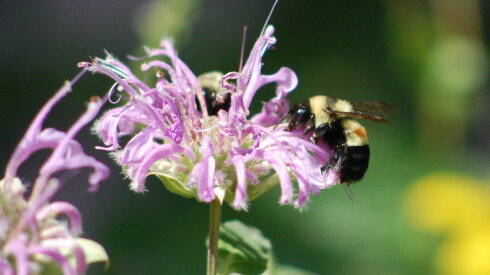
Rusty patched bumble bee
When Libby Shafer was a biological technician with the United States Geological Survey and tried to track down the rare rusty patched bumble bee over the course of a three-month search that spanned Illinois, Indiana, and Wisconsin, she had very little luck.
“I personally only saw one,” Shafer, now an urban ecologist and PhD candidate at Northwestern University, said.
The bee, which sports a distinctive amber spot near the middle of its back, was once common in 28 states including Illinois and the Canadian provinces of Ontario and Quebec. The pollinator has declined by nearly 90 percent over the past 30 years. Today, it occupies just 0.1 percent of its historic range.
The bee was listed as federally endangered in 2017, becoming the first bee species listed under the Endangered Species Act.
The Trump administration’s reinterpretation of the Endangered Species Act could be particularly harmful to these bees because the administration will no longer consider the destruction of their habitat in violation of the law. The species is small and spends half the year in soil, making them difficult to spot for experts, let alone a developer building a road.
“This is bad news for the rusty patched bumble bee,” Schafer said.

Piping plovers
“They are, in a word: adorable,” said Mikko Jimenez, an urban ecologist researching how migratory birds interact with cities, recalling the first time he saw Monty and Rose — the pair of federally endangered piping plovers that made headlines after making a home of Montrose Beach between 2019 and 2021.
The shorebirds’ historic homecoming marked the first time the migratory birds had nested on Chicago’s beaches since at least 1948. At a high point there were close to 800 pairs of small, white birds with their stubby orange bills nesting throughout the Great Lakes region, but populations plummeted to about a dozen breeding pairs in the 1990s, according to Jimenez.
“The populations have shown some really encouraging signs of recovery in more recent years,” Jimenez said. “But we’re certainly not out of the woods.”
The plovers are competing with humans for popular beach front and coastal habitat, prime for real estate development and recreation. Experts like Jimenez worry that any loss of habitat protection could have serious implications on the bird species recovery.
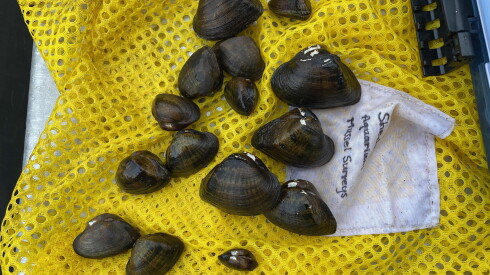
Freshwater mussels
Freshwater mussels are particularly imperiled in Illinois, where the aquatic species comprise half of all the federally endangered wildlife present in the state.
Illinois was once a hotspot for the shelled species. Scientists recorded approximately 80 different species in the state before dropping down to 59 around 1970.
Major threats to freshwater mussels include habitat degradation, water pollution, and invasive species, according to Kentaro Inoue, a research biologist at Shedd Aquarium. In Illinois and the Midwest, the species have had to contend with decades of industrial agricultural activity that have significantly altered freshwater habitats and river connectivity.
The mussels are already facing significant pressures, and the Trump administration’s rule changes won’t make their survival any easier.
“The full impact of these regulatory changes remains uncertain; however, protecting endangered mussels requires protecting not only animals themselves but also the river systems they depend on,” Inoue said.
This coverage is made possible through a partnership between WBEZ and Grist, a nonprofit environmental media organization.